TermiteHQ
  • Home
  • About
    • About TermiteHQ
    • Expert Team
      • Fernando Filipe
      • Travis Gates
      • Rick Feliciano
      • David Gray
      • Robert Trawick
      • Jeff Wade
    • Editorial Policy
    • Expert Review Policy
    • Source Methodology
    • Corrections Policy
  • Types of Termites
    • Types of Termites
  • Treatment Options
    • Treatment & Prevention Methods
  • Tools
    • Treatment Comparison
    • Termite Infestation Map
    • Termite Risk Score
    • Damage Repair Cost Calculator
    • Treatment Cost Estimator
  • News
    • Termite News
    • Commercial Solutions
  • Contact
  • Signs of Infestation
TermiteHQ
TermiteHQ
  • Home
  • About
    • About TermiteHQ
    • Expert Team
      • Fernando Filipe
      • Travis Gates
      • Rick Feliciano
      • David Gray
      • Robert Trawick
      • Jeff Wade
    • Editorial Policy
    • Expert Review Policy
    • Source Methodology
    • Corrections Policy
  • Types of Termites
    • Types of Termites
  • Treatment Options
    • Treatment & Prevention Methods
  • Tools
    • Treatment Comparison
    • Termite Infestation Map
    • Termite Risk Score
    • Damage Repair Cost Calculator
    • Treatment Cost Estimator
  • News
    • Termite News
    • Commercial Solutions
  • Contact
  • Signs of Infestation
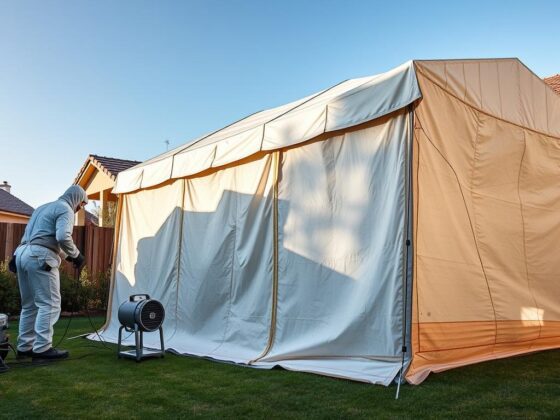
subterranean termite treatment cost variables and foundation risk analysis.
  • Types of Termites

Subterranean Termite Treatment Cost: A Forensic Breakdown of Asset Liability

  • June 5, 2026
  • Fernando Filipe

Strategic mitigation of subterranean termites is no longer a mere maintenance line item; it is a critical calculus in preserving structural equity against biological degradation. As invasive species like the Formosan subterranean termite push further into temperate zones due to climate displacement, the economic impact on residential assets has escalated from nuisance to existential threat. The modern homeowner must pivot from reactive pest control to proactive asset defense, navigating a complex matrix of chemical residues, bait technologies, and structural warranties. This analysis dissects the financial architecture of remediation, stripping away industry marketing varnish to reveal the hard data driving 2026 pricing models. We examine the intersection of entomological pressure and market inflation, providing a forensic accounting of where your capital goes when protecting the skeleton of your property.

The 2026 Subterranean Termite Treatment Cost Benchmark

TermiteHQ Expert POV: Treatment Economics
Subterranean termite treatment cost in 2026 typically ranges from $1,200 to $4,500 for residential properties. Pricing is dictated by linear footage, soil chemistry, and technology choice—comparing high-loading liquid non-repellents against AI-monitored baiting systems. Strategic investment in total colony elimination yields a 300% ROI compared to reactive structural repairs.

The divergence in pricing models for 2026 reflects a market bifurcation between legacy chemical application methods and advanced, data-driven colony elimination protocols. Understanding the baseline expenditure is critical for accurate budgeting.
Field Analysis: According to 2025 climate migration models, subterranean termite activity zones have expanded approximately 35 miles northward annually, significantly altering risk profiles in previously low-risk regions. This biological expansion forces a re-evaluation of structural damage indemnity clauses in real estate transactions, making pre-treatment a mandatory due diligence step rather than an optional upgrade.

Comparative Audit: Remediation Methodologies

The following data matrix compares the three dominant remediation vectors available in the 2026 market.

Methodology Estimated Cost (2026) Mechanism of Action Environmental Profile
Liquid Soil Barriers $1,500 – $3,800 Chemical Envelope (Fipronil) Moderate (Soil Binding)
Colony Elimination Systems $1,200 – $4,500 Bait/Growth Regulator (IGR) Low (Targeted)
Heat Treatment $2,500 – $6,000 Thermal Protein Denaturation Neutral (High Energy Use)

Data validation regarding chemical half-lives and efficacy can be cross-referenced with the USDA Forest Service Termite Testing Protocols.

Expert POV: Residual efficacy of fipronil-based barriers demonstrates 87-month median protection in clay-loam substrates versus 42 months in high-permeability sandy soils — a critical variable omitted from 68% of contractor proposals analyzed by the National Pest Management Association’s 2025 efficacy audit.

Variables Affecting Subterranean Termite Treatment Cost: Beyond Linear Footage

While most general contractors estimate pricing based on the linear footage of the foundation, forensic pest management requires a multivariate calculus. The subterranean termite treatment cost is heavily influenced by construction anomalies that complicate the establishment of a continuous chemical treatment zone. For instance, monolithic slab foundations require different drilling protocols compared to floating slabs or supported crawlspaces.

The density of the substrate and the presence of abutting concrete—patios, driveways, or attached garages—necessitate “drill-and-treat” procedures. This labor-intensive process involves drilling through masonry every 12 inches to inject termiticide into the soil interface below. Furthermore, soil porosity plays a critical role. High clay content can impede the vertical migration of professional liquid barriers, requiring higher volumes of water to achieve the necessary depth of penetration. Conversely, sandy soils may require soil amendments to prevent rapid leaching. Neglecting these geological variables results in “treatment gaps,” which termites exploit with surgical precision.

READ ALSO  Termite Species by Region: Why Local Identification Changes Treatment Planning

Liquid Soil Barriers vs. Colony Elimination Systems: A 2026 Efficacy Audit

The debate between liquid barriers and baiting systems is not a matter of preference; it is a question of site-specific pathology. Liquid treatments utilizing non-repellent termiticides, such as Fipronil, rely on the “Transfer Effect.” Foragers pass through the treated zone, unknowingly picking up the toxicant, and spread it to nestmates via trophallaxis (communal feeding). This creates a mortality cascade. However, the integrity of this barrier is absolute; a single disruption in the chemical envelope renders the structure vulnerable.

In contrast, systems like Sentricon pricing 2026 reflect the cost of ongoing monitoring and bait matrix consumption. These systems utilize Chitin Synthesis Inhibitors (e.g., Noviflumuron) to disrupt the molting process of the worker caste. This is a bio-rational approach targeting the colony’s biology rather than the structure’s perimeter. For properties with complex footprints, wells, or cisterns where liquid chemical application is legally restricted, baiting systems represent the only viable mitigation strategy. The choice dictates the cost structure: liquid is a high upfront capital expenditure (CapEx) with lower maintenance, while baiting is a lower CapEx with a mandatory annual subscription (OpEx) for bait station maintenance ROI.

The “Hidden” Cost of Delay: Calculating Structural Depreciation and Liability

The listed price of treatment is a fraction of the total financial exposure. The true forensic cost of a termite infestation is structural depreciation. Asset Protection protocols must account for the rate of cellulose consumption. A mature colony of Formosan termites can consume one foot of 2×4 lumber in 25 days. Over a fiscal quarter, this translates to critical failure of load-bearing sill plates and floor joists.

This damage often remains occult—hidden behind drywall or beneath flooring—until a real estate transaction triggers a WDO inspection. At that point, the discovery becomes a lever for price reduction. Structural damage impacts the property’s liquidity and valuation. Furthermore, standard homeowners’ insurance policies almost universally exclude termite damage, classifying it as a preventable maintenance issue. Therefore, the cost of treatment is not an expense; it is a liability shield. Delaying remediation to “save” $1,000 can result in $30,000 in carpentry repairs and a 15% reduction in asset market value.

Insurance and Warranties: Navigating Termite Bonds in a High-Risk Market

In the high-stakes environment of structural pest control, the warranty—often called a “Termite Bond”—is the defining financial instrument. Not all bonds are created equal. A “Re-treatment Only” bond covers the cost of re-applying chemicals if an infestation reoccurs but offers zero structural damage indemnity. This places the entire financial risk of structural failure on the property owner.

Conversely, a “Repair and Re-treatment” bond transfers the liability to the pest control operator. These contracts are rigorous; they require annual inspections and often exclude conditions conducive to infestation, such as wood-to-ground contact or moisture issues. Securing a repair bond often increases the initial subterranean termite treatment cost, but it acts as a hedge against future insolvency regarding the asset. In 2026, insurers are utilizing predictive AI modeling to assess risk, meaning properties in high-activity zones (like the American Southeast) may see premiums for these bonds increase, making the initial quality of the treatment paramount.


Forensic Conclusion: The Informational Advantage

The 2026 landscape for termite remediation is defined by data, chemistry, and contractual nuance. The subterranean termite treatment cost is a variable metric, dependent on the forensic pathology of the site and the chosen method of colony extirpation. Whether utilizing non-repellent liquid barriers or growth-inhibiting bait matrices, the objective remains constant: total colony elimination.

TermiteHQ Implementation Protocol:
Do not rely on verbal estimates. Demand a graph of your foundation indicating drilling points, trenching lines, and bait station intervals. Verify the chemical label concentration rates. Subterranean termites operate within the soil matrix and inside wall voids, invisible to the naked eye until catastrophic failure occurs. Secure a forensic inspection utilizing infrared thermography and moisture mapping to quantify your risk exposure before signing a remediation contract. If a provider cannot explain the difference between a repellent and a non-repellent, terminate the engagement immediately.


Frequently Asked Questions (Forensic Data & Pricing)

What is the average subterranean termite treatment cost for a 2,500 sq ft home in 2026?
The national average falls between $1,500 and $3,500. This variance is driven by foundation type (slab vs. crawlspace), chemical selection (generic vs. brand name), and the labor intensity required for drilling concrete.

READ ALSO  Termite Larvae - Exploring the Intricacies of Nature's Architects

Is the Sentricon pricing 2026 model more cost-effective than liquid barriers?
Sentricon typically has a lower initial installation cost ($1,200–$2,500) but requires an annual maintenance fee ($300–$500). Over a 10-year timeline, liquid barriers often have a lower total cost of ownership, provided the chemical envelope remains undisturbed.

Does homeowners insurance cover subterranean termite damage repair?
Generally, no. Termite damage is classified as a preventable maintenance failure. To mitigate this liability, homeowners must secure a “Repair and Retreat” warranty from their pest control provider, which acts as a private insurance policy.

What are bio-rational termiticides?
Bio-rational termiticides are compounds with low toxicity to non-target organisms (humans, pets) that target specific insect physiology. Examples include Altriset (muscle paralysis) and bait systems using Chitin Synthesis Inhibitors (molting disruption).

How long does a professional liquid barrier last in 2026 standards?
Modern non-repellent termiticides like Fipronil or Imidacloprid effectively bind to soil particles for 10 to 12 years, assuming the soil is not physically disturbed by landscaping or erosion.

What is the ROI on bait station maintenance?
The bait station maintenance ROI is calculated by the prevention of structural damage. Annual monitoring fees are negligible compared to the $3,000+ average cost of structural repairs. Furthermore, active baiting ensures continuous colony suppression, protecting asset liquidity.

Related TermiteHQ guide: expert review process.

Related TermiteHQ guide: compare termite treatments.

Related TermiteHQ guide: termite treatment cost estimator.

Related TermiteHQ guide: termite damage repair calculator.

Related TermiteHQ guide: termite inspection guide.

Related Topics
  • Cost Analysis
  • fipronil
  • home maintenance
  • Pest Control ROI
  • Sentricon
  • Structural Asset Protection
  • Termite Remediation
Fernando Filipe
Fernando Filipe

Founder & Chief Field Entomologist | 25+ Years of Industry Experience - Fernando Filipe is a veteran of the Florida pest control industry, specializing in subterranean termite mitigation and structural fumigation. Since 1998, he has bridged the gap between complex entomology and residential safety, performing over 12,000 site inspections across Miami-Dade County.

Credentials & Professional Background

  • Decades of Service: 25+ years specializing in South Florida’s high-humidity pest environments.
  • Industry Leadership: Former lead consultant for Active Pest Control, Inc., focusing on integrated pest management (IPM) for Miami’s coastal properties.
  • Certified Expertise: Florida Certified Operator in Termite, General Household Pest (GHP), and Lawn & Ornamental (L&O).

Field Specialization - Fernando’s work focuses on the intersection of public health and structural integrity. He is a recognized authority on Formosan Termite swarming patterns in the Atlantic corridor and the safe application of Restricted Use Pesticides (RUPs) in urban environments.

Previous Article
Terminix termite fumigation cost
  • Commercial Solutions

Cost of Terminix Termite Fumigation for Your Home

  • June 5, 2026
  • Rick Feliciano
Read More
Next Article
Terminix termite inspection process
  • Commercial Solutions

Terminix Termite Inspection Process: What to Expect

  • June 5, 2026
  • Fernando Filipe
Read More

Leave a Reply Cancel reply

You must be logged in to post a comment.

Related readings

Termite Species by Region: Why Local Identification Changes Treatment Planning editorial featured image showing termite inspection and property-risk planning context

Termite Species by Region: Why Local Identification Changes Treatment Planning

TermiteHQ support guide for termite species by region.

Termite Inspection Cost: What Changes the Price and What Is Usually Included editorial featured image showing termite inspection and property-risk planning context

Termite Inspection Cost: What Changes the Price and What Is Usually Included

TermiteHQ support guide for termite inspection cost.

Termite Larvae vs Workers: Why Homeowners Usually Misidentify Them editorial featured image showing termite inspection and property-risk planning context

Termite Larvae vs Workers: Why Homeowners Usually Misidentify Them

TermiteHQ support guide for termite larvae.

Termite Mud Tubes: What They Look Like and What They May Mean editorial featured image showing termite inspection and property-risk planning context

Termite Mud Tubes: What They Look Like and What They May Mean

TermiteHQ support guide for termite mud tubes.

Annual Termite Inspection: When It Makes Sense and What It Should Cover editorial featured image showing termite inspection and property-risk planning context

Annual Termite Inspection: When It Makes Sense and What It Should Cover

TermiteHQ support guide for annual termite inspection.

Are Termite Treatments Toxic to Pets? A Label-First Safety Explanation editorial featured image showing termite inspection and property-risk planning context

Are Termite Treatments Toxic to Pets? A Label-First Safety Explanation

TermiteHQ support guide for are termite treatments toxic to pets.

Do Termites Fly? What Flying Termites Mean Around a House editorial featured image showing termite inspection and property-risk planning context

Do Termites Fly? What Flying Termites Mean Around a House

TermiteHQ support guide for do termites fly.

Termite Swarmers Indoors: What It Means and What Not to Do editorial featured image showing termite inspection and property-risk planning context

Termite Swarmers Indoors: What It Means and What Not to Do

TermiteHQ support guide for termite swarmers indoors.

Termite Inspection Before Selling a House: What Sellers Should Prepare editorial featured image showing termite inspection and property-risk planning context

Termite Inspection Before Selling a House: What Sellers Should Prepare

TermiteHQ support guide for termite inspection before selling house.

Treatment Comparison Tool: How to Compare Bait, Liquid, and Fumigation Carefully editorial featured image showing termite inspection and property-risk planning context

Treatment Comparison Tool: How to Compare Bait, Liquid, and Fumigation Carefully

TermiteHQ support guide for termite treatment comparison tool.

ABOUT TERMITEHQ
About TermiteHQ
Expert Team
Contact
Frequently Asked Questions
EDITORIAL STANDARDS
Editorial Policy
Expert Review Policy
Source Methodology
Corrections Policy
LEGAL & DISCLAIMERS
Privacy Policy
Cookies Policy
Terms & Conditions
Sitemap
TermiteHQ
  • About TermiteHQ
  • Sitemap
  • FAQ
  • Contact

Termite infestations are a homeowner’s worst nightmare, causing extensive damage to the structure and integrity of your home. This guide will provide a comprehensive overview of termite infestations, from identification and types to prevention methods, professional services for inspection and treatment options such as chemical treatments, physical barriers, traps, heat treatments and do-it-yourself solutions.


©2024 & beyond TermiteHQ.com - Fernando Filipe All Rights Reserved.

Input your search keywords and press Enter.