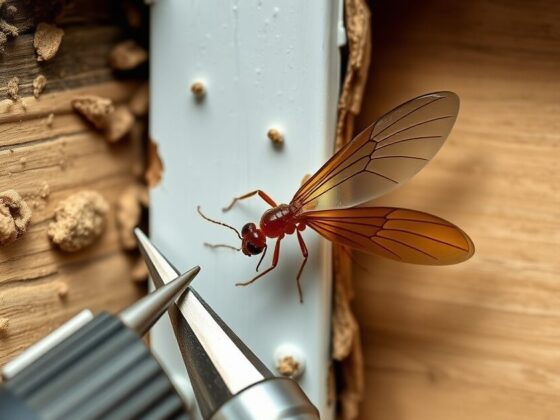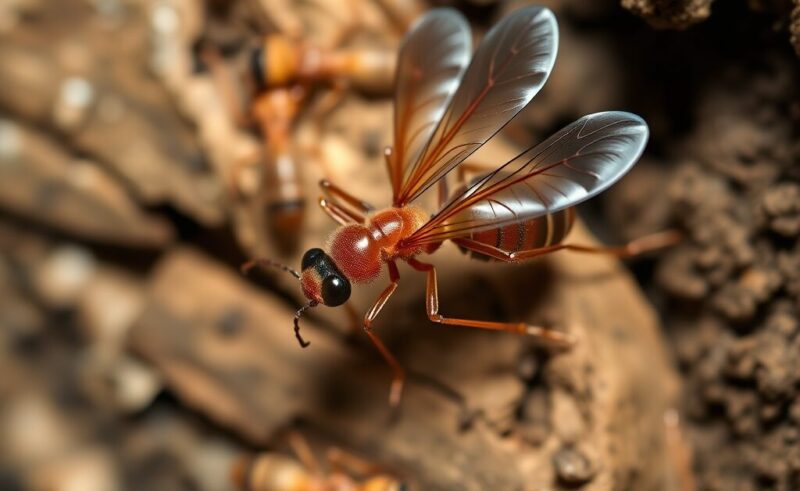
Termite swarmers emerge when environmental conditions—temperature, humidity, and daylight length—align with their species’ reproductive cycle. Subterranean termites typically swarm in spring after rain events when soil moisture is high. Drywood termites swarm in late summer and fall, often during warm evenings. Dampwood termites swarm in summer near wood with elevated moisture content. The timing and location of the swarm help narrow the species, which directly affects inspection scope and treatment approach.
Winged termites are often mistaken for flying ants. Termite swarmers have straight antennae, equal-length wings that extend well past the abdomen, and a broad waist with no segmentation. Flying ants have elbowed antennae, unequal wing pairs, and a pinched waist. Correct identification matters because treatment methods, material risk, and inspection protocols differ significantly between the two. If you’re uncertain, place a specimen in a sealed plastic bag and request identification during a professional inspection or submit a photo to your state’s university extension entomology service.
Swarmers themselves do not cause structural damage—they have soft bodies, no functional mandibles for chewing wood, and survive only a few hours to days after flight. The concern is what their presence indicates: a mature colony capable of producing reproductives, which means the colony has been active for at least three to five years in the case of subterranean species, or two to three years for drywood species. Travis Gates, a structural pest control operator and TermiteHQ contributor, notes that homeowners often discover swarmers before noticing other signs of infestation, making the sighting a useful early detection event if acted upon promptly. Use the Termite Risk Score tool to assess baseline environmental and structural factors that may support colony establishment near your property.
What Changes Whether Flying Termites Are a Problem
Not every flying termite sighting means the same thing. The variables that matter most are where you saw them, how many, whether they came from inside or outside, and what species is common in your area.
If you see a few winged termites outdoors near a tree stump or old fence post in spring, that’s normal reproductive behavior. Subterranean colonies send out swarmers when soil moisture and temperature align, typically after rain. Outdoor swarms from landscape wood don’t automatically mean your house is infested, but they do confirm active colonies within flight range—usually a few hundred feet.
If you see flying termites indoors, especially emerging from baseboards, window frames, or wall voids, that indicates a colony inside or directly against the structure. Swarmers don’t tunnel through wood to reach light; they emerge from established colonies. Indoor swarms are the clearest evidence of active infestation, and they justify an inspection even if you see only a handful of insects.
Species changes the urgency. Subterranean termites—the most common group across the U.S.—swarm predictably in spring and early summer, and they require soil contact or moisture pathways. Formosan termites, a more aggressive subterranean species in the Southeast and Gulf Coast, swarm at dusk in large numbers and can build above-ground colonies if moisture is present. Drywood termites, common in coastal California, Florida, and the Southwest, swarm in late summer and fall, often in smaller numbers, and they don’t need ground contact. A species identification helps clarify whether the swarm suggests soil-based entry points or wood-to-wood spread.
Timing also matters for property transactions. If swarmers appear during a sale inspection period, most buyers will require a licensed termite inspection and clearance or treatment before closing. If the house has an active termite warranty, a swarm may trigger a service call under the agreement, but coverage depends on the contract’s re-treatment and damage terms.
Foundation type and moisture history shape risk. Slab foundations with plumbing penetrations or cracks offer hidden entry routes that make indoor swarms harder to trace. Crawlspace homes with visible mud tubes and high humidity give clearer evidence trails. Older treatment history—especially non-repellent liquid applications or bait systems—can suppress swarming for years, so a sudden indoor swarm after a long gap may indicate either treatment failure or a new colony arrival.
Use the Termite Risk Score to see how local pressure, construction type, and moisture variables combine in your situation. Flying termites don’t diagnose the scope of damage or tell you which treatment will work, but they do mark the need for a professional inspection with moisture meters, sounding tools, and species confirmation.
What You Can Do Before Calling a Professional
If you see flying termites inside your home or emerging from soil, wood, or structural gaps near the foundation, you cannot confirm an active infestation or rule one out on your own. You can, however, document what you observe and prepare useful information for a licensed inspector.
Start by photographing the insects—close-ups of wings, body shape, and the location where you found them. Note the date, time of day, weather conditions, and whether the swarm occurred indoors or outdoors. If you can safely collect a few specimens in a sealed plastic bag or jar, that helps with identification. Subterranean termites, drywood termites, and dampwood termites all swarm, but at different times of year and under different moisture conditions, and a professional can often distinguish species from wing venation and body proportions.
Check your property records for past termite inspections, treatments, or warranty documents. If the house was treated within the last five years, locate the service agreement and note the treatment type—liquid termiticide, bait stations, or fumigation. Some warranties require annual renewals or reinspections, and a new swarm may indicate that coverage has lapsed or that a different colony has entered an untreated zone.
Walk the perimeter of your home and look for mud tubes on the foundation, discarded wings near windowsills or door frames, and soft or hollow-sounding wood in areas that were recently dry. Do not probe structural wood with tools or remove siding to investigate further; you may disturb evidence the inspector needs or create new moisture entry points. Use the Termite Risk Score to assess whether your property’s construction type, soil contact, and regional pressure align with higher infestation likelihood.
Prepare a short list of questions for the inspector: whether the swarm suggests a mature colony already inside the structure, what species is most common in your area, whether the treatment will address both the colony and future swarmers, and what monitoring or warranty options exist. According to the National Pest Management Association, a single swarm does not measure colony size, but it does confirm reproductive maturity—meaning the colony has been feeding for at least three to four years in subterranean species. The inspector’s report will clarify whether you need immediate treatment, monitoring, or a follow-up inspection after the swarm season ends.
For guidance on what inspectors look for and how they document findings, see the termite inspection overview. If you need help distinguishing termite damage from other wood-destroying insects, the signs of infestation guide covers physical evidence in detail.
When Professional Judgment Changes the Outcome
A swarm inside your home on a Tuesday afternoon is not the same decision as finding two alates near an exterior door on a windy Saturday in May. Licensed inspectors use flight timing, location, colony indicators, and structural access to separate cosmetic events from active infestations that require treatment.
If you see more than a handful of alates indoors, or if swarms recur over multiple days, a professional inspection becomes the only reliable way to confirm whether reproductives emerged from inside the structure or drifted in from outside. Inspectors check crawlspaces, attic framing, expansion joints, and plumbing penetrations—areas homeowners rarely access—and use moisture meters and probing tools to locate hidden damage that explains why alates appeared where they did.
Travis Gates, a structural pest control operator with two decades of subterranean termite work across the Southeast, notes that the most expensive mistakes happen when homeowners wait through a second or third swarm before calling. By that point, colonies are mature, damage has spread to multiple zones, and treatment costs reflect the delay. A single indoor swarm in spring does not always mean immediate treatment, but it does mean scheduling an inspection within the week, not the month.
Inspectors also distinguish between species. Subterranean alates near foundation vents in April suggest soil contact and possible mud tube activity. Drywood alates near attic vents in late summer point to localized wood infestations that require fumigation or spot treatment, not liquid termiticides. Misidentifying the species leads to mismatched treatment and wasted cost.
Our Expert Team reviewed this routing because the decision to treat—or to monitor and re-inspect in 90 days—depends on variables a photograph or phone description cannot capture. If you are unsure whether what you saw constitutes a swarm, or if you found discarded wings but no live insects, a licensed inspector can measure risk using site-specific evidence rather than general alarm. You can estimate your baseline exposure using the Termite Risk Score tool, but flight activity inside the home moves the timeline from routine monitoring to immediate professional review.
All expert interpretation on TermiteHQ follows our Expert Review Policy and draws from sources detailed in our Source Methodology. We do not provide remote diagnosis or treatment recommendations—only the framework licensed professionals use when flight activity appears around your property.