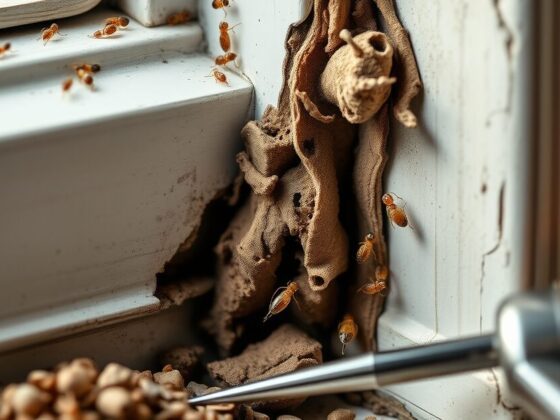
Annual inspections exist because termite colonies grow slowly, damage accumulates invisibly, and early detection reduces repair cost and treatment complexity. In states such as California, Florida, Texas, and much of the Southeast, subterranean termites are active year-round, and a single missed season can allow a new colony to establish shelter tubes, consume structural framing, and spread to adjacent rooms. Drywood termites in coastal and desert climates produce less obvious evidence—small exit holes and pellet piles that homeowners often mistake for sawdust or dirt—making scheduled professional review the most reliable detection method.
The inspection does not guarantee that termites are absent. It confirms whether a trained observer found visible evidence or conducive conditions during a specific visit. Inspectors examine areas where termites typically reveal themselves: mud tubes on foundation walls, hollow-sounding wood near plumbing, frass piles below kick-out holes, discarded wings near window sills, and moisture stains in crawl spaces. They do not open walls, remove insulation, or destructively probe every board unless the service agreement explicitly includes invasive inspection. If you need that level of examination—common during escrow or pre-purchase review—you request an expanded scope and pay accordingly.
What you can do between inspections: walk your foundation perimeter every few months, check for new mud tubes or wood damage near soil contact, note any swarming insects in spring, and photograph changes for your inspector. What you cannot do: issue a compliant report, satisfy a lender’s termite contingency, renew a treatment warranty, or make a reliable species identification from a photo. Those decisions require a licensed professional, standardized reporting, and sometimes laboratory confirmation. Use TermiteHQ’s Termite Risk Score to understand your property’s baseline pressure, then decide whether annual scheduling fits your risk profile and budget.
Core Variables That Change the Answer
Whether annual termite inspection makes sense for your property depends on measurable conditions, not calendar rules. The variables that matter most are termite species present in your region, moisture patterns around your foundation, previous treatment history, and whether you’re managing a property transaction or warranty requirement.
Subterranean termites—the species responsible for most structural damage in the U.S.—require consistent soil-to-wood contact or moisture pathways. If your property sits in the Southeast, Gulf Coast, or Pacific Coast regions where Formosan or native subterranean species maintain year-round activity, annual inspection creates a tighter detection window than biennial or triennial schedules. In contrast, drywood termite pressure in coastal California, Florida, and Hawaii changes the inspection focus entirely: inspectors look for kickout piles, surface exit holes, and attic framing rather than soil-grade mud tubes.
Foundation type and crawlspace access directly affect both inspection thoroughness and risk accumulation between visits. Slab foundations with minimal exterior grade exposure and no plumbing penetrations near untreated soil present lower annual risk than pier-and-beam homes with open crawlspaces, poor ventilation, and wood debris left during construction. If your inspector cannot access 70% or more of the substructure during a standard visit, annual scheduling helps catch activity that might otherwise develop unobserved for multiple years.
Treatment history and warranty language often set the inspection interval for you. Most liquid termiticide treatments—applied as soil barriers around foundations—carry warranties that require annual professional inspections as a condition of coverage. Miss the inspection, and the warranty typically voids. Baiting systems usually include monitoring visits every 90 days during the first year, then quarterly or semi-annual checks depending on the contract. If you’re outside a warranty period and no previous treatment exists, the decision shifts back to species pressure, moisture conditions, and structural access.
Property sale context changes the question entirely. Pre-listing inspections and buyer-requested termite inspections follow state-specific timelines—some states accept reports up to 90 days old, others require inspections within 30 days of closing. These are separate from ongoing monitoring schedules and usually required regardless of your normal inspection rhythm.
Moisture events—such as plumbing leaks, gutter failure, or grading changes that direct water toward your foundation—reset the inspection clock. Subterranean termites colonize new moisture sources within weeks under favorable conditions. If you’ve had recent water intrusion near wood framing, an out-of-cycle inspection makes more sense than waiting for your next scheduled visit. Use the Termite Risk Score tool to evaluate how these variables combine for your specific property and region.
What You Can Do Before Scheduling an Inspection
Before you contact a professional, a short walk-through of your property helps you describe what you’re seeing, gather useful records, and ask better questions. This is not a substitute for a licensed inspection—you cannot diagnose termites or assess structural damage from visual clues alone—but you can document conditions that warrant professional attention.
Start inside the home. Look at baseboards, door frames, and window sills for paint that bubbles without water damage, wood that sounds hollow when tapped, or fine grit that collects on sills or floors. Check exposed wood in basements, crawl spaces, and attics for mud tubes (pencil-width lines of soil running along foundation walls or joists), discarded wings near windows in spring, or wood that crumbles when pressed with a screwdriver. Take clear, close-up photos of anything unusual, and note the room and approximate height from the floor.
Move outside. Walk the foundation perimeter and note any wood-to-soil contact: deck posts set directly in dirt, siding that touches mulch, firewood stacked against the house, or landscape timbers in contact with the foundation. Photograph these areas and measure the distance from the contact point to the nearest door or window. Look for mud tubes on the exterior foundation, especially near cracks, utility penetrations, or areas where the ground slopes toward the house. If you see tubes, photograph them but do not scrape them off—professionals use their location and construction to identify the species and assess activity.
Gather your records. Pull any past termite inspection reports, treatment contracts, or warranties. Note the date of the last inspection, the company name, and whether any recommendations were made but not completed. If you’re preparing for a real-estate transaction, locate the disclosure statement and any seller-provided pest reports. If you’ve noticed new signs of infestation since the last inspection, write down when you first saw them and whether they’ve changed.
Prepare a short list of questions based on what you found: the species common in your area, whether an annual schedule makes sense given your home’s construction and history, what the inspection will and will not cover, and how findings are reported. If you’re comparing inspectors, ask whether they follow state-specific protocols and whether the report will meet real-estate or refinance requirements. Use the Termite Risk Score to understand how your property’s features and location affect baseline risk, but remember that only a licensed inspector can assess your specific situation.
Do not attempt to treat, remove, or “test” suspected termite activity with store-bought products. You may destroy evidence the inspector needs to identify the species, locate the colony, or recommend the right treatment. Your role is to observe, document, and route the decision to someone with the training and tools to act on what you’ve found.
When Professional Judgment Changes the Outcome
Most homeowners can walk their foundation, check crawlspace access points, and note visible mud tubes or damaged wood without a license. The decision to hire a professional becomes necessary when you need documentation for a transaction, when you’re evaluating structural damage that may require treatment, or when you cannot safely access the areas where subterranean termites typically enter—crawlspaces, slab edges, attached garages, and exterior grade transitions.
A licensed inspector brings liability insurance, species identification training, and familiarity with local termite pressure. In the Southeast and Gulf Coast, where multiple termite species overlap and Formosan colonies can exceed two million individuals, misidentifying the species changes treatment method, cost, and timeline. In California, where drywood termites nest inside attic framing and require fumigation or localized heat, a visual inspection from ground level misses the infestation entirely.
Robert Trawick, a board-certified entomologist who has reviewed TermiteHQ’s inspection guidance, recommends professional involvement whenever a report will be used in a real-estate transaction or insurance claim. These reports carry legal weight, and errors—misidentified species, missed activity in inaccessible areas, or vague damage descriptions—create disputes during closing or denial of coverage. State licensing boards in Texas, Florida, and California publish enforcement actions each year for inspectors who documented “no visible evidence” without accessing crawlspaces or attics where active infestations were later found.
The inspection itself should include all accessible areas: interior perimeter walls, attached structures, crawlspaces, basements, attics, and exterior grade within three feet of the foundation. The inspector should note moisture sources, wood-to-soil contact, previous treatment evidence, and any conditions that increase risk—mulch against siding, poor drainage, untreated wood steps. If the report lists only “no visible activity” without documenting inaccessible areas or conducive conditions, it provides limited value.
Annual inspections make sense in high-pressure regions, for homes with previous infestations, or when required by treatment warranties. In low-pressure areas with no history and no conducive conditions, a three-year interval may be sufficient. The Termite Risk Score tool uses regional data, construction type, and site conditions to estimate pressure, but it does not replace an inspector’s judgment about inaccessible areas or ambiguous evidence. If you’re buying, selling, or documenting damage for repair estimates, hire a state-licensed inspector and request a written report that lists what was accessed, what was not, and what conditions require correction.