Homeowners, buyers, and property managers often search for a universal “best” termite treatment, but the question itself assumes all infestations and structures are alike. They are not. Subterranean termites enter through soil and require different chemistry than drywood termites living entirely inside wood. A pier-and-beam foundation allows different access than a post-tension slab. An active infestation spreading through floor joists demands faster intervention than a monitoring strategy for a property with no current activity. Comparing treatments carefully means identifying which variables matter for your property, then matching those variables to the methods a licensed operator can legally and physically perform.
You can safely observe and compare treatment categories—liquid, bait, fumigation, spot treatment, heat, and foam—but you cannot determine species, measure infestation extent, calculate required chemical volumes, or confirm label-compliant application without a licensed inspection. What you can do is understand what each method does, what it requires, and which situations disqualify it before the inspector arrives. That understanding lets you ask better questions, recognize when an estimate skips necessary steps, and compare proposals that reflect your actual structure rather than generic marketing. The Treatment Comparison tool organizes these variables into side-by-side decision context, and the TermiteHQ Expert Team—led by Travis Gates—reviews treatment-selection logic against field standards and university extension guidance before publication, following the Expert Review Policy and Source Methodology that ground all TermiteHQ decision support.
## Core variables that change the answer
No single treatment works best in every situation. The right choice depends on termite species, structural access, moisture patterns, foundation type, infestation evidence, property transaction timing, treatment history, and local termite pressure. These variables interact, so a method that works well for one property may fail or cost more than necessary on another.
Species drives the first decision split. Subterranean termites—Eastern, Formosan, and Western species—require soil-to-wood contact and respond to both liquid barriers and bait systems. Drywood termites live entirely inside wood without soil contact, which eliminates bait and liquid soil treatments as options and typically requires fumigation or localized wood treatment. Dampwood termites cluster in moisture-damaged wood and often resolve when moisture sources are corrected, though treatment may still be necessary depending on colony size and structural damage.
Foundation type and structural access determine whether liquid treatments can reach the soil-structure interface. Slab foundations with post-tension cables, radiant heating, or shallow footings limit where technicians can drill and inject termiticide. Crawlspace foundations with adequate clearance allow full perimeter treatment and interior monitoring. Basement foundations may require interior and exterior applications depending on footing depth and grading. Bait systems work on any foundation type because stations install in soil around the structure, not through it.
Moisture and access issues change treatment durability. Persistent moisture from plumbing leaks, poor grading, or high water tables can dilute liquid termiticides over time, especially in sandy or highly permeable soils. Bait systems avoid this dilution risk but require consistent monitoring and bait replenishment. Properties with dense landscaping, hardscaping, or utility conflicts may not allow continuous liquid barrier placement, making bait a better fit for those zones.
Infestation evidence and timing affect urgency and method selection. Active subterranean termite mud tubes with live workers justify immediate liquid treatment for fast colony disruption. Older evidence—hollow wood, abandoned tubes, frass piles without fresh material—may indicate a resolved infestation or one that moved, which changes whether you need treatment now or monitoring first. Drywood swarmers or kickout piles of fecal pellets confirm active drywood colonies and point toward fumigation or spot treatment depending on colony distribution.
Property sale context and treatment history introduce contractual variables. Many real-estate transactions require a retreatment warranty or proof of recent treatment. Liquid treatments typically include renewable warranties; bait systems may require annual service agreements. If the property was treated in the past five years, check whether the existing warranty transfers, what it covers, and whether the original company still operates locally. Some warranties exclude certain species, pre-existing damage, or secondary infestations.
Local termite pressure shapes long-term strategy. High-pressure regions—coastal areas, the Southeast, Hawaii, Southern California—see frequent reinfestations and benefit from continuous monitoring or renewable barriers. Lower-pressure areas may justify one-time treatment without ongoing service contracts. Your local infestation risk and soil type influence how long liquid treatments remain effective and how often bait stations require inspection.
How Treatment Methods Work—and Why No Single Option Fits Every Case
Termite treatments differ by mechanism, application method, coverage area, timeline, and structural access requirements. Bait systems rely on delayed toxicity and colony-wide transfer. Liquid termiticides create treated-soil barriers around or beneath structures. Fumigation uses gas penetration for whole-structure drywood infestations. Localized treatments address isolated activity without full-perimeter application. The right choice depends on termite species, infestation extent, construction type, soil conditions, occupancy constraints, and label-permitted use—not marketing claims or cost alone.
Bait systems use cellulose stations installed in soil around the structure perimeter, typically 10–20 feet apart. Termites feed on the bait matrix, which contains a slow-acting insect growth regulator or chitin synthesis inhibitor. Workers carry the active ingredient back to the colony, disrupting molting and reproduction over weeks to months. Bait works when termites encounter stations during natural foraging, making it effective for subterranean species with established ground contact. It does not create a chemical barrier, requires ongoing monitoring and bait replenishment, and depends on sustained termite activity. Bait is often chosen when drilling or trenching is impractical, when minimizing pesticide volume is a priority, or when treating around wells, gardens, or sensitive landscaping. University extension studies show colony elimination can take 3–12 months depending on species, colony size, and seasonal activity patterns.
Liquid termiticides are applied to soil along foundation perimeters, beneath slabs, or in wall voids to create a treated zone that kills or repels termites on contact or ingestion. Non-repellent formulations (fipronil, imidacloprid, chlorfenapyr) allow termites to pass through treated soil and transfer the active ingredient to nestmates before dying. Repellent formulations (pyrethroids, bifenthrin) block termite movement through treated areas. Liquid treatments require trenching, rodding, or sub-slab injection to reach the soil-structure interface. They provide faster initial control than bait and can protect structures without active infestations, but application depends on accessible soil, adequate moisture for dispersion, label-compliant dilution rates, and proper equipment. Liquid barriers degrade over time—labels typically estimate 5–10 years of protection, though soil type, rainfall, microbial activity, and pH affect longevity. Liquid is often the preferred option for pre-construction treatment, slab foundations, or situations requiring immediate barrier establishment.
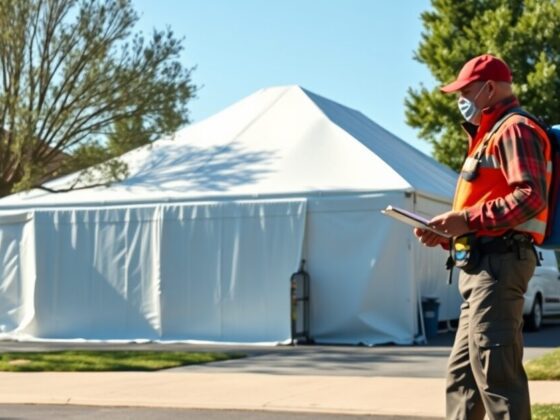
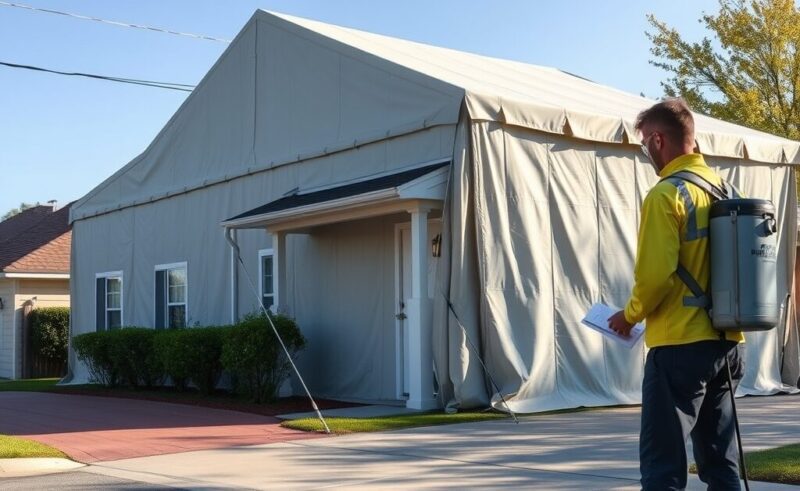
Fumigation uses sulfuryl fluoride gas released inside a sealed structure, typically tented with tarps. The gas penetrates wood, voids, and inaccessible spaces, killing drywood termites, powder post beetles, and other wood-destroying insects throughout the building. Fumigation does not leave residual protection—it eliminates existing infestations but does not prevent recolonization. It requires occupants, pets, and plants to vacate for 24–72 hours, removal of medications and food in permeable packaging, and aeration until gas concentrations drop below EPA safety thresholds. Fumigation is the standard treatment for widespread drywood infestations in multi-level structures, attics, or wall cavities where localized access is impractical. It is not effective against subterranean termites with ground colonies outside the structure. Cost is typically based on structure volume, and the process is regulated by state pesticide agencies and EPA product labels.
Localized treatments—foam, dust, or spot liquid applications—target isolated drywood galleries or small subterranean entry points without full-structure intervention. These methods work when infestation is confirmed in a single accessible area, such as a window frame, door jamb, or attic beam. Localized treatment is faster and less expensive than fumigation or perimeter liquid, but it depends on accurate identification of all active sites. Missed galleries allow infestations to continue, making this approach suitable only when inspection confirms limited, accessible activity.
No treatment method is universally superior. The Treatment Comparison tool helps organize variables, but final decisions require species identification, professional inspection findings, and label-compliant application by a licensed operator. TermiteHQ expert review emphasizes that treatment selection must account for structural realities, not assumptions about speed, cost, or convenience.
What You Can Do Before Calling a Professional
No homeowner can diagnose termite species, measure colony pressure, or select treatment chemistry remotely. But you can gather useful information that helps professionals give better recommendations and helps you ask sharper questions during estimates.
Document What You See
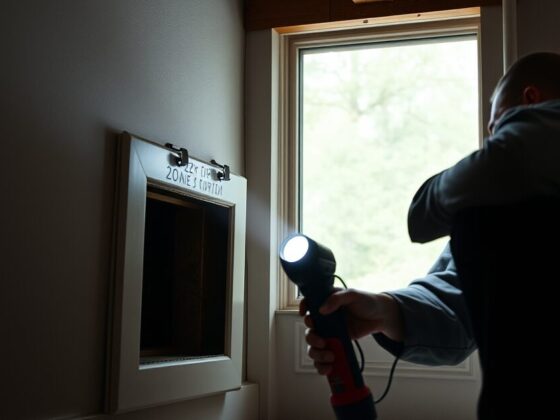
Take clear photos of visible evidence: mud tubes on foundation walls, discarded wings near windowsills, wood that sounds hollow when tapped, frass piles below kick-out holes, or sagging door frames. Note the location of each sign—basement corner, garage wall, bathroom subfloor—and whether the area stays damp or has a history of leaks. These details help inspectors focus their tools and narrow the species quickly.
Do not disturb mud tubes or probe damaged wood aggressively. Breaking tubes can push workers deeper into wall voids, and poking soft wood can collapse structural members that still carry load. Photograph from six inches away, include a ruler or coin for scale, and leave physical evidence intact for the inspector.
Gather Your Property Records
Collect any past termite inspection reports, treatment contracts, warranty certificates, or pest-control invoices. If the house was treated before you bought it, check your closing documents for a termite disclosure or treatment summary. Knowing whether the property has an active bait monitoring system, a liquid barrier applied in a specific year, or a lapsed warranty changes which options make sense now.
If you rent, ask the landlord or property manager for treatment history. In many states, landlords must provide pest-control records on request, and knowing the baseline helps you understand whether new activity is a system failure or a new introduction.
Prepare Questions That Match Your Situation
Use the variables in our Treatment Comparison Tool to shape your questions. If you have subterranean termites in a slab foundation, ask how the contractor plans to reach soil under the concrete and whether they use trenching, drilling, or both. If you see drywood evidence in attic framing, ask whether spot treatment is viable or whether the inspector recommends whole-structure fumigation based on the spread pattern.
Ask about monitoring intervals, re-treatment triggers, warranty transferability, and what happens if activity reappears in year three. These answers reveal how the company handles long-term accountability, which matters more than the initial price in most residential cases.
Understand What You Cannot Do Alone
You cannot identify species reliably without a microscope and reference specimens. You cannot measure the extent of infestation inside walls or under slabs without moisture meters, infrared cameras, or borescopes. You cannot apply restricted-use termiticides, calculate dosage per linear foot of foundation, or drill and treat without a structural pest-control license in any U.S. state.
Preparation helps you choose the right professional and recognize useful answers during estimates. It does not replace the inspection. Schedule at least two estimates from licensed companies, bring your photos and records to each appointment, and compare the inspection findings before comparing the treatment bids. More context at Expert Team and Source Methodology.