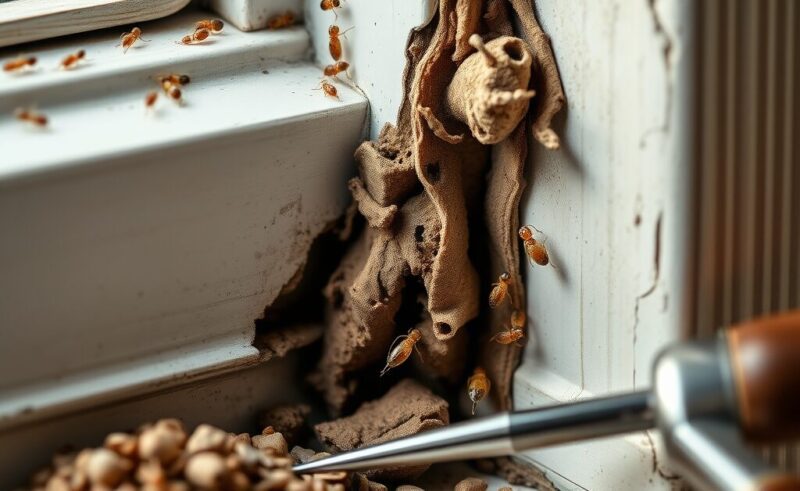
Mud tubes are one of the most recognizable signs of infestation, and they serve a specific biological purpose: subterranean termites lose moisture quickly in open air, so they build these protective highways from damp soil to wood food sources above ground. The tubes maintain humidity, block predators, and allow workers to forage without exposure. You’ll most often find them on concrete foundation walls, crawlspace piers, slab edges, or inside wall voids near plumbing penetrations.
Not every mud tube means an active infestation at this moment. Termites build exploratory tubes to test new routes, and they abandon tubes when food sources are exhausted or environmental conditions change. A dry, brittle tube with no live insects inside may indicate past activity, but it does not rule out a nearby colony. Conversely, a tube with moist soil and visible worker termites is a strong indicator of current feeding. Breaking a small section—about one inch—and checking back in a few days can show whether termites rebuild it, but this test does not replace professional assessment.
What you can do now: photograph the tubes with a ruler or coin for scale, note their locations (foundation wall, pier, garage corner), and avoid disturbing them further until an inspector documents them. Tube placement, thickness, and branching patterns help professionals estimate colony size, entry points, and treatment zones. If you’re evaluating a property before purchase, mud tubes are a clear signal to request a full termite inspection and written report before closing. For current homeowners, the presence of tubes typically triggers an inspection within days, not weeks, especially if the tubes appear fresh or connect directly to structural wood.
## What Changes the Meaning of a Mud Tube
Not all mud tubes carry the same urgency. The species building them, the moisture conditions around your foundation, and whether you’re days from closing on a sale all change what happens next.
Subterranean termites—Eastern, Formosan, and desert species—build most of the tubes homeowners find. Eastern subterranean termites construct narrow, fragile tubes that follow foundation cracks and mortar joints. Formosan termites build thicker, branching networks that can span open air gaps and tolerate more disturbance. Desert species in the Southwest often build tubes only during brief moisture windows after rain. If you live in coastal Louisiana or Southern California, the species alone changes how fast the colony can grow and how a professional will treat it.
Moisture drives tube construction. Termites need humidity above 75% to survive outside soil, so tubes appear where condensation, plumbing leaks, or poor drainage create stable moisture. A single tube on a dry foundation corner during summer may indicate exploratory foraging. A cluster of tubes near a leaking hose bib or crawlspace vent with visible condensation suggests active feeding and a moisture problem that will outlast any treatment unless you fix it.
Foundation type and access points matter. Slab homes often show tubes along expansion joints, utility penetrations, or where brick veneer meets concrete. Pier-and-beam or crawlspace foundations may have tubes on interior piers, along floor joists, or traveling up plumbing. Basements can host tubes behind stored boxes or along sill plates. The location tells a professional where to focus treatment and whether soil, wood, or both need attention.
Evidence age changes the decision. Fresh tubes feel damp and pliable. Old tubes crumble when touched and may be hollow inside, meaning the colony moved or died months ago. Breaking a tube and checking it 24 to 48 hours later can show whether termites rebuild it, but this test doesn’t confirm the colony is gone—it only shows whether that specific route is still active. A licensed inspector uses moisture meters, sounding tools, and species knowledge to interpret what you’re seeing.
Real-estate transactions compress every timeline. If you’re buying and the inspection report lists mud tubes, your contract may require treatment, a warranty, or a re-inspection before closing. If you’re selling, state disclosure laws in California, Texas, and other markets may require you to report known termite evidence even if you’ve already treated it. Our Termite Risk Score can help you understand baseline risk by region and structure type, but a Wood-Destroying Insect Report from a state-licensed firm is the only document that satisfies most lenders and title companies.
Treatment history and warranty language also matter. If your home was treated in the past three years and you have an active warranty, the company may re-treat at no cost if tubes reappear. Read the warranty’s re-treatment clause and notification window—most require you to report new evidence within 30 to 90 days to keep coverage valid.
What You Can Do Before Calling a Professional
If you’ve found structures that look like mud tubes, a few careful steps will help you document what you’re seeing and prepare useful information for an inspector. This is not about diagnosing the problem yourself—it’s about gathering the context a professional will ask for anyway.
Start by taking clear, close-up photographs of the tubes from multiple angles. Include a coin or ruler in the frame for scale, and photograph the surrounding area so the location is obvious. Note where each tube appears: foundation wall, floor joist, pier, exterior siding, or interior wall. If you find tubes in more than one spot, photograph each location separately. These images become part of your property record and help an inspector plan the visit.
Look for additional signs of infestation nearby without disturbing the tubes themselves. Check for discarded wings near windowsills or door frames, small piles of frass that resemble sawdust or coffee grounds, wood that sounds hollow when tapped, or paint that appears bubbled or uneven. Write down what you see and where, but do not pry open walls, remove baseboards, or break apart suspected damage. Structural intrusion is an inspector’s job, not a homeowner’s.
If your home has had prior termite inspections or treatments, locate those records. Past reports often include diagrams, treatment dates, product names, and warranty terms. If you’re unsure whether coverage is still active, note the company name and approximate service date. An inspector will want to know if the property has a treatment history, especially if you’re seeing new tubes in a previously treated area.
Prepare a few practical questions for the inspection appointment. Ask whether the tubes appear active, what termite species are common in your area, whether additional inspection points are recommended, and what the typical timeline looks like from inspection to treatment if needed. If you’re in a real-estate transaction, ask whether the findings will require a formal Wood-Destroying Insect Report and what that process involves in your state.
Do not attempt to remove the tubes, apply store-bought pesticides, or delay scheduling an inspection while you research online. Mud tubes indicate that termites have already established a pathway between soil and wood. Removing a tube does not remove the colony, and over-the-counter sprays do not reach the insects that matter. A licensed inspector will assess the full scope, explain what the tubes mean in your specific situation, and outline next steps based on what the evidence actually shows.
If you’re evaluating overall risk or preparing for a professional conversation, the Termite Risk Score tool can help you organize location, construction, and environmental factors that affect termite pressure. It won’t replace an inspection, but it will give you a clearer sense of the variables an inspector will consider.
When Licensed Professional Judgment Changes the Outcome
Finding mud tubes tells you termites have been present, but it does not tell you whether the colony is still active, how much structural damage exists, where the nest is located, or what treatment approach will work in your specific building. Those determinations require a licensed inspection, and the quality of that inspection varies widely based on the inspector’s experience with your local termite species and construction type.
Robert Trawick, who has conducted thousands of inspections across the Southeast, points to three moments where professional judgment becomes critical. The first is distinguishing between abandoned tubes and active foraging routes—homeowners often break a tube, see no immediate termite movement, and assume the problem is resolved, but subterranean termites frequently abandon surface tubes while maintaining concealed pathways inside wall voids or under slabs. The second is identifying whether damage is cosmetic surface scoring or involves compromised structural members, which requires probing wood with calibrated tools and understanding load-bearing versus non-load-bearing components. The third is determining whether a localized spot treatment will suffice or whether the infestation pattern indicates a mature colony requiring full-perimeter intervention, a decision that depends on soil type, moisture sources, construction details, and the species involved.
In real-estate transactions, the stakes shift. A standard termite report may note “evidence of prior termite activity” without clarifying whether that activity was treated, whether treatment was verified effective, or whether conditions that attracted termites in the first place have been corrected. Buyers often receive a clean report because the inspector found no live insects on the day of the visit, even though mud tubes, staining, or hollow-sounding wood suggest recent or ongoing issues. Trawick recommends requesting a full written report that documents all evidence found, treatment history if available, and any conducive conditions—such as soil-to-wood contact, poor drainage, or untreated wood near the foundation—that increase future risk regardless of current activity levels.
If you are comparing inspection findings or treatment bids, focus on specificity. A useful report will name the termite species, map the locations where evidence was found, describe the extent of accessible damage, and explain why a particular treatment method is recommended for your situation. Vague language like “termite activity detected” or “treatment recommended” without supporting detail suggests the inspector may not have the experience to guide a high-stakes decision. You can cross-reference findings using the Termite Risk Score and review our expert review standards to understand what thorough documentation should include.