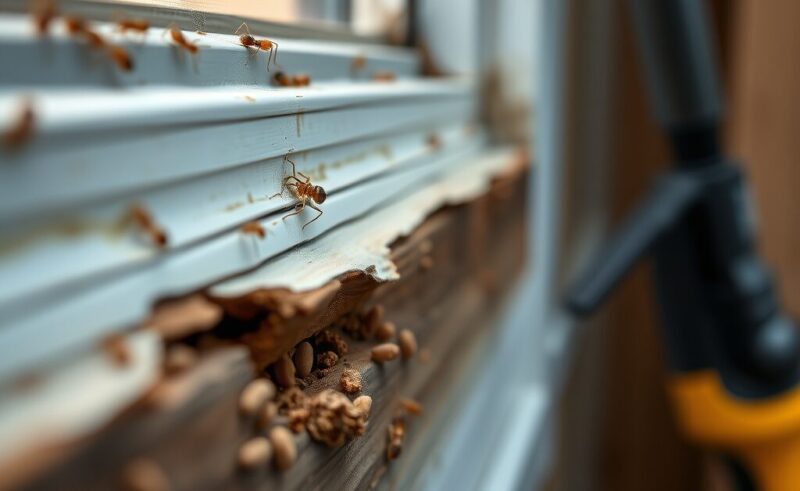
Homeowners, buyers, and property managers routinely encounter soft baseboards, discolored drywall, or warped flooring and face the same question: is this termites, water, or both? The confusion is reasonable. Both problems attack wood and drywall in hidden spaces—wall voids, subfloors, attics, crawlspaces—and both produce damage that becomes visible only after the underlying structure has already weakened. Surface clues overlap: blistering paint can signal subterranean termite activity or trapped moisture; sagging ceilings can mean drywood frass accumulation or a roof leak; hollow-sounding wood can result from insect feeding or fungal decay.
What you can do safely is observe and document surface evidence—texture changes, odor, the presence of mud tubes or frass, moisture sources, and the pattern of damage—then route that information to the right professional. What you cannot do from visual inspection alone is determine the full extent of hidden damage, confirm active infestation, distinguish between fungal rot and termite hollowing in concealed framing, or know whether a single cause or combined causes are at work. According to the National Pest Management Association, termites cause an estimated $5 billion in U.S. property damage annually, and much of that cost stems from delayed detection when homeowners mistake early termite clues for cosmetic water issues or assume a resolved leak has also resolved structural damage.
A useful termite damage vs water damage: how to avoid misreading the clues decision starts with the details that change the answer: what evidence is visible, where it appears, whether access is limited, what treatment or warranty records already exist, and which parts of the property still need a licensed onsite review.
Core Variables That Change the Answer
Distinguishing termite damage from water damage depends on six variables that shift what you can see, when you see it, and what it means for your next step. These aren’t abstract factors—they directly change whether visual clues point to insects, moisture, or both working together.
Wood moisture content matters first. Subterranean termites require wood moisture above 15 percent to feed and survive, according to USDA Forest Service research. Water-damaged wood often sits in that same range or higher. When you find soft, discolored framing in a bathroom wall or under a kitchen sink, moisture created the conditions, but termites may have followed. A moisture meter reading above 20 percent suggests active water intrusion; readings between 15 and 20 percent with visible insect evidence point toward termite activity in previously wet wood. Drywood termites operate differently—they extract moisture from the wood itself and tolerate humidity as low as 10 percent, so you can find drywood damage in attics, window frames, and furniture far from any plumbing.
Access paths separate the two causes. Subterranean termites build mud tubes from soil to wood, traveling through cracks in concrete, along foundation piers, or up exterior stucco. Water damage spreads from leaks, condensation, or exterior drainage problems. If you see damage in a second-floor bedroom with no plumbing above and no roof leak, check for drywood termite pellets or kickout holes before assuming water. If you find buckling baseboards below a bathroom, look for both supply-line leaks and mud tubes on the foundation wall below.
Foundation type changes inspection priorities. Homes on concrete slabs limit subterranean termite entry to expansion joints, utility penetrations, and exterior perimeters, but they also trap moisture under flooring when grading or vapor barriers fail. Pier-and-beam foundations expose more wood to soil contact and make mud tubes easier to spot during crawlspace inspections. Basements concentrate both risks—termites enter through foundation cracks, and water seeps through the same openings.
Evidence age tells you whether the problem is active. Fresh termite mud tubes feel moist and pliable; old tubes crumble when touched. Termite frass remains dry and pellet-shaped regardless of age, while water stains darken over time and may show mold growth. Wood that compresses under light pressure but shows no insect exit holes or frass usually points to water damage alone. Wood that sounds hollow when tapped, shows surface blistering, and sits near mud tubes or pellet piles indicates termite activity, even if water damage occurred first.
Transaction context raises the stakes. During a pre-sale termite inspection, inspectors document both conditions separately because lenders, buyers, and state disclosure laws treat them differently. Termite damage triggers treatment requirements and repair negotiations; water damage signals maintenance issues and potential mold liability. If you’re buying a home and the inspection report lists both, request documentation of the water source, proof the leak is repaired, and a treatment proposal with a warranty that covers re-infestation. Our Damage Repair Cost Calculator separates structural repair estimates from treatment costs so you can negotiate each line item accurately.
Local termite pressure and species mix determine how aggressively moisture problems turn into insect problems. In coastal areas and the Gulf South, Formosan subterranean termites establish aerial colonies inside water-damaged walls without ground contact, according to NPMA field guidelines. In the desert Southwest, drywood termites dominate, and water damage alone rarely invites subterranean activity. Your county extension office and state agriculture department publish regional species maps that clarify which risks apply to your property and what evidence to prioritize during self-inspection.
What You Can Document—and What Requires a Licensed Evaluation
Homeowners can photograph surface conditions, measure visible sag, note moisture patterns, and record the location of damaged wood. That documentation helps professionals understand the timeline and scope during an inspection. What homeowners cannot do is determine whether structural framing remains load-bearing, whether concealed joists have lost cross-sectional integrity, or whether damage originated from subterranean termites, drywood colonies, or prolonged water intrusion. Those conclusions require removal of finish materials, moisture meters, probing tools, and training in wood-destroying organism behavior.
Visible damage—blistered paint, sagging drywall, soft baseboards—signals a problem but does not reveal the full extent. Termites hollow wood from the inside, leaving a thin shell that may look intact until pressed. Water damage often shows staining, but the framing behind drywall may be dry if the leak was repaired months earlier. A termite inspection includes probing accessible wood, checking crawlspaces and attics, and using moisture meters to distinguish active leaks from old water marks. If the inspector finds both conditions, the report will note each and recommend separate remediation steps.
Repair planning changes the inspection path when a homeowner already knows that a bathroom subfloor or porch beam needs replacement. In that case, the question shifts from “Is there damage?” to “What caused it, is the cause still active, and how far does it extend?” A general contractor may open walls to assess framing, but a licensed pest-control operator or structural pest inspector determines whether termites are present, identifies the species, and confirms whether treatment is required before or during the rebuild. Skipping that step risks sealing new materials over an active colony or untreated soil.
Structural conclusions—whether a beam can carry load, whether a sill plate must be replaced, whether a floor system needs sistering or full removal—fall outside the scope of pest inspections. A termite report documents the presence, species, and extent of infestation and notes which structural members show damage. A structural engineer or licensed contractor translates that information into repair specifications, load calculations, and code-compliant rebuilds. In transactions, lenders and title companies often require both reports before approving financing or issuing policies.
Homeowners contribute most by providing access to crawlspaces, attics, and utility areas; clearing stored items from suspected zones; and sharing maintenance records that show when leaks occurred or when prior treatments were performed. Accurate history helps inspectors distinguish new activity from old damage and reduces the chance that cosmetic repairs mask ongoing problems. Use the Damage Repair Cost Calculator to estimate replacement costs once the inspection defines the scope, but defer all structural and treatment decisions to qualified professionals working from direct observation.
What You Can Do Before Calling a Professional
You cannot diagnose termites or water damage remotely, and you should not attempt structural repairs or apply pesticides without proper licensing. What you can do is document visible clues, gather relevant records, and prepare questions that help a licensed inspector work efficiently when they arrive.
Start by photographing any damaged wood, staining, or surface changes you’ve noticed. Use a flashlight to capture detail in dim areas like crawl spaces, basements, and attic corners. Take wide shots that show the location within the room, then close-ups of texture, color, and any cracking or sagging. Note the date and time of day on each photo—moisture patterns can shift between morning and evening, and seasonal humidity affects both termite activity and water intrusion.
Check your home maintenance records for past plumbing work, roof repairs, gutter replacements, or foundation waterproofing. If you’ve had previous termite inspections or treatments, locate those reports. Cross-reference the dates: did the visible damage appear before or after a known leak, a heavy rain event, or a treatment cycle? This timeline helps inspectors distinguish between ongoing problems and resolved issues that left cosmetic marks.
Prepare a short list of questions based on what you’ve observed. Ask the inspector whether the damage pattern suggests active termites, past infestation, chronic moisture, or a combination. Request clarification on which repairs are urgent and which can wait. If the inspector finds both termites and water intrusion, ask which problem should be addressed first—treatment timing often depends on whether the wood is too wet to accept certain termiticides, and some moisture sources must be corrected before treatment can succeed.
Understand the limits of visual inspection. Termites and water both move through hidden pathways—inside walls, beneath flooring, above ceilings. Surface clues guide the search, but they rarely tell the whole story. Licensed inspectors use moisture meters, thermal imaging, and probing tools to measure what you cannot see. If the inspector recommends further evaluation—such as opening a wall section or scheduling a follow-up visit after a rain event—that recommendation reflects the complexity of the damage, not a failure of your documentation.
Use the Damage Repair Cost Calculator to estimate repair scope once you have an inspection report in hand. The calculator accounts for both termite-related wood replacement and moisture-related structural work, helping you compare contractor bids and plan repair sequences. For more detail on what inspectors look for and how reports are structured, see the termite inspection guide. If you need help interpreting findings or understanding treatment options, the TermiteHQ expert team provides context drawn from field experience and university extension research, following the standards outlined in our source methodology and expert review policy.
How to Use This Termite Information Safely
Online termite education can help you organize questions, understand written findings, and compare next-step variables, but it does not replace a licensed onsite inspection, pesticide-label directions, structural advice, real-estate compliance review, or local regulatory judgment.