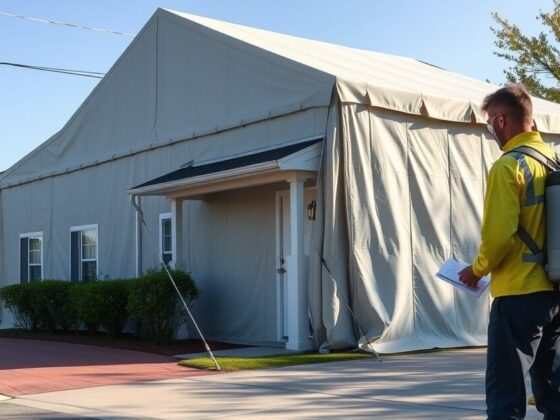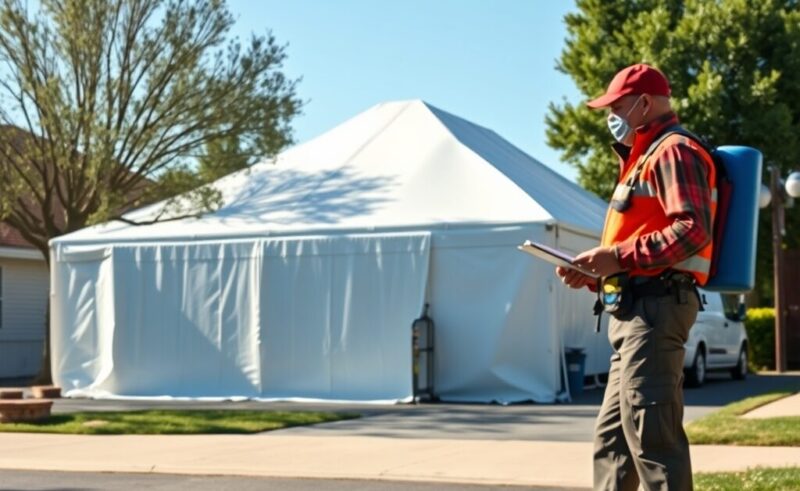
Fumigation and local treatment represent different strategies, not interchangeable options. Fumigation—whole-structure tenting with sulfuryl fluoride or methyl bromide—penetrates all wood in the envelope and kills termites present at the time of treatment, but it leaves no residual protection and requires complete evacuation, typically for 24 to 72 hours. Local treatments apply termiticide, foam, or heat to specific zones, preserve occupancy in most cases, and can establish long-term soil barriers against subterranean species, but they depend on accurate identification of infestation boundaries and accessible treatment points.
Drywood termites, common in coastal and southern states, often prompt fumigation when colonies occupy wall voids, attic framing, or furniture that cannot be individually treated without extensive demolition. Subterranean termites, which forage from soil, are usually managed with liquid termiticides applied to the soil perimeter, bait stations, or foam injected into galleries, unless the infestation has spread into inaccessible structural cavities or when soil treatment alone cannot reach active feeding sites inside the building.
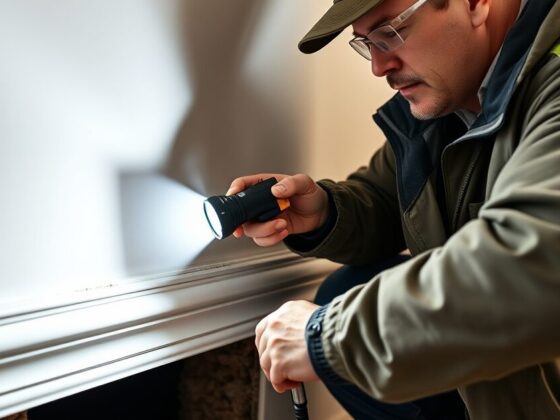
You can observe kick-out piles of fecal pellets, mud tubes on foundation walls, or hollow-sounding wood, but you cannot determine colony size, species with certainty, or whether termites occupy hidden framing members without opening walls or probing with specialized tools. A licensed inspection uses moisture meters, acoustic sensors, and invasive probing to map activity, identify species by soldier head shape and wing venation, and assess whether treatment can be confined to known areas or must address the entire structure. The inspector’s report should specify infestation extent, recommend treatment type with supporting rationale, and disclose access limitations that affect treatment reliability—information that determines whether fumigation, local treatment, or a combination is appropriate for your property.
## Core variables that change the answer
The choice between fumigation and local treatment depends on measurable conditions at the property, not preference or marketing. Professionals evaluate infestation scope, termite species, structural access, moisture patterns, and whether the property is entering a sale or refinance.
Infestation scope matters most. A single subterranean colony feeding at one bathroom wall typically receives local liquid treatment or bait stations. Multiple active sites across disconnected areas—garage framing, kitchen subfloor, bedroom window trim—suggest either widespread subterranean pressure or drywood activity that may justify fumigation. When mud tubes appear on opposite sides of a house or frass piles emerge from several rooms, local treatment becomes harder to defend as complete.
Species drives method compatibility. Subterranean termites build colonies in soil and require ground-based treatment: liquid termiticides along the foundation perimeter, interior injection at active sites, or bait systems that intercept foragers. Drywood termites live entirely inside wood, leave no ground connection, and often occupy attic framing, roof eaves, or furniture that liquid barriers cannot reach. Fumigation with sulfuryl fluoride penetrates all wood simultaneously, which is why drywood infestations in California, Florida, and coastal markets often default to tenting when multiple colonies are suspected.
Structural access limits local treatment. Slab foundations with no crawlspace prevent direct soil treatment under living areas. Post-tension slabs prohibit drilling in many zones. Stucco exteriors, tile floors, and finished basements raise the cost and invasiveness of reaching the soil-wood interface. When access requires removing hardscape, cutting through expensive finishes, or working around utilities, fumigation can become the simpler path if the infestation is already widespread.
Moisture and conducive conditions change durability. Local treatment works when the attractant—a plumbing leak, poor grading, wood-to-soil contact—can be identified and corrected. If moisture problems persist or the property sits in high-pressure termite geography with dense colony populations, reinfestations may occur faster than warranty periods cover. Fumigation eliminates current colonies but provides no residual soil barrier, so properties with ongoing moisture issues often need both: fumigation to clear active drywood infestations and a liquid perimeter treatment or bait system to prevent subterranean reentry.
Real estate transactions compress timelines and shift liability. Purchase agreements in termite-active states often require Section 1 clearance, meaning all active infestations and damage must be treated before close. When inspection reports list multiple treatment areas or drywood evidence in inaccessible framing, buyers and lenders may require fumigation to ensure complete clearance rather than risk missed colonies. Sellers weighing cost against deal risk frequently choose the method that satisfies all parties and avoids re-inspection delays.
Treatment history and warranty language also matter. A property fumigated three years ago that now shows new subterranean activity needs local treatment and moisture correction, not another tent. Conversely, a home treated locally twice in five years for recurring drywood swarms may need fumigation to address hidden colonies the prior treatments missed. Warranty terms vary: some cover retreatment at no cost, others prorate or exclude certain species and conditions.
How Treatment Mechanisms Differ and Why No Single Method Fits Every Case
Termite treatment methods differ in how they reach colonies, where they can be applied, and what structural conditions they require. Fumigation uses sulfuryl fluoride gas to penetrate all wood inside a sealed structure, killing termites present during the exposure period—typically 18 to 24 hours under tent. Liquid soil termiticides create chemical barriers in the ground around and beneath foundations, blocking foraging tunnels and killing termites that contact treated zones. Bait systems rely on cellulose stations monitored over months; when termites feed, they carry slow-acting insect growth regulators back to the colony. Localized treatments inject termiticide foam, dust, or liquid directly into galleries, wall voids, or damaged wood where activity is confirmed. Each method addresses different infestation patterns, and no approach works universally across all structures or termite species.
Fumigation reaches drywood termites inside furniture, attic framing, and inaccessible wall cavities without drilling or trenching. It does not leave residual protection; termites can re-infest the day after aeration if new colonies arrive or untreated wood is introduced. The process requires vacating the building, removing or sealing food and medicine, and coordinating with a licensed fumigation company that follows dosage calculations on the product label. Subterranean termites, which nest in soil and forage into structures, are not effectively controlled by fumigation because the gas does not reach below-grade colonies or treat the soil interface where re-entry occurs.
Liquid termiticides—such as fipronil, imidacloprid, or chlorantraniliprole formulations—are applied to soil along foundation perimeters, beneath slabs through drilled holes, and around plumbing penetrations. These products provide multi-year residual barriers when applied at label rates and adequate soil saturation. They work against subterranean species that must travel through treated zones to reach wood. Liquid barriers cannot treat drywood colonies living entirely above ground, and they require access to soil or crawlspace perimeters. Installation involves trenching, rodding, or subslab injection, and some formulations are labeled as repellent (termites avoid treated soil) or non-repellent (termites contact and transfer the active ingredient before dying).
Bait systems use in-ground stations or above-ground devices installed around the structure. Termites feed on cellulose matrix treated with insect growth regulators like hexaflumuron or noviflumuron, which disrupt molting and gradually eliminate the colony. Baiting requires regular monitoring—often quarterly—and works best when foraging pressure is consistent. The method avoids soil treatment and chemical application inside living spaces, but colony elimination may take several months, and not all infestations will recruit to bait stations if natural food sources are abundant or accessible.
Localized treatments address isolated infestations in specific timbers, door frames, or wall sections. Applicators drill small access holes and inject foam, dust, or liquid termiticide directly into galleries. This approach limits chemical use and avoids whole-structure procedures, but it depends on accurate detection of all active zones. If hidden colonies exist elsewhere, localized treatment will not prevent continued damage. It is most appropriate when infestation is confirmed in a single area, access is available, and the species involved does not require soil or perimeter treatment.
No treatment method is universally superior. The appropriate choice depends on termite species, infestation extent, structural access, soil conditions, occupant sensitivity, and whether residual protection or immediate eradication is the priority. Licensed inspectors evaluate these variables during the assessment and recommend methods that align with label requirements and site-specific conditions. For detailed comparisons of cost, timeline, and application scenarios, see the Treatment Comparison tool and the broader Treatment and Prevention Methods guide.
What You Can Do Before Calling a Professional
You cannot diagnose the extent of an infestation or choose between fumigation and local treatment on your own, but you can gather useful information that will make your first conversation with a licensed inspector more productive. The goal is to document what you see, collect records that affect treatment decisions, and prepare questions that reflect your property’s actual conditions.
Start by photographing visible evidence. Take clear images of mud tubes on foundation walls, wood that sounds hollow when tapped, frass piles near baseboards, or blistered paint on window frames. Note the location of each sign—foundation perimeter, attic framing, garage studs—and the date you first noticed it. If you see swarming insects, capture a few in a sealed plastic bag or take close-up photos; wings left on windowsills are also helpful for species identification. Do not disturb damaged wood or pry open walls; you may destroy evidence the inspector needs to assess colony activity and entry points.
Gather your property records. Pull any past termite inspection reports, treatment invoices, or warranty documents. If you bought the home within the last few years, review the pest-inspection addendum from escrow; it may show prior infestations, treatment dates, and whether a monitoring system was installed. If you have architectural drawings or remodeling permits, note any crawl-space conversions, additions, or slab-on-grade sections—these details affect access and treatment logistics. For condominiums or townhomes, check your HOA documents for shared-wall treatment protocols and responsibility clauses.
Prepare a short list of questions based on what you found. Ask the inspector whether the visible damage suggests a localized colony or widespread activity, which treatment method they recommend and why, what preparation steps you will need to complete, and how long the process takes from start to clearance. If you are under contract to sell or refinance, ask whether the timeline fits your closing date and whether a completion certificate will satisfy your lender or buyer. If you have pets, young children, or medical sensitivities, ask about re-entry intervals and ventilation requirements for each option.
Understand the boundaries of self-assessment. You cannot see inside walls, under slabs, or into subterranean galleries. You cannot determine whether an old mud tube is still active or abandoned. You cannot measure the chemical concentration needed for soil treatment or calculate the gas exposure time required for whole-structure fumigation. These judgments require a licensed inspector with moisture meters, borescopes, and knowledge of local termite behavior. Use the Treatment Comparison tool to preview the decision variables, but defer the final recommendation to a professional who has walked your property and reviewed your documentation.