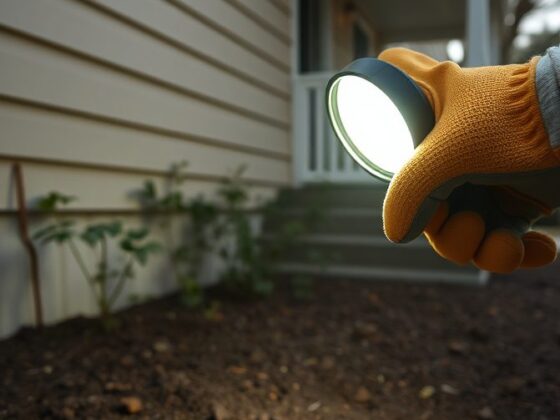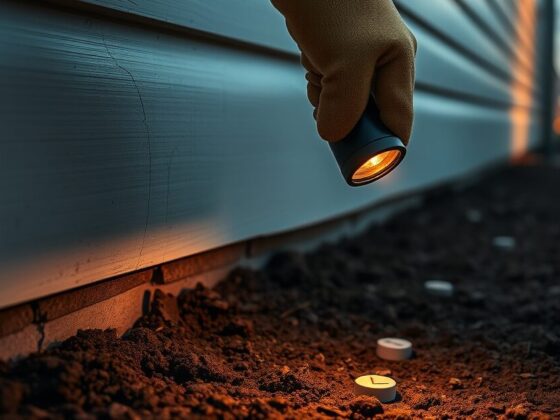
Termite evidence falls into three categories: structural changes you can feel or hear, visible insects or insect byproducts, and environmental conditions that support colony activity. Subterranean termites—responsible for roughly 80% of U.S. termite damage according to the National Pest Management Association—rarely expose themselves to air, so most signs appear at the soil-wood interface or along hidden pathways inside walls. Drywood termites work entirely within wood and produce distinctive fecal pellets that accumulate below kickout holes. Dampwood termites require wood moisture above 20% and leave larger, paste-like frass mixed with wood fragments.
Homeowners can safely document visible evidence with photos, measurements, and notes about location and timing, then use the Termite Risk Score tool to understand whether immediate inspection is warranted or seasonal monitoring is appropriate. You cannot determine treatment need, species identity, or infestation age from photos alone. Wood that sounds hollow when tapped may indicate years of concealed feeding; a single pair of discarded wings may signal a new colony attempt that failed. Both scenarios require different responses, and only a inspector licensed under your state’s structural pest control or agriculture department can make that distinction during a physical examination that includes probing wood, inspecting crawlspaces, and checking moisture levels with calibrated meters.
If you’re under contract to buy or sell property, most states require seller disclosure of known termite activity, and many lenders require a clear structural pest inspection within 30–90 days of closing. In that context, even ambiguous signs justify a pre-inspection before listing or making an offer. For existing homeowners, the decision depends on sign type, your region’s termite pressure, and whether you’ve had an inspection within the past 12 months. The sections below walk through each evidence category, explain what you can observe safely, and clarify when professional evaluation moves from optional to necessary.
What Changes the Meaning of a Termite Sign
The same visible clue—mud tubes on a foundation wall, discarded wings on a windowsill, or hollow-sounding wood—can mean different things depending on species, moisture conditions, access points, and how long the evidence has been present. A subterranean termite mud tube on an exterior concrete stem wall in Georgia during spring swarm season is a different scenario than a single discarded wing found in a second-floor bathroom in Arizona, where drywood termites are common. Understanding these variables helps you assess urgency and prepare useful information before calling a professional.
Species drives behavior and risk. Subterranean termites—including Reticulitermes species across most of the U.S. and Coptotermes formosanus (Formosan) in the Southeast and Gulf Coast—require soil contact and build mud tubes to travel above ground. Drywood termites (Incisitermes and Cryptotermes species) live entirely inside wood and leave small piles of fecal pellets instead of mud. Dampwood termites prefer very wet wood and are less common in structures. If you see mud tubes, you’re likely dealing with subterranean activity; if you see pellet piles that look like sand or coffee grounds, suspect drywood termites. The species identification guide provides visual comparisons.
Moisture and access change the timeline. Subterranean termites move faster in consistently damp conditions—crawl spaces with poor ventilation, slab edges with irrigation overspray, or wood-to-soil contact from landscaping. A mud tube on damp wood near a leaking gutter represents active conditions; a dry, abandoned tube on a foundation wall may indicate old activity or a colony that moved after treatment. Drywood termites don’t need moisture but do need direct wood access, so pellet piles below attic framing, window sills, or furniture indicate localized colonies.
Foundation type and construction age also matter. Homes on concrete slabs in high-pressure regions like Florida, Louisiana, or coastal California face different risks than pier-and-beam homes in Texas or basements in the Mid-Atlantic. Slab homes often show signs at expansion joints, plumbing penetrations, or along exterior perimeters. Crawl-space homes may show tubes on piers, floor joists, or subfloor sheathing. Older homes with untreated wood and no termite history face higher risk than newer construction with pre-treated lumber and an active monitoring system.
Real-estate context changes the response. If you’re buying a home and the inspection report notes evidence of prior termite activity, you need to know whether treatment occurred, whether a warranty transferred, and whether the damage was repaired. If you’re selling, visible signs can delay closing or trigger buyer requests for re-inspection and treatment proof. If you’re a long-term homeowner, the same evidence might prompt monitoring rather than immediate whole-structure treatment, depending on local pressure and your property’s risk profile.
Treatment history and warranty language also shift decisions. A mud tube found during an annual inspection under an active monitoring contract is handled differently than the same tube discovered by a homeowner with no service history. Some warranties cover re-treatment and damage repair; others cover re-treatment only. Knowing what documentation exists—and what it actually promises—helps you evaluate whether new evidence represents a contract claim or a separate issue.
What You Can Do Before Calling a Professional
If you’ve found something that looks like termite activity, a few practical steps help you document what you’re seeing, organize relevant property records, and prepare useful questions for an inspector. These steps don’t replace a professional inspection, but they make the conversation more efficient and help you understand what the inspector will need to evaluate.
Document What You See
Take clear, close-up photos of any visible damage, mud tubes, frass piles, or swarmer wings. Include a coin or ruler in the frame for scale. Note the location—interior wall, exterior foundation, garage framing, deck post—and whether the area feels damp or has a history of leaks. If you found swarmers, try to capture a few intact specimens in a sealed plastic bag or pill bottle; wing venation and body segmentation help inspectors distinguish subterranean termites from drywood species or carpenter ants.
Avoid disturbing mud tubes or damaged wood beyond what’s necessary to photograph them. Inspectors often use the pattern and condition of tubes to estimate colony activity and treatment scope. Breaking apart large sections of infested wood can also release more moisture into wall cavities, which may complicate the assessment.
Gather Property Records
Collect any past termite inspection reports, treatment records, or warranties you received at closing or from previous pest-control services. These documents show whether the property has a treatment history, what products were used, when the last inspection occurred, and whether a monitoring or renewal contract is still active. If you’re preparing for a real-estate transaction, your agent or title company may already have copies in the file.
Robert Trawick, a licensed inspector who has worked on pre-sale evaluations across the Southeast, notes that buyers and sellers often assume a clean report from five years ago means the home is still clear. Termite activity changes, and older reports don’t cover new construction, landscape changes, or shifts in soil moisture. Bringing those records to the inspection helps the professional understand what’s been done and what still needs attention.
Prepare Questions
Write down what you want to know: Is this active? How widespread is it? What treatment options fit this situation? What does follow-up look like? If you’re comparing bids, ask each company to explain their process, product choice, warranty terms, and whether they’ll provide a diagram marking treated zones. Our treatment comparison guide covers the decision variables that matter most when you’re weighing liquid, bait, or fumigation approaches.
Understand the Limits of Remote Advice
No photo, forum post, or online tool can replace an on-site inspection. Termite species, infestation extent, structural access, soil type, and local regulation all shape the treatment plan. If you’re uncertain about risk level before scheduling an inspection, the Termite Risk Score tool gives you a preliminary sense based on location, construction type, and visible clues—but it’s a starting point, not a diagnosis.
When Professional Judgment Changes the Outcome
Most termite signs—mud tubes, frass piles, hollow-sounding wood—point clearly toward an active problem, but they don’t tell you how far the colony has spread, whether structural members are compromised, or which treatment method will work in your soil type and construction style. A licensed inspector brings calibrated moisture meters, borescopes, sounding tools, and years of pattern recognition that separate cosmetic damage from load-bearing risk.
The decision point shifts from “Do I have termites?” to “What’s failing, where, and what happens if I wait three months?” when you’re closing on a house, refinancing, or facing a seller who disputes your findings. Robert Trawick, a North Carolina-based inspector who has reviewed thousands of pre-sale reports, notes that buyers often misread old, treated damage as new activity, or dismiss live tubes because they’re small. In real-estate transactions, timing matters: a two-week delay for a second opinion can mean a missed rate lock or a seller who walks. A professional report with species identification, treatment recommendation, and damage-extent mapping gives all parties a shared reference and keeps negotiations from stalling on conflicting amateur photos.
High-stakes moments include discovering swarmers during a final walkthrough, finding mud tubes inside finished walls during renovation, or noticing sagging floors in a crawlspace you can’t safely enter. In each case, the next step isn’t more online research—it’s a same-week inspection that clarifies whether you’re looking at subterranean tunnels requiring soil treatment, drywood galleries needing fumigation, or dampwood colonies that will leave once a plumbing leak is fixed. The inspector’s species call determines the treatment class, and the treatment class determines cost, timeline, and whether you can stay in the house.
If you’re weighing bait stations against liquid termiticide or deciding whether to tent a historic home, the professional’s site-specific judgment—soil pH, footing access, nearby wells, landscaping obstacles—matters more than any general-advice article. Our Expert Team and Expert Review Policy explain how TermiteHQ incorporates field experience into educational content, but we do not perform inspections or write treatment specifications. For that, you need a state-licensed operator who will stake their bond and liability coverage on the recommendation. Use the Termite Risk Score to understand your baseline exposure, then schedule the inspection that turns visible clues into a documented action plan.
Next Steps, Tools, and Common Questions
If you’ve identified one or more signs—mud tubes, frass piles, hollow-sounding wood, discarded wings, or visible damage—the next step is a professional inspection. TermiteHQ’s Termite Risk Score helps you assess whether your property’s location, construction type, soil contact points, and moisture history place you in a higher-risk category, which can inform how quickly you schedule that inspection and what questions to ask the inspector.
For a fuller picture of what inspectors look for and how they document findings, visit the termite inspection guide. If you’re comparing treatment options after confirmation, the treatment comparison tool walks through liquid barriers, bait systems, and fumigation in plain terms. Cost context is available through the treatment cost estimator and damage repair cost calculator.
TermiteHQ draws on EPA pesticide-label summaries, university extension bulletins (University of Florida, Texas A&M, UC Agriculture and Natural Resources), NPMA professional standards, and state agriculture department licensing frameworks. Our source methodology explains how we evaluate field studies, product data, and inspector reports. Content is reviewed by licensed professionals, including contributions from Robert Trawick when real-estate transaction context or report interpretation is involved; see the expert review policy for details.
TermiteHQ is an educational resource. We do not perform inspections, sell treatments, or replace the judgment of a licensed pest-control operator, structural engineer, or real-estate professional. Always follow pesticide-label directions, local building codes, and your state’s licensing requirements.
Frequently Asked Questions
Can I confirm termites without a professional inspection?
You can observe physical signs—mud tubes, frass, wings, or damage—but species identification, colony size, and treatment planning require a licensed inspector with moisture meters, probes, and experience reading structural clues.
How quickly should I act after finding a sign?
Subterranean termites work year-round in warm climates; drywood colonies grow more slowly. Schedule an inspection within one to two weeks if you see active tubes or fresh frass, sooner if you’re in escrow or have known moisture problems.
Do all signs mean active infestation?
No. Old mud tubes may be abandoned, discarded wings can appear after a brief swarm with no established colony, and staining may come from past leaks. An inspector distinguishes active feeding from historical evidence.
Are some signs more urgent than others?
Live swarmers indoors, soft or blistered wood near soil contact, and mud tubes with moist interiors signal active feeding. Surface frass and wings on windowsills warrant inspection but may reflect slower drywood activity or a swarm that did not colonize.
What if I see signs but no damage yet?
Early detection is ideal. Termites hollow wood from the inside, so visible damage lags behind colony growth. An inspection can locate feeding sites, moisture sources, and conducive conditions before structural harm becomes costly.