Why Termite Type Determines Treatment and Cost
Termite species biology dictates where the colony lives, how it accesses wood, and which treatment methods work. Subterranean termites nest in soil and require liquid termiticides, bait stations, or physical barriers installed at the soil line. Drywood termites nest entirely within wood members and require fumigation, localized heat, or spot treatments inside the structure. Dampwood termites occupy moisture-damaged wood and often resolve when the moisture source is corrected.
Misidentifying the termite type leads to ineffective treatment. A soil termiticide applied for a drywood infestation wastes money and delays the correct response. A fumigation proposal for subterranean termites may indicate the inspector misread field signs or the colony type. Licensed inspectors use swarmers, soldier head shape, fecal pellet form, and mud-tube presence to assign species during the termite inspection, and that assignment drives the treatment plan and cost estimate.
Subterranean Termites: Soil-Dependent Colonies and Mud Tubes
Subterranean termites build their primary nest in soil and forage through underground tunnels or above-ground mud tubes to reach wood. Workers cannot survive prolonged exposure to open air; they construct protective tubes from soil, saliva, and feces to maintain humidity during travel. Mud tubes appear on foundation walls, piers, slab edges, and inside wall voids. Tubes range from pencil-width exploratory lines to highway-width foraging tunnels.
The Eastern subterranean termite (Reticulitermes flavipes) is the most widespread species, active from the Atlantic coast to the Great Plains and north into southern Canada. Formosan subterranean termites (Coptotermes formosanus) occupy the Gulf Coast and lower Atlantic states, form larger colonies, forage more aggressively, and build above-ground carton nests when moisture is available inside wall voids or attics. Western subterranean termites (Reticulitermes hesperus) dominate California and the Pacific Northwest.
Subterranean swarmers emerge in spring or fall, depending on species and latitude. Eastern subterranean swarmers are dark brown to black with translucent wings of equal length. Formosan swarmers are yellowish-brown and swarm at dusk, attracted to lights. Swarmers shed wings after a brief flight, leaving piles of detached wings near windowsills, door frames, or exterior lights. The presence of swarmers indoors indicates an active colony nearby, often within the structure or immediately adjacent soil.
Subterranean termites consume spring wood preferentially, leaving behind a hollowed, layered appearance with soil or mud packed into galleries. Wood sounds hollow when tapped, and a screwdriver or probe penetrates easily. Damage progresses along the grain and often follows moisture gradients, concentrating near plumbing penetrations, HVAC condensate lines, or roof leaks.
Treatment for subterranean termites includes liquid termiticide barriers applied to soil around the foundation perimeter and under slabs, bait station systems that deliver slow-acting toxicants to foraging workers, and physical barriers such as stainless-steel mesh or basaltic termite shields installed during construction. The treatment comparison tool provides cost and method details based on foundation type and infestation severity.
Drywood Termites: No Soil Contact and Diagnostic Pellets
Drywood termites infest dry, sound wood without requiring soil contact or external moisture. Colonies live entirely within the wood they consume, including framing lumber, furniture, hardwood floors, window frames, and decorative trim. Drywood termites extract moisture from the wood itself and produce dry, hard fecal pellets that accumulate below exit holes or inside galleries.
Fecal pellets are the most reliable field sign. Pellets measure approximately one millimeter long, have six concave sides, and range in color from tan to dark brown depending on the wood species consumed. Pellets pile up below kick-out holes—small, round openings workers create to clear waste from galleries. Homeowners often mistake pellet piles for sawdust, but drywood pellets are uniform in size and shape, while sawdust is irregular and fibrous.
Western drywood termites (Incisitermes minor) are the primary structural pest along the California coast and into Arizona and Nevada. Southeastern drywood termites (Incisitermes snyderi) occur in Florida and Gulf Coast states. Powderpost drywood termites (Cryptotermes species) infest tropical hardwoods and imported furniture but rarely establish in structural lumber in temperate climates.
Drywood swarmers emerge during daylight hours in late summer and fall, often after the first warm day following cooler weather. Swarmers are larger than subterranean swarmers, with reddish-brown to dark brown bodies and wings that break off cleanly at a basal suture, leaving small wing stubs. Swarmers are attracted to light-colored surfaces and often land on windowsills, patios, or vehicles.
Drywood colonies grow slowly, taking several years to reach a size that produces noticeable damage. A single colony may contain a few hundred to a few thousand individuals, far smaller than subterranean colonies. However, multiple independent colonies can infest the same structure, each originating from a separate swarmer pair.
Treatment for drywood termites includes whole-structure fumigation with sulfuryl fluoride gas, localized heat treatment raising wood temperature above 120°F for a sustained period, spot treatments using injectable foams or dusts for accessible galleries, and wood replacement for heavily damaged members. Fumigation is the only method that reaches hidden colonies throughout the structure. Heat and spot treatments work when the infestation is localized and accessible. The treatment cost estimator provides pricing ranges based on structure size and treatment method.
Dampwood Termites: Moisture-Driven Infestations
Dampwood termites require wood with high moisture content, typically above 20 percent. They infest logs, stumps, dead trees, and structural wood in contact with soil or affected by plumbing leaks, roof leaks, or condensation. Dampwood termites are larger than subterranean or drywood termites, with soldiers reaching up to three-quarters of an inch in length.
Pacific dampwood termites (Zootermopsis angusticollis) are common along the Pacific Coast from Northern California to British Columbia. Nevada dampwood termites (Zootermopsis nevadensis) occupy mountain and high-desert regions. Florida dampwood termites (Neotermes castaneus) infest coastal and subtropical wood in the Southeast.
Dampwood termites do not build mud tubes and rarely infest sound, dry structural wood. Infestations concentrate in wood touching soil, wood with chronic moisture exposure, or wood in crawlspaces with poor ventilation and high humidity. Galleries are large, clean, and free of soil or pellets, though fecal material may be present as a paste in some species.
Swarmers are large, dark brown to reddish, and emerge during late summer and fall. Swarmers are often found near exterior lights or windows after evening flights. Wings are long and shed after landing, leaving piles similar to subterranean swarmer wings but noticeably larger.
Treatment for dampwood termites focuses on moisture correction. Repairing leaks, improving drainage, increasing crawlspace ventilation, and replacing damaged wood often eliminates the infestation without chemical treatment. Localized treatments with borates or other wood preservatives can protect vulnerable wood in high-moisture areas. Structural fumigation is rarely necessary unless the infestation is widespread and moisture correction alone is insufficient.
How to Identify Termite Type from Field Signs
Accurate identification begins with visible evidence. Mud tubes on foundation walls, piers, or slab edges indicate subterranean termites. Tubes are constructed from soil particles and appear as raised, hardened lines. Breaking a tube open reveals a hollow interior; active tubes are quickly repaired by workers within hours to days.
Fecal pellet piles below wood surfaces or inside furniture indicate drywood termites. Pellets are hard, dry, and uniform. Kick-out holes are small, round, and clean-edged, often found on horizontal surfaces where gravity allows pellets to fall.
Large galleries in moist wood, absence of mud tubes or pellets, and proximity to moisture sources indicate dampwood termites. Wood feels soft, spongy, and often shows fungal staining or decay alongside termite damage.
Swarmers provide direct identification. Collect several intact specimens in a sealed plastic bag or vial with rubbing alcohol. Note the time of day, season, and location of the swarm. Subterranean swarmers are small, dark, and emerge in spring or fall. Drywood swarmers are larger, reddish-brown, and emerge during daylight in late summer or fall. Dampwood swarmers are the largest and emerge in late summer evenings.
Soldier termites have distinctive head shapes. Subterranean soldiers have rectangular heads with large mandibles. Drywood soldiers have darker, more heavily armored heads with prominent mandibles that point forward. Dampwood soldiers are large with massive heads and powerful mandibles. A licensed inspector uses soldier morphology, swarmer characteristics, and field signs to confirm species during the inspection.
Geographic Distribution and Regional Risk
Termite risk varies by region, climate, and soil type. The USDA Forest Service and university extension services publish termite hazard maps showing infestation probability by county. The Southeast, Gulf Coast, and Southern California face the highest risk from multiple termite species. The Midwest and Mid-Atlantic regions have moderate risk, primarily from Eastern subterranean termites. The Northern Plains, Rocky Mountains, and interior Alaska have low risk due to cold winters and low humidity.
Formosan subterranean termites are established in Hawaii, Southern California, Texas, Louisiana, Mississippi, Alabama, Georgia, Florida, and South Carolina. Formosan colonies are larger, more aggressive, and cause damage faster than native subterranean species. Structures in Formosan-active areas require more frequent inspections and proactive treatment.
Drywood termites are concentrated in coastal California, Southern Arizona, Southern Texas, Florida, and Gulf Coast states. Drywood risk extends inland in desert regions where low humidity does not limit their survival. Structures built with susceptible wood species, such as Douglas fir or pine, face higher drywood risk than those built with naturally resistant woods like redwood or cedar heartwood.
Dampwood termites are common in the Pacific Northwest, Northern California, and coastal regions with high humidity and abundant decaying wood. Dampwood infestations in structures are less common than subterranean or drywood infestations but occur where chronic moisture problems exist.
The Termite Risk Score tool estimates infestation probability based on location, structure age, construction type, and prior treatment history. The tool does not replace a licensed inspection but helps property buyers and owners understand baseline risk.
Treatment Implications by Termite Type
Subterranean termite treatment requires soil application or bait systems. Liquid termiticides create a chemical barrier in soil around and under the structure. Non-repellent termiticides allow workers to pass through treated soil and spread the active ingredient to nest mates. Repellent termiticides block foraging routes and force workers to find alternative paths. Bait stations use cellulose lures combined with slow-acting insect growth regulators or metabolic inhibitors. Workers carry bait back to the colony, eventually eliminating the queen and collapsing the colony.
Drywood termite treatment requires access to the wood itself. Fumigation encloses the structure in a gas-tight tent and introduces sulfuryl fluoride, which penetrates all wood members and kills termites at all life stages. Heat treatment raises interior temperatures using propane heaters and fans, killing termites through thermal exposure. Spot treatments inject foam, dust, or liquid termiticides directly into galleries through drilled access holes. Spot treatments work only when the infestation is localized and all colonies are accessible.
Dampwood termite treatment focuses on moisture correction and wood replacement. Chemical treatment is secondary and used only when moisture correction alone does not resolve the infestation. Borate wood preservatives applied to exposed wood surfaces provide long-term protection in high-moisture environments.
Treatment cost varies by termite type, structure size, foundation type, and infestation severity. Subterranean treatments range from $1,200 to $3,500 for liquid barriers and $1,500 to $4,000 for bait systems. Drywood fumigation costs $1 to $4 per square foot of structure, with total costs ranging from $2,000 to $8,000 or more. Localized drywood treatments cost $500 to $2,500 depending on the number of colonies and accessibility. Dampwood treatments cost $300 to $1,500 when limited to moisture correction and wood replacement.
How Inspectors Confirm Termite Type
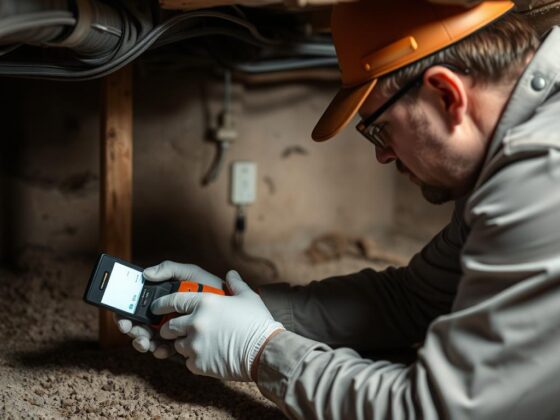
Licensed inspectors use a combination of visual evidence, specimen collection, and probing to confirm termite type. Inspectors examine the foundation, crawlspace, attic, and interior walls for mud tubes, pellet piles, swarmer wings, and damaged wood. Inspectors probe wood with a screwdriver or awl to assess damage depth and gallery structure.
Inspectors collect soldier and worker specimens for morphological identification. Soldiers are easier to identify due to distinct head shapes and mandible structures. Workers are more uniform across species but can be identified by body size, color, and behavior.
Inspectors note environmental conditions, including soil moisture, wood-to-soil contact, plumbing leaks, roof condition, and crawlspace ventilation. Environmental clues help distinguish between termite types and identify conducive conditions that increase infestation risk.
Inspectors document findings in a written report that includes termite type, infestation location, damage severity, conducive conditions, and recommended treatment. The report serves as the basis for treatment proposals and, in real estate transactions, informs buyer and seller negotiations. The signs of infestation guide explains what inspectors look for and how findings are documented.
Questions to Ask Your Inspector
Ask the inspector which termite species was identified and how the identification was confirmed. Request to see collected specimens or photographs of field signs. Ask whether the infestation is active or inactive, and how the inspector determined activity level.
Ask which treatment method is recommended and why. Request an explanation of how the treatment addresses the specific termite type and infestation pattern. Ask whether alternative treatment methods are available and what trade-offs each method presents.
Ask whether conducive conditions were identified and what corrective actions are recommended. Conducive conditions include wood-to-soil contact, moisture intrusion, poor ventilation, landscape irrigation near the foundation, and stored wood or debris near the structure. Correcting conducive conditions reduces re-infestation risk regardless of treatment method.
Ask for a written cost estimate that itemizes labor, materials, and warranty terms. Ask whether the warranty covers re-treatment, damage repair, or both, and what conditions void the warranty. Ask how often follow-up inspections are recommended and whether they are included in the treatment cost.
When to Request a Second Opinion
Request a second inspection if the termite type identification seems inconsistent with field signs. For example, if the inspector identifies drywood termites but the only visible evidence is mud tubes, a second opinion is warranted. If the treatment proposal includes methods not typically used for the identified termite type, seek clarification or a second evaluation.
Request a second opinion if the cost estimate is significantly higher or lower than regional averages. Unusually high estimates may indicate unnecessary treatments or inflated pricing. Unusually low estimates may indicate incomplete treatment coverage or unlicensed work.
Request a second opinion if the inspector pressures immediate treatment without explaining the infestation severity, treatment method, or cost breakdown. Licensed inspectors provide clear, written documentation and allow time for the property owner to review options and obtain additional bids.
Sources and Methodology
This guide synthesizes information from the U.S. Environmental Protection Agency (EPA) consumer resources on termite biology and treatment methods, University of California Agriculture and Natural Resources publications on drywood and subterranean termite identification, University of Florida IFAS Extension termite fact sheets, USDA Forest Service termite hazard maps, and the National Pest Management Association (NPMA) professional standards for termite inspection and treatment. Additional context is drawn from state pesticide-applicator licensing materials and product-label language for registered termiticides.
TermiteHQ does not provide pest-control services, sell treatments, or operate referral programs. This content is educational and does not replace a licensed termite inspection, treatment recommendation, or pesticide-label directions. For detailed sourcing standards, see the TermiteHQ Source Methodology. For expert contributor context, see the Expert Team and Expert Review Policy pages.