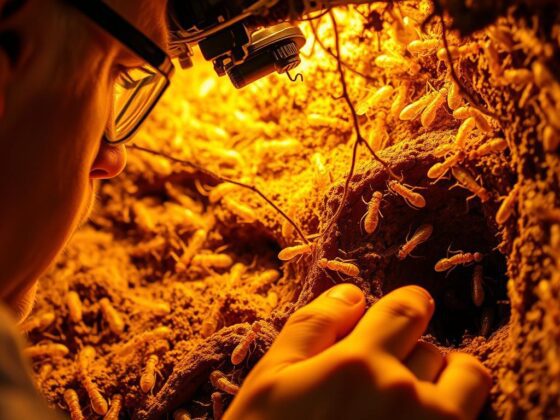
This TermiteHQ pillar explains what an inspection usually covers, when homeowners should consider one, what common findings may mean, how to prepare for the appointment, how to read the report, and how to decide what to ask next. It is written for homeowners, buyers, sellers, property managers, and commercial operators who need practical context before speaking with a local professional. Everything here prepares you for a better inspection conversation; it does not replace the inspection itself.
What Is a Termite Inspection?
A termite inspection is a structured property review for evidence of termite activity, previous activity, termite-conducive conditions, and visible damage patterns. A good inspection is not a quick search for live insects. Termites are often hidden inside wood, soil contact points, wall voids, crawl spaces, attic framing, porch structures, or moisture-prone exterior transitions, so inspectors look for patterns rather than one dramatic clue.
The inspection is usually visual and limited to accessible areas unless the property owner, transaction requirement, or local rules call for a more invasive process. That limitation matters. An inspector can document what is accessible and visible, but inaccessible wall cavities, concealed framing, finished surfaces, stored materials, locked rooms, or unsafe crawlspace areas can limit what the report can responsibly conclude.
For a broader starting point, use the Termite Inspection category. If the first concern is a visible clue, compare it with Signs of Infestation before disturbing the evidence. If the concern appears species-specific, the Types of Termites archive explains how drywood, subterranean, Formosan, dampwood, and swarmer clues differ.
When Should Homeowners Schedule One?
A termite inspection is most useful before a home purchase, before listing a property, after visible warning signs, before renewing or transferring a warranty, after moisture or drainage problems, before major wood repairs, after nearby termite activity, or as part of routine prevention in termite-prone regions. The timing matters because a report can affect treatment planning, repair budgeting, negotiation, documentation, and follow-up scheduling.
In a real-estate transaction, the inspection is not just a maintenance check. The report may influence buyer confidence, seller repair decisions, lender requirements, insurance conversations, warranty transfer questions, or contract timelines. When report language has financial or legal significance, the reader should treat the article as orientation only and work with qualified local professionals who understand the transaction and local requirements.
Routine inspections can also matter for homes without obvious signs. Subterranean termite risk is affected by soil access, moisture, foundation design, drainage, landscaping, mulch placement, crawlspace conditions, and previous treatment history. Drywood termite risk can involve exposed wood, roofline entry points, attic access, eaves, fascia, window frames, and regional swarming pressure. An annual or recurring inspection conversation is often about risk control, not panic.
What Inspectors Usually Check
Inspectors usually start with accessible exterior and interior areas where termite evidence or conducive conditions are more likely to appear. Exterior checks may include foundation edges, expansion joints, crawlspace openings, porch attachments, decks, fences, wood-to-soil contact, mulch depth, drainage, downspouts, planter boxes, stored wood, and visible treatment evidence. Interior checks may include baseboards, trim, window and door frames, garages, bathrooms, kitchens, utility areas, attics, and moisture-prone rooms when accessible.
The evidence itself can vary by termite group. Subterranean termites may leave mud tubes, soil sheltering, damaged wood, or swarmers. Drywood termites may leave frass pellets, kick-out holes, discarded wings, or localized wood damage. Formosan termites can create larger colonies and may be associated with moisture and aggressive structural activity in some regions. A homeowner does not need to identify the species before calling; describing the location, appearance, moisture conditions, and timing is usually more useful.
- Accessible foundation areas, crawl spaces, exterior walls, and wood-to-soil contact points.
- Interior trim, baseboards, window frames, door frames, garages, and moisture-prone rooms.
- Attics, porches, decks, fences, roofline wood, and attached wood elements when accessible.
- Evidence such as mud tubes, swarmers, discarded wings, frass, galleries, damaged wood, and prior treatment signs.
- Conducive conditions such as moisture, drainage, wood debris, mulch placement, vegetation contact, and structural access points.
Warning Signs Homeowners May Notice
Warning signs can include mud tubes, discarded wings, swarmers, frass, blistered paint, soft trim, hollow-sounding wood, sagging flooring, unexplained cracks, moisture problems, or damaged wood around windows, doors, baseboards, porches, and crawlspace areas. These signs may indicate termite activity, but they do not always prove species, severity, damage age, activity status, or treatment need.
That distinction prevents expensive mistakes. A pile of wings can suggest a swarm, but the swarm may have entered from outside or may point to activity inside the structure. Frass can suggest drywood termite activity, but a professional still needs to evaluate location, quantity, recurrence, access, and surrounding wood. Mud tubes can suggest subterranean termite access, but activity and extent require inspection. The safest homeowner step is to photograph the clue, avoid disturbing it, and record where and when it appeared.
How to Prepare Before the Inspector Arrives
Preparation helps the inspector and protects the homeowner from relying on memory after the appointment. Gather previous inspection reports, treatment records, warranty paperwork, repair invoices, photos of recent clues, moisture or leak history, renovation records, and any seller disclosures. Clear access to attic entries, crawlspace openings, garage edges, utility areas, exterior walls, and wood stored near the structure where practical and safe.
Write down the questions that matter most before the appointment. Ask what areas were inaccessible, whether the evidence appears active or historical, whether the finding is a conducive condition or confirmed activity, whether species identification is possible, what follow-up documentation is recommended, and which decisions should wait for a written report. These questions make the inspection more useful without turning the homeowner into the inspector.
How to Understand the Inspection Report
A termite inspection report should be read as a decision document, not a simple pass or fail label. It may include observed evidence, conducive conditions, inaccessible areas, previous treatment signs, moisture observations, recommendations for follow-up, and limitations. The most important part is often the distinction between active evidence, previous evidence, damage, conducive conditions, and areas that could not be inspected.
Robert Trawick’s review route is especially relevant when content discusses inspection reports, real-estate context, or damage interpretation because report language can influence repair negotiations and next-step decisions. A TermiteHQ guide can explain common report concepts, but the report itself requires a qualified professional to generate and interpret in the context of the property, transaction, and local requirements.
If a report mentions Wood-Destroying Organism (WDO) context, suspected activity, inaccessible areas, prior treatment, structural concerns, or recommended treatment, ask for clarification before comparing quotes. The report should help the reader understand what was seen, what was not accessible, which conditions matter, and which next step is professional judgment rather than internet interpretation.
What to Do After the Inspection
After the inspection, the best next step depends on the finding. If no evidence is found but conducive conditions are present, prevention and monitoring may be the focus. If visible activity is found, treatment discussion should wait for a clear explanation of species, access, extent, and method options. If damage is noted, repair planning may require additional contractor or structural evaluation. If the property is in a transaction, timing and documentation should be handled carefully.
- Ask which evidence was found, where it was found, and whether it appears active, historical, or uncertain.
- Clarify which areas were inaccessible and whether follow-up access is needed.
- Request a written explanation before comparing treatment quotes or repair costs.
- Use Treatment Comparison and Treatment Cost Estimator as educational planning tools, not final diagnosis engines.
- Keep reports, photos, warranty documents, treatment records, and repair invoices together for future reference.
Cost, Risk, and Tool Connections
Inspection cost and treatment cost vary by region, property size, access complexity, transaction requirements, report type, and whether additional follow-up is needed. A low-cost inspection is not automatically a weak inspection, and a higher price is not automatically better. The more useful question is what the inspection includes, what documentation is provided, what areas are checked, and whether the provider can explain limitations clearly.
TermiteHQ tools can help organize the next conversation. The Termite Risk Score can help homeowners think through moisture, access, and property conditions. The Termite Infestation Map can support regional awareness. The Damage Repair Cost Calculator can help frame repair-exposure questions when damage is already part of the conversation. Each tool is educational and should be paired with local professional judgment.
FAQ
Can I inspect my own home for termites?
You can look for visible clues, document them, reduce obvious conducive conditions, and prepare questions. That is not the same as a professional termite inspection. Hidden access, species identification, treatment history, damage interpretation, local reporting requirements, and inaccessible areas require professional judgment.
Is a termite inspection the same as treatment?
No. Inspection evaluates evidence, risk, conditions, and limitations. Treatment decisions depend on confirmed findings, termite group, structure, access, product labels, local rules, and licensed professional judgment.
How often should a home be inspected?
Inspection timing depends on local termite pressure, construction, moisture, past activity, warranty terms, and property use. In higher-risk regions, homeowners often discuss annual or recurring checks with qualified local providers, especially when moisture, crawlspace access, or prior termite history is involved.
What should I avoid before an inspection?
Avoid removing or destroying evidence before it is documented. Do not scrape away tubes, sweep up recurring frass without photos, open walls, or apply treatment products just to see what happens. Documentation is often more useful than disturbance.
Sources and Methodology
This guide follows TermiteHQ’s educational review model: answer-first explanations, cautious wording around treatment and inspection findings, contextual internal links, and expert-review routing for higher-risk content. Review standards are described in the Source Methodology and Expert Review Policy.
- U.S. EPA termite identification and control guidance
- University extension termite resources, including termite biology and inspection education
- Professional practice context for WDO and real-estate inspection documentation
- TermiteHQ Source Methodology
- TermiteHQ Expert Review Policy
Educational boundary: TermiteHQ content is for educational purposes only. It does not replace licensed termite inspection, pesticide label directions, structural engineering advice, legal advice, real-estate compliance review, or local regulatory requirements. For active termite concerns, suspected damage, treatment decisions, or property transactions, contact qualified local professionals.