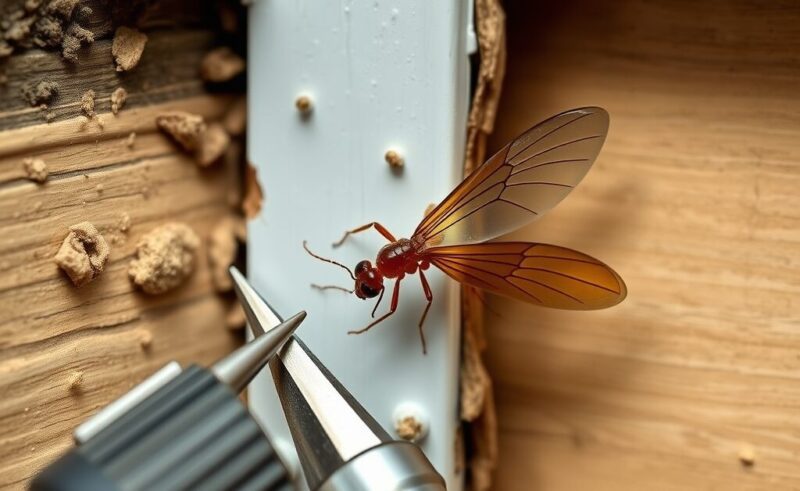
Finding winged insects indoors during spring or fall—or discovering small piles of discarded wings near windows, doors, or light fixtures—creates immediate uncertainty. Swarmers look similar to flying ants, and many homeowners first assume the insects are a nuisance rather than a structural threat. But termite swarmers behave differently: they emerge in coordinated groups, often within minutes of each other, then shed their wings and either die quickly indoors or attempt to pair off. The wings left behind, translucent and uniform in size, are often the clearest evidence that remains after the swarm ends.
What you can determine on your own is whether the insects match termite characteristics—straight antennae, equal-length wings, thick waists—and whether the emergence happened indoors rather than outdoors near your foundation. What you cannot determine without professional tools is where the colony is located, how much concealed damage exists in framing or subfloors, whether soil treatment or above-ground baiting is appropriate, and whether the swarm came from subterranean, drywood, or dampwood termites. According to Travis Gates, a licensed inspector with 19 years of field experience across the Southeast, homeowners who attempt to spray or clean up swarmers before an inspection often eliminate the exact evidence—live specimens, wing piles, and emergence points—that would have allowed faster, more accurate colony location and treatment planning.
This article walks through what swarmer presence indoors reliably indicates, what actions interfere with professional diagnosis, how to preserve useful evidence, and when same-day scheduling is justified versus standard 48-hour booking. It does not replace a licensed termite inspection, and it does not provide treatment recommendations, which depend on species identification, local soil conditions, construction type, and state-specific pesticide regulations your inspector will explain during the service call.
What Changes the Meaning of Indoor Swarmers
Not all indoor swarmer events carry the same urgency or point to the same problem. The variables that matter most are species, location within the structure, moisture conditions, foundation type, and whether you’re in a real-estate transaction.
Subterranean termite swarmers indoors—especially Reticulitermes species in the eastern U.S. or Coptotermes in coastal areas—typically mean an established colony with direct wood-to-soil contact or compromised moisture barriers. These colonies often nest in soil near the foundation and send swarmers through cracks in slab edges, expansion joints, or wall voids. If swarmers emerge from baseboards, floor registers, or window frames on a slab foundation, the colony is likely feeding within 10 to 20 feet of that spot. Crawlspace and basement foundations give subterranean colonies more concealed access points, so swarmers may appear far from the active feeding site.
Drywood termite swarmers indoors—common in Florida, Southern California, Hawaii, and Gulf Coast states—mean the colony is inside the wood itself, often in attic framing, window headers, or furniture. Drywood swarmers don’t need soil contact, so their presence confirms localized infestation in the structure above ground. A single swarm from an attic beam is a different treatment scope than widespread drywood activity across multiple rooms.
Moisture history changes the risk profile. If swarmers appear near a recent roof leak, plumbing failure, or poorly graded exterior soil, the colony likely exploited that moisture source to establish feeding galleries faster. Older homes with untreated crawlspace wood or no vapor barrier show higher swarmer-to-damage correlation than newer construction with treated lumber and proper grading.
Foundation type affects access and treatment cost. Slab foundations limit inspection access but often concentrate subterranean entry points near plumbing penetrations and expansion joints. Pier-and-beam or crawlspace foundations allow direct visual confirmation of mud tubes, damaged sill plates, and moisture sources, but they also give termites more concealed pathways.
Transaction context matters. If you’re under contract to buy or sell and swarmers appear during the inspection period, most purchase agreements allow renegotiation or require seller-funded treatment and clearance letters. If you’re already closed and swarmers emerge within a year, check whether your termite inspection included a warranty or bond—some policies cover re-treatment if swarmers appear within 12 months of clearance.
Treatment history is a variable many homeowners overlook. If the home was treated within the past five years and swarmers appear indoors, the original treatment may have missed a satellite colony, the chemical barrier degraded faster than expected, or a new moisture source created a bypass route. Prior treatment records help the next inspector focus on gaps rather than starting from assumption.
What You Can Do Before Calling a Professional
Finding swarmers indoors usually means you need a licensed inspector, but you can gather useful information in the hours or days before that visit. The goal is to document what you see, locate any records that might explain the context, and prepare questions—not to diagnose the problem yourself or attempt treatment.
Start by photographing the swarmers, discarded wings, and the room where you found them. Use your phone’s camera with good lighting, and include a reference object like a coin or ruler for scale. Note the date, time, and weather conditions. If you see swarmers near a specific window, door frame, or baseboard, photograph that location from multiple angles. These images help the inspector understand what triggered your call and may reveal patterns you didn’t notice in the moment.
Check your records for any past termite inspections, treatments, or warranties. If you bought the home within the last few years, review the seller’s disclosure and any pest-inspection reports attached to the closing documents. If a treatment was performed before you moved in, locate the contract, diagram, and product labels. Subterranean termite treatments typically last five to ten years depending on the product and soil conditions, but warranties often require annual inspections. A current warranty may cover re-treatment at no additional cost if the swarmers indicate new or recurring activity.
Walk through your home and note any other signs of infestation—mud tubes on foundation walls, hollow-sounding wood, small piles of frass near wooden furniture, or sagging floors. Do not probe wood with a screwdriver or pry open walls. You’re gathering observations, not conducting a structural assessment. Write down what you see and where, then share that list with the inspector.
Prepare a short list of questions based on your situation. If you’re planning to sell, ask whether the inspector can provide a clearance letter or official report that satisfies your state’s real-estate disclosure rules. If you’ve had past treatments, ask whether the current activity suggests a gap in the treatment zone or a separate colony. If you’re weighing treatment options, ask for a written explanation of each method’s costs, timeline, and limitations. Our treatment comparison guide and cost estimator can help you understand the range of answers you’re likely to hear.
Do not apply store-bought sprays, dusts, or foam to the swarmers or the areas where you found them. These products kill surface insects but do not reach the colony, and they can interfere with the inspector’s ability to trace activity back to the nest. Do not seal cracks or gaps until after the inspection—the entry points swarmers used may help the inspector locate the colony. If you need to clean up dead swarmers or wings, use a vacuum and save the contents in a sealed bag so the inspector can confirm the species if needed.
When to Route to a Licensed Professional and What They See That You Can’t
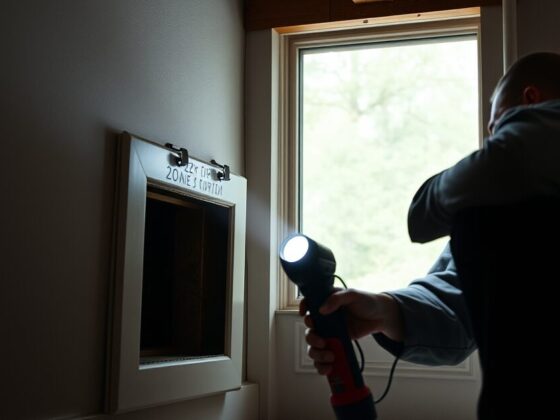
If you find swarmers indoors, a licensed termite inspector changes the outcome in three specific ways: they access concealed structural zones you cannot safely reach, they distinguish between surface activity and colony-level infestation using moisture meters and sounding tools, and they apply species-specific treatment thresholds that vary by local soil type, construction era, and regulatory jurisdiction. A homeowner seeing ten swarmers near a window cannot determine whether the colony is inside the wall cavity, under the slab, or in an exterior stump 40 feet away. A professional opens access panels, inspects crawlspace joists with a probe, and correlates swarmer location with mud-tube pathways, moisture readings, and wood-damage patterns across the structure.
Travis Gates, a structural pest-control operator and TermiteHQ contributor, notes that the most common homeowner misstep after an indoor swarm is assuming the visible insects represent the full extent of the problem. In most cases, swarmers emerge from a colony that has been feeding for two to four years. The inspection priority is not counting wings on the windowsill—it is identifying the active feeding site, measuring the scope of structural contact, and determining whether the infestation is localized or distributed across multiple zones. That distinction controls whether you need a spot treatment, a perimeter barrier, or a whole-structure approach, and it is not visible from swarmer behavior alone.
High-stakes decision points include situations where swarmers appear in multifamily buildings, homes with prior treatment history, properties in escrow, or structures with known moisture intrusion. In these cases, the inspector’s role extends beyond species identification: they document infestation evidence for disclosure purposes, coordinate access with adjacent units, review treatment records to assess re-infestation versus incomplete coverage, and flag conditions—such as active roof leaks or failed vapor barriers—that must be corrected before or during treatment. These are not tasks a homeowner can complete with a flashlight and a swarmer sample.
For routing and preparation, schedule an inspection within one to three business days of the indoor swarm event. Preserve swarmer specimens in a sealed plastic bag or on clear tape, note the exact emergence location and time of day, and photograph any visible mud tubes, wood damage, or moisture stains near the swarm site. Do not apply pesticides to wall voids, seal suspected entry points, or remove damaged wood before the inspection—these actions can obscure evidence and complicate treatment planning. If you need help interpreting inspection findings or comparing treatment options after the visit, use the Termite Risk Score to understand how infestation variables and property characteristics influence professional recommendations. For inspector selection and credentialing context, see the TermiteHQ Expert Team and Source Methodology pages.