Subterranean termites differ from drywood and dampwood species by maintaining direct soil contact. Workers travel between underground nests and above-ground food sources through shelter tubes—pencil-width tunnels made of soil, saliva, and fecal material that protect foragers from light and dry air. These tubes appear on foundation walls, pier blocks, and inside wall voids, often near plumbing penetrations or HVAC chases where moisture accumulates. The presence of tubes indicates active foraging, though absence does not confirm a structure is termite-free; workers also travel through soil-filled cracks and behind exterior cladding.
Three subterranean termite groups cause most U.S. structural damage: Reticulitermes species (Eastern, Western, and Dark Southeastern subterranean termites) across the northern two-thirds of the country; Coptotermes formosanus (Formosan subterranean termite) in the Southeast and Hawaii; and Heterotermes aureus (Desert subterranean termite) in the Southwest. Formosan colonies grow larger and consume wood faster than native Reticulitermes, but all subterranean species require professional-grade treatment once established. Our termite species guide details identification and regional distribution.
Homeowners can reduce termite access by correcting grade slopes that direct water toward foundations, replacing soil-to-wood contact at deck posts and stair stringers, and clearing mulch, firewood, and scrap lumber from perimeter zones. These steps lower moisture and remove cellulose attractants but do not eliminate existing colonies. Treatment requires either liquid termiticide applied to soil around and beneath the foundation, bait stations that deliver slow-acting toxicants to foraging workers, or—in new construction—physical barriers such as stainless-steel mesh or treated foundation materials. The treatment comparison tool outlines method durability, re-treatment intervals, and suitability for different foundation types.
This guide organizes subterranean termite information by decision stage: biology and behavior that explain why certain structures are vulnerable, inspection and detection methods that define what homeowners can observe versus what requires instrumentation, treatment and prevention options with cost and durability ranges, and damage-repair considerations. It does not replace site-specific inspection, pesticide-label directions, or local building codes. Content is reviewed by licensed pest-management professionals and cross-referenced against EPA, university extension, and NPMA standards under our source methodology.
What Changes the Answer for Subterranean Termites
Subterranean termite decisions depend on variables that shift the timeline, cost, and treatment method. Species matters first. Eastern subterranean termites (Reticulitermes flavipes) swarm in spring, build smaller colonies, and respond well to liquid termiticides and bait. Formosan termites (Coptotermes formosanus) swarm at night in late spring, build colonies ten times larger, and often require more aggressive treatment in Gulf Coast and Southern California zones. Western subterranean termites (Reticulitermes hesperus) tolerate drier soil and appear in areas where moisture seemed unlikely. Knowing which species is active in your area changes the inspection interval and the treatment a professional will recommend.
Moisture and access drive the severity. Subterranean termites need soil contact and consistent moisture. A crawlspace with standing water, a slab foundation with plumbing leaks beneath it, or wood siding that touches mulch creates ideal conditions. Homes with full basements, proper grading, and six-inch clearance between soil and wood framing face lower pressure. But even low-risk homes can develop problems if a gutter downspout saturates the foundation perimeter or a deck post sits directly on grade. The Termite Risk Score tool walks through these structural and environmental factors to show where your property sits on the exposure spectrum.
Foundation type changes treatment options. Slab foundations require drilling and injection or exterior trenching. Basement and crawlspace foundations allow interior and exterior liquid applications, and crawlspaces often permit monitoring stations or bait installation without drilling. Homes with post-tension slabs or radiant floor heating may require non-invasive bait systems to avoid damaging embedded cables or tubing. A professional will assess foundation type during the inspection, but knowing your foundation construction in advance helps you understand why one method is proposed over another.
Evidence age and context matter during property transactions. Active mud tubes with live workers require immediate treatment. Old, dry tubes with no current activity may indicate a past infestation that was treated or abandoned, but they still trigger disclosure requirements in most states. Buyers typically request a current termite inspection and a treatment completion certificate if activity is found. Sellers with an active termite warranty may transfer coverage, but warranty language varies—some cover retreatment, some cover damage repair, and some exclude pre-existing conditions. Reading the warranty before listing prevents surprises at closing.
Treatment history and local pressure also shift decisions. A home treated five years ago in a high-pressure area may need reinspection or a renewal application. A home in a low-pressure zone with no prior treatment and no nearby infestations may only need monitoring. State agriculture extension offices and university entomology programs publish county-level termite pressure maps that show where subterranean species are most active, and those maps help set realistic inspection schedules. TermiteHQ’s Source Methodology explains how we use these regional datasets to frame decision variables without replacing local professional judgment.
Species Differences That Change What You See and How You Respond
Subterranean termites live in soil and build mud tubes to reach wood above ground. Drywood termites live entirely inside the wood they eat and leave small piles of pellet-shaped droppings below exit holes. Dampwood termites need high moisture and rarely damage homes unless wood stays wet for weeks. Formosan termites are a subterranean species that builds larger colonies, forages more aggressively, and can nest above ground if moisture is present. The species you’re dealing with determines what evidence you’ll find, where the colony lives, and which treatments work.
Subterranean workers cannot survive in open air for more than a few minutes, so they build pencil-width mud tubes on foundation walls, slab edges, piers, and plumbing penetrations. You may see tubes on concrete, brick, or metal—anywhere between soil and wood. Tubes can be active, abandoned, or exploratory; breaking a small section and checking for rebuilt material after two days tells you whether workers are still using the route. Damage occurs inside framing, floor joists, and sill plates, often hidden until wood sounds hollow when tapped or feels soft when probed. Swarmers appear in spring, usually during daylight after rain.
Drywood termites do not need soil contact. Swarmers enter through attic vents, eaves, or window frames, then bore into wood and seal the entry. You will not see mud tubes. Instead, look for small exit holes—about 1 to 2 mm—and piles of six-sided pellets that look like coarse sand or sawdust. Pellets accumulate below kick-out holes in furniture, window sills, door frames, or exposed beams. Drywood colonies grow slowly and may stay in one piece of wood for years. Swarms occur in late summer or fall, often at dusk. Treatment usually requires fumigation or localized heat, not liquid soil barriers.
Formosan termites forage across wider areas and consume wood faster than native subterranean species. Colonies can exceed one million workers. In humid climates, Formosans sometimes build carton nests—papery masses of chewed wood and soil—inside wall voids, attics, or hollow trees if a moisture source is nearby. Swarms are large, occur at dusk in late spring or early summer, and are often mistaken for flying ants. Mud tubes may be thicker and more branched. Because of colony size and foraging range, Formosan infestations often require more extensive treatment and monitoring than other subterranean species.
Dampwood termites are uncommon in structures unless there is ongoing water intrusion, roof leaks, or ground-contact wood. They are larger than subterranean workers, do not build mud tubes, and leave moist, compacted frass inside galleries rather than pellet piles. Fixing the moisture problem and removing damaged wood usually resolves dampwood activity without chemical treatment.
If you are not sure which species you have, collect a few specimens in a sealed container or take clear photos of tubes, pellets, or swarmers and show them to a licensed inspector. Species identification changes the treatment method, the urgency, and the cost. For a location-adjusted risk estimate based on species prevalence in your area, use the Termite Risk Score tool. More detail on identification appears in the Types of Termites guide.
What You Can Do Before Calling a Professional
You cannot diagnose subterranean termites from a distance, and you should not apply pesticides without a license, but you can document what you see, organize your property records, and prepare questions that help a licensed inspector work efficiently when they arrive.
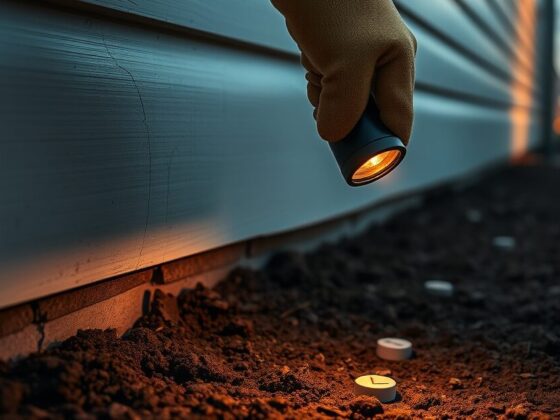
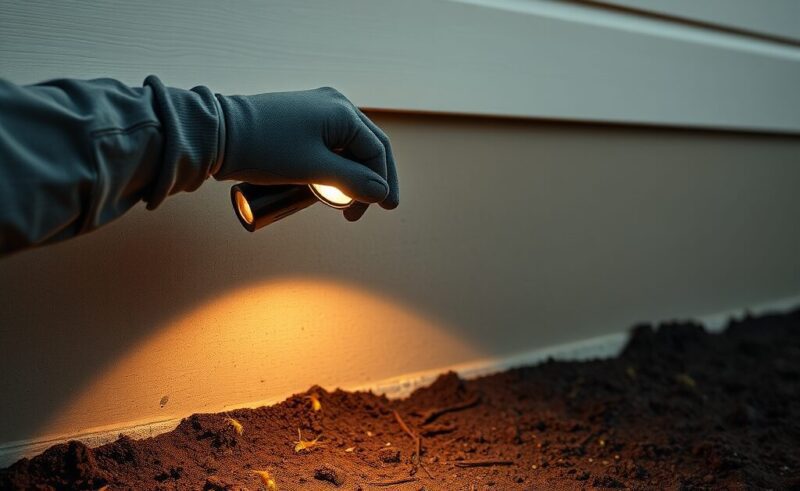
Start by photographing any mud tubes, damaged wood, or swarm evidence you find. Use a flashlight to check crawl-space piers, basement joists, garage door frames, and exterior foundation walls where wood meets soil. Take close-up images that show texture—flaking paint, hollow-sounding wood, or the pencil-width mud tunnels termites build between soil and food sources. Note the location of each photo using room names or compass directions so the inspector can move directly to problem areas.
Gather your treatment history if the home has been treated before. Look for a diagram stapled inside the electrical panel, a folder from the previous owner, or a disclosure document from your real-estate transaction. Record the treatment date, the company name, the pesticide used, and whether the system was liquid termiticide, bait stations, or both. If you have an active monitoring contract, find the most recent inspection report and note when the next service visit is scheduled.
Check for conditions that raise risk. Walk the perimeter and look for mulch or soil piled against siding, downspouts that drain next to the foundation, wood lattice in ground contact, or crawl-space vents blocked by storage or landscaping. Subterranean termites need moisture, wood, and a path from soil to structure; removing one of those three elements reduces pressure even before treatment begins.
Prepare a short list of questions based on what you found. Ask the inspector whether visible damage suggests an active colony or old injury from a previous infestation. Ask what treatment method fits your foundation type—slab, crawl space, or basement—and whether monitoring stations make sense if you live in a high-pressure area. If you are buying the home, ask whether the inspection report will satisfy your lender’s requirements and whether the seller’s treatment estimate includes a repair rider or a renewable warranty. Our Termite Risk Score tool can help you understand which site factors matter most in your region before the appointment.
Do not attempt to remove mud tubes, probe damaged wood with sharp tools, or apply over-the-counter pesticides to active galleries. Disturbing the colony can cause termites to abandon one area and move to another part of the structure, making it harder for the professional to locate the source. Your role is to observe, document, and route the decision to someone with the license, liability insurance, and diagnostic training to recommend treatment that matches your home’s construction and your state’s pesticide regulations. For a detailed explanation of what happens during a licensed visit, see our termite inspection guide.
When Professional Judgment Changes the Outcome
Most subterranean termite decisions hinge on variables a homeowner cannot measure from the surface: colony pressure behind a wall, the load-bearing status of damaged wood, whether soil treatment will reach the gap under a monolithic slab, or if a baiting system can intercept foraging tunnels before they reach structural members. A licensed inspection translates visible evidence into a treatment scope, and the inspector’s field experience determines whether the recommendation matches the infestation pattern.
Travis Gates, a structural pest control operator with two decades of subterranean termite work across the Southeast, describes the judgment call that changes cost and outcome most often: deciding whether to treat the entire structure or limit the application to active zones. In homes with partial slab construction, partial treatments save money but require accurate mapping of colony entry points and moisture sources. If the inspector misreads the infestation edge or assumes a single colony when two are present, the untreated zone remains vulnerable. Full-perimeter treatment costs more and uses more termiticide, but it closes the gap when colony boundaries are unclear or when conducive conditions exist on multiple sides of the foundation.
Professional judgment also governs timing. An inspector may recommend immediate liquid treatment if active feeding appears in floor joists or if a real-estate transaction requires clearance within days. The same inspector may suggest baiting if the infestation is light, the structure can tolerate a slower elimination cycle, and the homeowner prefers lower chemical load. Neither choice is universally correct; the decision depends on structural risk, transaction deadlines, and the property’s termite pressure history, which only a local professional can assess accurately.
Licensing and continuing education requirements vary by state, but most jurisdictions require pest control operators to document infestation evidence, treatment zones, and product labels in the inspection report. Reviewing that documentation before signing a contract lets you confirm that the recommendation addresses the specific conditions in your home, not a standard package. If the report lacks detail or the scope feels mismatched to what you observed, a second opinion from another licensed firm often clarifies whether the original judgment was conservative, appropriate, or incomplete.
TermiteHQ’s expert review team evaluates content against field standards and university extension guidelines, but we do not perform inspections or endorse specific contractors. For attribution and methodology details, see our source methodology and expert review policy.