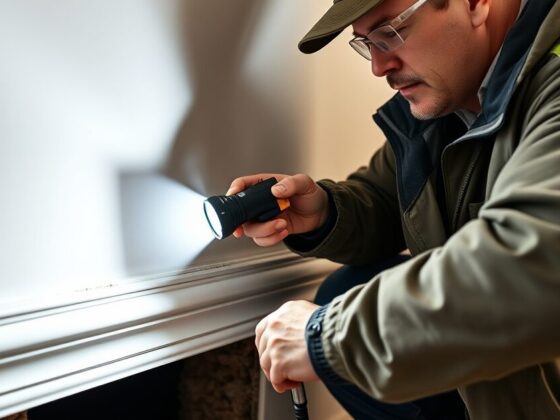
Most residential real estate transactions in termite-active regions include a termite inspection before closing. Lenders often require one. Buyers rely on the report to understand whether the property has termites now, had them in the past, or shows conditions that make future infestation more likely. The inspection itself is a snapshot: a trained technician examines accessible areas of the structure, probes suspect wood, checks crawlspaces and attics, and documents findings in a written report. What the inspector cannot see—wood inside walls, areas blocked by stored belongings, or soil beneath concrete slabs—remains outside the scope unless destructive access is authorized.
The report typically identifies active infestations, visible damage, and conducive conditions such as wood-to-soil contact, moisture problems, or cellulose debris near the foundation. If the inspector finds signs of infestation, the report will note the species when identifiable—subterranean, drywood, or dampwood termites require different treatment approaches. Some reports include treatment recommendations; others refer the buyer to a separate pest-control proposal. Robert Trawick, a structural pest-control veteran with decades of field experience, notes that buyers often misread “evidence of prior treatment” as proof the problem is resolved, when in fact it only confirms that someone treated the property at some point in the past.
You can use the Termite Risk Score tool to understand how regional activity, construction type, and site conditions affect long-term exposure, but the tool does not replace a licensed inspection or interpret a specific report. The questions in the sections that follow help you clarify what the inspector found, what the report does and does not cover, and what steps—treatment, repair, or re-inspection—make sense before you close. For methodology behind TermiteHQ guidance, see the Source Methodology and Expert Review Policy pages.
## Core Variables That Change the Answer
Not all pre-purchase termite inspections produce the same level of clarity. The questions you need to ask—and the weight you give to the answers—depend on several concrete variables that change from property to property.
Species and local pressure matter first. Subterranean termites are present across most of the United States, but infestation probability and reinfestation speed vary by region. Eastern subterranean termites in the Southeast behave differently than desert species in Arizona or dampwood termites in coastal Washington. If you’re buying in a high-pressure zone—coastal Carolinas, Gulf states, Southern California—active evidence or conducive conditions carry more weight than they would in a moderate-pressure area. You can check regional context using the TermiteHQ Infestation Map.
Foundation type and access determine what the inspector can see. A raised pier-and-beam foundation with full crawlspace access allows direct observation of joists, sills, and soil contact points. A monolithic slab with no access panels means the inspector evaluates exterior grade, visible framing, and indirect evidence only. If the report notes limited access, ask what wasn’t inspected and whether invasive access—removing panels, cutting drywall—would be justified based on visible risk factors.
Evidence age and activity status separate current infestations from old damage. Mud tubes with moist soil, live termites in wood, or fresh frass indicate active colonies. Dry, abandoned tubes or old damage with no current signs may reflect a past treatment or natural colony collapse. The inspector should distinguish between the two. If the report lists “evidence of prior infestation,” ask whether any signs suggest current activity and what monitoring or verification would confirm the colony is gone.
Treatment history and transferable warranties change your position significantly. If the seller has an active termite bond with a renewable warranty, ask whether it transfers at closing, what it covers, and whether the treatment company will honor retreatment or damage repair clauses under new ownership. Some contracts require continuous coverage with no lapse; others allow transfer with an inspection fee. According to Robert Trawick, a licensed pest control operator and TermiteHQ contributor, buyers often assume warranties transfer automatically when most require explicit assignment and may exclude pre-existing damage.
Moisture sources and conducive conditions predict future risk even when no termites are present. Grading that directs water toward the foundation, wood-to-soil contact, leaking gutters, or crawlspace humidity above 70% create environments that attract subterranean termites. If the report lists multiple conducive conditions, ask what corrective work is realistic before closing and whether the seller will address structural moisture issues as part of the sale.
These variables—not generic checklists—determine which questions matter most for your property. More detail on interpreting findings appears in TermiteHQ’s inspection guide.
What to Do Before the Inspector Arrives
Preparing for a pre-purchase termite inspection improves the quality of the report and helps you ask better questions during the walkthrough. Start by gathering any termite-related documents the seller provides—prior inspection reports, treatment records, warranty paperwork, or contractor invoices. These records establish treatment history, identify previously affected areas, and show whether follow-up inspections occurred as recommended.
Walk the property perimeter and accessible interior spaces before the scheduled inspection. Look for visible mud tubes on foundation walls, wood-to-soil contact points such as deck posts or stacked firewood, moisture stains near plumbing penetrations, and areas where paint or drywall appears bubbled or sagging. Take dated photos of anything that looks unusual. You are not diagnosing termite activity—you are documenting conditions the inspector should evaluate closely. If you notice hollow-sounding wood when tapping baseboards or door frames, note the location but do not probe or remove material.
Check for common access barriers that limit inspection scope. Inspectors cannot report on areas they cannot see, so identify crawlspace hatches that may be blocked by storage, attic access points covered by furniture, and exterior walls obscured by dense landscaping or stacked materials. If the property has a finished basement with drywall covering all framing, understand that the inspector will note limited visual access in the report. The same applies to areas with wall-to-wall carpeting or inaccessible subfloor voids.
Prepare a short list of questions based on what you observed and what the disclosure documents reveal. Useful questions include: Are there signs of active infestation in any area? What species is most common in this region, and does that change treatment recommendations? If prior treatment occurred, was it localized or whole-structure? Are there structural conditions—such as grade-level wood siding or poor drainage—that increase future risk even if no current activity is found? Does the report meet lender and state requirements for the transaction?
Understand what the inspection will not cover. Most pre-purchase termite inspections focus on accessible wood-destroying insect evidence and do not include moisture testing, mold assessment, or general pest surveys unless separately requested. Inspectors typically do not move stored items, remove insulation, or cut into finished surfaces. If you want those areas examined, discuss expanded scope and additional cost before the appointment. Knowing these boundaries in advance prevents confusion when you review the final report and helps you decide whether follow-up evaluations are necessary before closing.
When Professional Judgment Changes the Outcome
A pre-purchase termite inspection report becomes most valuable when the inspector explains what the visible evidence means for your specific transaction timeline. Licensed inspectors evaluate active infestations, structural damage extent, moisture conditions that support future activity, and treatment access constraints—variables that determine whether you proceed, negotiate repairs, or walk away. The professional decision point is not whether termites are present, but whether the infestation scale, damage severity, and remediation cost justify altering your offer or closing terms.
Robert Trawick, a structural pest control operator with decades of field experience in the Southeast, notes that buyers often misread inspection reports by focusing on the presence of termites rather than the treatment complexity and repair scope. A small colony in an accessible crawlspace with minimal frass and no structural compromise may require only localized treatment and monitoring. An established subterranean termite colony with mud tubes inside wall voids, sagging floor joists, and moisture intrusion from failed grading requires excavation, structural reinforcement, and multi-year monitoring—costs that can exceed $15,000 and delay occupancy by weeks.
Ask your inspector to separate cosmetic damage from load-bearing compromise. Cosmetic damage—surface galleries in trim, minor veneer delamination, or isolated stud hollowing—rarely affects home safety or insurability. Load-bearing damage to floor joists, roof trusses, or foundation sill plates triggers structural engineering review and may require sister joists, steel reinforcement, or full member replacement. Inspectors licensed under state structural pest control boards can identify damage location and extent, but they do not provide load calculations or repair specifications. If the report notes structural concern, hire a licensed structural engineer before finalizing your offer.
High-stakes moments occur when inspection findings intersect with financing and insurance requirements. Most lenders require a termite-free certification or completed treatment with transferable warranty before closing. If active infestation is found, ask whether the seller will complete treatment, provide escrow funds for post-closing work, or reduce the purchase price by the estimated treatment and repair cost. Insurance underwriters in high-risk states may deny coverage or exclude termite-related claims if the inspection reveals untreated activity or prior damage without documented remediation. Review your inspection report with a licensed professional who understands your state’s disclosure and treatment standards, and confirm that any agreed-upon work includes a transferable warranty that meets your lender’s and insurer’s requirements.