Every 30 seconds, a homeowner faces termite-related repair bills exceeding $3,000. These hidden pests cause over $5 billion in property damage annually across the U.S., often before residents even notice the problem. Addressing infestations quickly isn’t just smart—it’s essential for safeguarding your most valuable asset.
Specialized treatments for persistent wood-destroying insects vary widely in price. Factors like property size, infestation severity, and local service rates all play a role. While initial expenses might seem steep, they pale in comparison to structural repairs from unchecked damage.
Professional services offer comprehensive solutions that spot treatments can’t match. The process involves thorough inspections and targeted elimination methods, ensuring complete colony removal. This approach helps prevent recurring issues that could compromise your home’s integrity over time.
Key Takeaways
- Treatment expenses depend on property dimensions and infestation scope
- Geographic location influences service provider pricing structures
- Complete colony elimination often requires advanced techniques
- Preventative measures reduce long-term maintenance costs
- Professional assessments provide tailored action plans
Understanding Termite Infestations and Drywood Termites
Silent invaders lurk in the bones of American homes, chewing through support beams undetected. These wood-destroying insects differ from other species by living entirely within their food source—no soil or moisture required. Their self-contained colonies make them masters of stealth, often thriving for years before leaving visible clues.
Identifying Drywood Termites
Look for pepper-like droppings called frass near baseboards or windowsills—a telltale sign of activity. Tap suspect wood surfaces; hollow sounds indicate internal tunneling. Discarded wings near light sources also signal swarmers seeking new nesting sites.
These pests prefer dry, untreated lumber in attics, furniture, and structural elements. Unlike subterranean varieties, they don’t build mud tubes, making visual identification critical. Professionals use specialized tools like moisture meters and infrared cameras to detect hidden colonies.
Potential Structural Damage
Left unchecked, these insects compromise load-bearing walls and flooring systems. Their maze-like tunnels weaken wood’s density, creating safety hazards over time. Window frames and door jambs often show early damage, while roof supports may collapse if infestations spread.
Repairs for advanced cases frequently involve replacing entire beams or sections of flooring. Early intervention prevents cascading destruction that impacts a home’s resale value and livability. Regular inspections help catch problems before they escalate into major renovations.
What is Terminix Fumigation?
When destructive insects infiltrate a home’s structural framework, targeted eradication becomes essential. Terminix fumigation offers a full-structure solution for persistent infestations that conventional methods can’t resolve. This approach addresses colonies embedded deep within walls, attics, and other hard-to-reach spaces.
How Fumigation Works
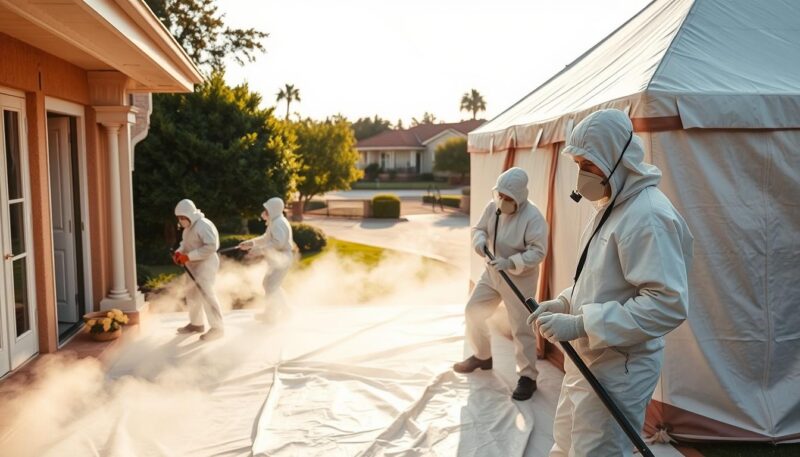
Specialized technicians begin by sealing the building with industrial-grade tarps. This tenting process creates an airtight environment where gas permeates every crevice. Sulfuryl fluoride—a colorless, odorless fumigant—disperses through walls and wooden beams, eliminating pests at every life stage.
The treatment requires residents to temporarily relocate for safety. Over 24-72 hours, the gas neutralizes hidden colonies in areas like floor joists and window frames. After ventilation clears residual fumes, professionals confirm the structure’s safety before re-entry.
This method proves vital when spot treatments fail to address widespread activity. Unlike localized applications, fumigation ensures complete penetration of infested zones. It’s particularly effective against species that nest entirely within wood, bypassing the need for soil-based barriers.
Homeowners gain peace of mind knowing the process targets both visible damage and hidden threats. By eradicating entire colonies, this pest control strategy prevents recurring issues that compromise structural integrity over time.
Cost of Terminix termite fumigation for drywood termites
Home protection investments vary widely depending on eradication scope and property specifications. Whole-structure solutions for persistent wood-destroying organisms often fall between $2,000 and $3,500 for standard residences. Larger properties face increased material and labor demands, with Phoenix-area 2,500 sq.ft. homes requiring $2,625 to $7,750 for complete resolution.
Severe infestations dramatically influence treatment cost calculations. Cases requiring extended tenting durations or supplementary methods may exceed $5,000. Regional service rates and structural complexities further modify final estimates, making professional assessments critical for accurate budgeting.
The average cost reflects specialized equipment, commercial-grade fumigants, and multi-phase protocols. Technicians seal structures completely, ensuring gas penetration into wall cavities and attic spaces. This comprehensive elimination strategy prevents recurring damage that compromises load-bearing elements over time.
While initial expenses appear substantial, they represent strategic safeguards against progressive destruction. For perspective, replacing compromised support beams or flooring systems often costs triple the termite treatment cost. Many homeowners find that timely intervention reduces long-term repair needs while preserving property value.
Obtaining multiple quotes helps identify competitive pricing structures. Service providers evaluate colony size, affected areas, and local regulations when determining total cost. This personalized approach ensures appropriate resource allocation while maintaining safety standards throughout the eradication process.
Factors Influencing Termite Treatment Costs
The expense of eliminating hidden colonies isn’t uniform—it fluctuates based on specific property characteristics. Three primary elements shape service fees: structural dimensions, infestation intensity, and geographic location. Each plays a critical role in determining resource allocation and treatment strategies.
Home Size and Infestation Severity
Larger properties demand more materials and labor. A 3,000 sq.ft. home may need double the fumigant volume of a 1,200 sq.ft. residence. Extended tenting durations for complex layouts also increase service fees.
Severe infestations often require multi-phase approaches. Technicians might combine fumigation with localized injections for deep-rooted colonies. These comprehensive solutions prevent recurring issues but add 40-60% to standard pricing.
Regional and Method-Related Variations
Service costs vary by 35% between states. Virginia’s average fees reach $2,800 due to strict regulations and higher wages. Florida’s tropical climate creates frequent infestations, keeping prices competitive between $1,300-$2,500.
Local factors like building codes and pest species also matter. Areas with aggressive termite types often need stronger chemicals. Urban locations may charge more for parking permits and equipment transport than rural regions.
Comparing Different Termite Treatment Options
Homeowners face multiple strategies when addressing wood-destroying invaders. Each approach carries unique benefits tailored to specific infestation scenarios and property needs. Understanding these options ensures informed decisions that balance effectiveness with practical considerations.
Fumigation vs Liquid Termiticides
Whole-structure fumigation eliminates active colonies in hard-to-reach areas through gas penetration. This method works best for widespread infestations within walls or attics. However, it requires temporary relocation and offers no lasting soil protection.
Liquid termiticides create chemical barriers around foundations, blocking new intrusions for 5-10 years. While ideal for prevention, these barrier treatments struggle against established colonies. They’re often paired with other methods for comprehensive protection.
Bait Systems and Heat Treatments
Bait stations like the ADVANCE system exploit termites’ feeding habits. Workers carry poisoned cellulose back to nests, gradually eradicating colonies. This eco-friendly approach takes weeks but minimizes chemical use.
Heat treatments raise indoor temperatures to 120-140°F, killing pests without toxins. Though chemical-free, this method matches fumigation’s costs and preparation requirements. It’s effective for localized infestations but less practical for large properties.
| Treatment | Method | Effectiveness | Time Frame | Best For |
|---|---|---|---|---|
| Fumigation | Gas penetration | Immediate colony elimination | 1-3 days | Severe infestations |
| Liquid Termiticides | Soil barrier | Long-term prevention | Ongoing | New construction |
| Bait Stations | Colony poisoning | Gradual control | 4-12 weeks | Eco-conscious homes |
| Heat Treatment | Thermal elimination | Chemical-free solution | 6-8 hours | Localized issues |
Choosing between these termite control methods depends on your home’s size, infestation severity, and environmental priorities. Professionals can assess which combination delivers optimal results for your situation.
DIY Methods vs Professional Termite Treatments
Homeowners often face tough choices when tackling persistent pest problems. While store-bought solutions promise quick fixes, they rarely match the precision of expert strategies. Understanding this critical distinction helps protect your property’s structural health.
Risks of DIY Treatments
Over-the-counter sprays and injectable formulas frequently miss hidden colonies. A homeowner might inject Termidor into visible holes using syringes, only to discover surviving insects weeks later. Partial eradication often scatters pests deeper into walls or attics.
Improper chemical handling creates safety risks for families and pets. Many DIY kits lack the potency to penetrate wood fully, leaving larvae intact. Without thermal cameras or moisture meters, hidden damage goes undetected until repairs become costly.
Benefits of Professional Services
Licensed technicians use industrial-grade equipment to locate every infestation site. They identify species-specific behaviors and apply targeted methods that prevent colony migration. This approach addresses current damage while blocking future intrusions.
Reputable control companies offer service warranties and follow-up inspections. Their treatments comply with EPA regulations, ensuring safe application. Long-term protection plans reduce recurring expenses by 70% compared to repeated DIY attempts.
Choosing expert pest control safeguards your investment through comprehensive solutions. Professionals eliminate guesswork while providing documentation for insurance requirements. This proactive strategy maintains property value and peace of mind.
Importance of Regular Termite Inspections
Protecting your home requires proactive measures against silent destroyers. Annual professional inspections by licensed experts serve as your first line of defense. These assessments identify warning signs like frass deposits or hollow-sounding wood before structural damage escalates.
Early Detection Saves Money
Evaluations costing $75-$150 in Virginia uncover hidden termite activity that DIY checks miss. Catching colonies early prevents extensive repairs averaging $3,000 or more. Technicians use moisture meters and thermal imaging to map infestation spread through walls and support beams.
Scheduled termite inspections every 12 months help maintain protection between treatments. They reveal new entry points or moisture issues attracting wood-destroying pests. Many companies offer service plans combining assessments with preventive barriers for year-round security.
Homeowners gain peace of mind knowing their investment receives expert monitoring. This strategic approach stops minor issues from becoming major financial burdens while preserving property value over time.
FAQ
How does fumigation eliminate drywood termite colonies?
Terminix fumigation uses specialized gases that penetrate wood structures, targeting hidden colonies. The treatment eliminates all life stages, including eggs and larvae, ensuring complete eradication of drywood termites.
What structural risks do drywood termites pose?
These pests consume wood from the inside out, weakening beams, floors, and support structures. Untreated infestations can lead to costly repairs, compromising a home’s safety and value over time.
How do bait systems differ from fumigation for termite control?
Bait stations attract termites to poisoned food sources, which they share with colonies. Fumigation provides immediate, whole-structure eradication, while baiting is a slower, targeted approach best for early-stage infestations.
Are DIY methods reliable for drywood termite removal?
DIY treatments often fail to address hidden colonies or reproductive cycles. Professional services like Terminix use industrial-grade solutions and expertise to ensure thorough, long-lasting protection against recurring infestations.
Why does home size impact treatment pricing?
Larger homes require more fumigant gas and labor hours to ensure proper coverage. Terminix calculates costs based on square footage, infestation severity, and regional factors like local regulations or climate risks.
How often should homes in high-risk areas be inspected?
Annual inspections are recommended, especially in warm, humid regions where drywood termites thrive. Early detection through routine checks minimizes damage and reduces long-term repair expenses.
Can heat treatments replace fumigation for severe infestations?
Heat treatments raise indoor temperatures to lethal levels for termites but may not penetrate deep into walls. Fumigation remains the gold standard for widespread or hard-to-reach drywood termite colonies.
What warranties do professional termite services typically offer?
Terminix often provides retreatment guarantees if termites return within a specified period. Coverage terms vary, so review service agreements to understand protection timelines and conditions.
Related TermiteHQ guide: expert review process.
Related TermiteHQ guide: compare termite treatments.
Related TermiteHQ guide: termite treatment cost estimator.
Related TermiteHQ guide: termite damage repair calculator.
Related TermiteHQ guide: termite inspection guide.