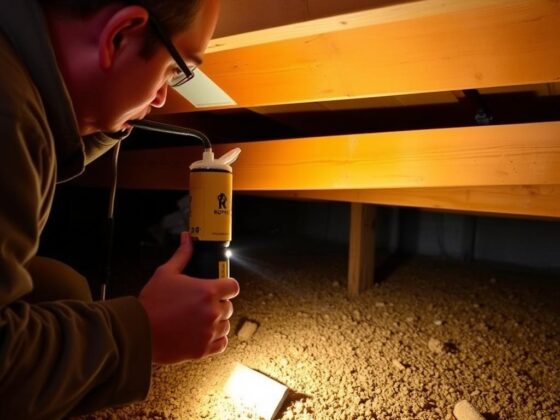
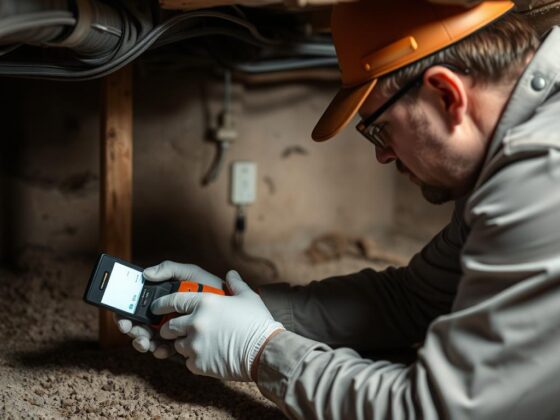
Commercial properties face the same termite biology as homes—subterranean colonies that forage through soil, drywood swarms that enter through attic vents, and dampwood infestations in water-damaged framing—but the inspection and treatment process operates under different constraints. A 40,000-square-foot warehouse, a multi-tenant office building, a restaurant with a health permit, and a hotel with continuous occupancy each require inspection protocols and treatment timing that account for liability, code compliance, tenant notification, and minimal business interruption. You cannot treat a commercial kitchen the same way you treat a single-family crawlspace, and you cannot schedule fumigation without coordinating lease terms, alarm systems, and re-entry certification.
What you can assess before hiring an inspector: visible signs of infestation such as mud tubes on foundation walls, discarded swarmer wings near exterior doors, hollow-sounding wood in door frames or baseboards, and water intrusion points that create conducive conditions. You can also review your property’s construction type—slab-on-grade, raised foundation, wood-frame or masonry—and note whether previous treatment records exist. If you manage multiple buildings, map which structures share plumbing trenches or landscape irrigation, since subterranean termites often move between adjacent foundations through continuous soil contact.
What requires a licensed professional: determining whether visible damage is active or old, identifying termite species, measuring the extent of hidden colony activity inside walls or below slabs, selecting EPA-registered termiticides appropriate for your building’s use and occupancy, calculating application volumes and drilling patterns, coordinating with local agricultural or structural pest control boards, and issuing compliance documentation that satisfies lender, insurance, or franchise requirements. In many states, only a licensed structural pest control operator can legally apply restricted-use termiticides or issue official inspection reports tied to real estate transactions or commercial leases.
A useful commercial termite inspection and treatment planning guide decision starts with the details that change the answer: what evidence is visible, where it appears, whether access is limited, what treatment or warranty records already exist, and which parts of the property still need a licensed onsite review.
Core Variables That Change Commercial Inspection and Treatment Decisions
Commercial termite decisions depend on variables that rarely align the way they do in residential properties. Building size, occupancy type, lease structure, regulatory requirements, and operational continuity all shift which inspection protocol makes sense and which treatment approach fits. A 4,000-square-foot retail space with a post-tension slab faces different constraints than a 40,000-square-foot warehouse with crawl access, and a multi-tenant office building under sale contract operates under different timelines than an owner-occupied manufacturing facility planning a five-year capital budget.
Species and local termite pressure set the baseline. Subterranean termites—particularly Reticulitermes species in most of the U.S. and Coptotermes in the Southeast and coastal zones—drive the majority of commercial treatment planning. Formosan termites (Coptotermes formosanus) increase inspection frequency and change treatment chemistry in Gulf Coast and Southern California markets. Drywood termites (Incisitermes and Cryptotermes species) appear in coastal and desert regions and require localized treatment or whole-structure fumigation, which creates occupancy and inventory complications in commercial settings. Dampwood termites remain rare but appear in properties with chronic moisture problems near untreated wood. Local pressure—mapped through state agriculture departments and university extension offices—determines whether annual inspections are standard or whether multi-year intervals are defensible. Our termite infestation map shows relative activity by region, and species identification clarifies which treatment categories apply.
Foundation type and access control which treatment methods are physically possible. Slab-on-grade construction limits soil treatment to exterior perimeters and requires drilling if interior infestations are confirmed. Post-tension slabs prohibit most drilling without engineering review, pushing decisions toward baiting systems or above-grade spot treatments. Raised foundations with crawl space access allow full perimeter soil treatment and visual monitoring, but only if clearance meets state-specific minimums—typically 18 inches in most jurisdictions. Basements with finished walls or tenant improvements block access to mud tubes and make monitoring stations the primary detection tool. Multi-story buildings with concrete or steel framing reduce wood-to-ground contact but do not eliminate risk; termites travel through expansion joints, utility penetrations, and landscaping connections.
Evidence type and age separate active infestations from old damage. Live termites, fresh mud tubes with moist soil, and soft or hollow wood indicate current activity and justify immediate treatment. Dry, abandoned tubes and old galleries with no live insects suggest past activity, but do not confirm the colony is gone—subterranean termites move between food sources seasonally. Frass piles below kick-out holes signal active drywood termites and require localized or whole-structure treatment depending on infestation spread. Swarmer wings near windows in spring indicate a nearby colony but do not pinpoint the entry or damage location. Professional inspectors use moisture meters, thermal imaging, and acoustic tools to distinguish active feeding from old scars, but these tools supplement—not replace—visual evidence and probing.
Property transaction context changes inspection scope and urgency. Sale agreements typically require Wood-Destroying Insect (WDI) reports that follow state-specific forms—NPMA-33 in many states, state agriculture variations in others. Lenders may require treatment completion and reinspection before funding. Lease agreements sometimes assign termite responsibility to landlords for structural treatment and to tenants for conditions that attract termites, such as mulch or moisture. Refinancing and insurance underwriting rarely require termite inspections unless damage is already documented, but some commercial policies exclude termite damage or require active monitoring contracts.
Treatment history and warranty status affect whether new treatment is necessary. Active liquid termiticide barriers installed within the past five years—using fipronil, imidacloprid, or chlorantraniliprole—may still provide protection if application records confirm label-compliant rates and coverage. Baiting systems require continuous monitoring; a lapsed contract means the system is no longer active. Warranties vary: some cover retreatment and damage repair up to a cap, others cover retreatment only, and many exclude damage caused by conditions the property owner controls, such as grading or plumbing leaks. Transferability matters in sales; some warranties transfer with documentation and a fee, others terminate at sale. Our treatment comparison tool outlines durability and warranty structures by method, and the TermiteHQ source methodology explains how we evaluate product-label claims and professional standards.
Treatment Mechanisms: Bait, Barrier, Fumigation, and Localized Options
Commercial termite treatment planning relies on matching mechanism to structure type, infestation pattern, access constraints, and occupancy schedule. No single method works universally, and most commercial properties require a combination of approaches over time. The four primary mechanisms—liquid soil barriers, bait monitoring systems, whole-structure fumigation, and localized wood treatments—differ in application method, active ingredient delivery, timeline, and regulatory requirements.
Liquid termiticides create treated zones in soil around and beneath a structure. Non-repellent products such as fipronil and imidacloprid allow termites to pass through treated soil, contact the active ingredient, and transfer it to colony members before dying. Repellent formulations such as bifenthrin block foraging routes but do not offer transfer effects. The EPA requires licensed applicators to follow label-specified dilution rates, trench depths, and drilling intervals. Liquid barriers work well when the foundation perimeter is accessible, soil composition allows even distribution, and the structure has a clear grade line. They do not address aerial colonies in upper floors, and reapplication intervals typically range from five to ten years depending on soil type, rainfall, and product label.
Bait systems use cellulose monitoring stations installed in soil around the structure perimeter and, in some designs, interior wall voids. When termites feed on untreated bait, the station is replaced with a toxicant cartridge—most commonly hexaflumuron or other chitin-synthesis inhibitors. Termites carry the active ingredient back to the colony, disrupting molting and reproduction. Bait systems require quarterly or semi-annual inspections, and colony elimination may take several months. They work well in settings where soil injection is restricted by landscaping, underground utilities, or sensitive environmental buffers, and where the property owner prefers ongoing monitoring over episodic chemical application. University extension research, including long-term trials at the University of Florida, shows bait efficacy comparable to liquid barriers when serviced consistently, but delayed control timelines make them less suitable for active infestations requiring rapid suppression.
Whole-structure fumigation uses sulfuryl fluoride gas under tarps to eliminate drywood termites and, less commonly, severe subterranean infestations within inaccessible structural voids. Fumigation requires complete building evacuation, typically for 24 to 72 hours, removal of plants and pets, and sealing or bagging of medications and food. It offers no residual protection—termites can re-infest immediately after aeration. Fumigation is most appropriate for drywood species in multi-unit buildings, historic structures where drilling would damage finishes, or warehouses with widespread concealed activity. The California Department of Pesticide Regulation and other state agencies require licensed fumigators to use gas monitoring equipment, post warning signs, and follow reentry clearance protocols. Commercial operators should budget for lost occupancy time and coordinate with tenants well in advance.
Localized treatments target individual infestations using foam, dust, or injectable termiticides applied directly into galleries, wall voids, or damaged wood. These methods work when activity is confined to a small area, the infested material is accessible, and surrounding zones show no evidence of spread. Localized treatment is common in spot repairs following inspection, but it does not prevent future entry and should be paired with perimeter monitoring or barrier maintenance. Some products combine borate wood preservatives with contact insecticides to offer both immediate kill and long-term protection in treated wood.
Label requirements govern dilution rates, application volumes, drilling patterns, and restricted-use designations. The EPA classifies some termiticides as general-use and others as restricted-use, requiring additional applicator certification. State departments of agriculture enforce these labels as law, and deviations can void treatment warranties and create liability exposure. Commercial property managers should request copies of product labels, verify applicator licenses, and confirm that the proposed treatment matches the infestation species and structural conditions documented during inspection.
Access limitations—concrete slabs, tile floors, finished interiors, active electrical conduits, and plumbing chases—often determine which methods are physically possible. A ground-floor retail tenant may prohibit sub-slab injection during business hours, making exterior-only bait systems the only viable option until lease renewal. A historic building may restrict drilling into masonry, requiring fumigation or above-grade spot treatments despite higher cost. Treatment planning must account for these constraints early, ideally during the inspection phase, to avoid recommending methods the property cannot accommodate. More detail on coordinating access and occupancy appears in the Treatment Comparison tool and related planning resources.
What You Can Do Before Calling a Commercial Termite Inspector
Commercial property owners and managers can gather useful information before scheduling a professional inspection. The goal is not to diagnose termite activity—only a licensed inspector can do that—but to document visible clues, organize property records, and prepare questions that help the inspector work efficiently. This preparation often shortens the inspection timeline and improves the accuracy of the treatment plan.
Document Visible Signs Without Disturbing Evidence
Walk the perimeter of your building and note any mud tubes on foundation walls, slab edges, or utility penetrations. Photograph them with a ruler or coin for scale, and record the location using room numbers, suite identifiers, or GPS coordinates if the property is large. Do not scrape or break the tubes—inspectors use intact tubes to assess colony size, species behavior, and treatment access points. Inside, photograph any wood that sounds hollow when tapped, any frass piles near baseboards or window frames, and any blistered paint or sagging drywall. Note the date and time of each observation.
If you see winged insects indoors, collect a few specimens in a sealed plastic bag or pill bottle with a damp paper towel. Label the container with the date, location, and time of day. Subterranean termite swarmers, drywood alates, and winged ants look similar to untrained eyes, and correct identification changes the inspection scope and treatment method. University extension offices and species identification resources can help, but a professional will confirm the species during the inspection.
Gather Property and Treatment Records
Locate any previous termite inspection reports, treatment contracts, and warranty documents. If the building has been treated before, note the treatment type—liquid termiticide, bait stations, fumigation, or localized wood treatment—and the date of application. If a monitoring system is in place, find the station map and service log. Inspectors use this history to evaluate whether prior treatments are still active, whether warranties remain valid, and whether retreatment intervals have lapsed.
Pull building plans, renovation records, and maintenance logs that show crawlspace access points, slab penetrations, expansion joints, and any structural modifications. Termites often enter through gaps created during remodeling, and inspectors need to know where concealed voids, false ceilings, and inaccessible wall cavities are located. If the property has a history of plumbing leaks, roof leaks, or HVAC condensation problems, document those as well—moisture history predicts where subterranean termites are most likely to establish.
Prepare Specific Questions for the Inspector
Write down questions that reflect your property’s use and risk profile. Ask whether the inspector will use moisture meters, thermal imaging, or acoustic detection tools, and whether those tools are included in the base inspection fee. Ask how the inspector will access crawlspaces, attics, and roof voids, and whether tenants or employees need to be notified in advance. For multi-tenant buildings, ask whether the inspection will cover common areas only or extend into leased spaces, and clarify who is responsible for coordinating access.
If you are buying or selling the property, ask whether the inspection meets lender requirements and whether the report format is acceptable to title companies in your state. If you are managing a leased property, ask whether the inspection findings trigger landlord or tenant obligations under the lease. These questions do not require pest-control expertise—they require clarity about scope, cost, and responsibility before the inspector arrives.
Understand the Limits of Self-Assessment
You cannot determine termite species, colony size, or treatment urgency without professional tools and training. You cannot assess whether structural damage is cosmetic or load-bearing. You cannot evaluate whether a treatment method complies with EPA-registered label directions or state commercial-applicator standards. Attempting to treat visible termites with retail products often drives the colony deeper into the structure and complicates later professional treatment, especially in commercial buildings where liability and code compliance are at stake.
Your role is to observe, document, and route the decision to a licensed inspector. If you see active swarming, fresh mud tubes, or structural sagging, schedule the inspection immediately rather than waiting for a routine service interval. If you are unsure whether what you see is termite-related, a professional can rule out wood-boring beetles, carpenter ants, or moisture damage during the same visit. The Treatment Comparison tool and Termite Risk Score can help you understand what questions to ask, but they do not replace an on-site inspection.
When Professional Judgment Changes the Outcome
Commercial termite inspection and treatment planning reaches decision points where licensed professional experience determines whether a building gets adequate protection or faces recurring damage. These moments involve interpreting incomplete evidence, choosing between treatment methods with different failure modes, and assessing structural risk that falls outside published guidelines. A property manager reading a termite report cannot always tell when the inspector’s judgment call was conservative, standard, or insufficient for the building type.
The first high-stakes judgment occurs when an inspector decides whether visible damage is active, dormant, or old. Subterranean termite mud tubes can remain intact for months after a colony abandons a food source, and wood that looks solid from the exterior may have hollow galleries behind a thin shell. An inspector who mistakes dormant evidence for resolved infestation may recommend monitoring instead of treatment, leaving the building vulnerable when foraging resumes. Conversely, an inspector who treats all old damage as active may recommend unnecessary soil treatment in areas where the colony died years ago. This distinction requires field experience with local termite behavior, moisture patterns, and seasonal activity cycles that vary by region and species.
The second decision point involves choosing between treatment methods when a building has multiple risk factors. A warehouse with both an active subterranean infestation in the foundation and drywood termite damage in roof trusses cannot be protected with a single approach. Soil treatment will not reach elevated drywood colonies, and localized wood treatment will not stop subterranean workers entering through expansion joints. An experienced inspector will specify a combined protocol with different products, application sites, and monitoring intervals. A less experienced inspector may recommend the treatment method their company uses most often, regardless of whether it addresses all entry points.
The third judgment involves interpreting treatment failure. When termite activity reappears after a liquid termiticide application, the cause may be incomplete trenching, product breakdown in alkaline soil, gaps in the treated zone, or a separate colony entering from an untreated side of the building. Each cause requires a different response—retreatment, product substitution, expanded treatment area, or additional monitoring stations—but the evidence often looks identical to someone without experience in post-treatment diagnostics. An inspector who assumes all retreatment needs are application errors may miss soil conditions or construction features that will cause the same failure again.
The fourth decision point occurs when a building has concealed spaces that cannot be inspected without destructive access. Commercial structures often have inaccessible crawlspaces, sealed chases, or areas behind fixed equipment where termite activity can progress undetected. An inspector must decide whether the visible evidence justifies recommending invasive access, additional monitoring, or acceptance of uncertainty. This decision depends on the building’s use, the cost of access versus the cost of undetected damage, and the likelihood that the concealed space contains conditions favorable to termites. A conservative recommendation protects the building but may be financially impractical; an overly permissive recommendation may allow damage to reach structural thresholds before detection.
TermiteHQ routes content through Travis Gates for review when professional field experience changes what a property owner might otherwise assume from published guidelines alone. This review focuses on decision points where judgment, not just protocol, determines whether a building receives adequate protection. Readers comparing treatment options can use the Treatment Comparison tool to see method differences, but the tool cannot assess which combination of methods a specific building requires. That assessment depends on an inspector’s ability to interpret incomplete evidence, recognize failure patterns, and match treatment design to building-specific risk factors that fall outside standardized checklists.
Tools, Sources, and Frequently Asked Questions
Commercial termite inspection and treatment planning involves more variables than most property managers can evaluate alone. The Treatment Comparison tool helps you organize options by building type, infestation scope, and access constraints, though final treatment selection requires a licensed professional who can assess your specific structure, soil conditions, and local termite pressure.
For multi-building portfolios or properties with known termite history, the Termite Risk Score provides a starting framework for prioritizing inspection frequency and budget allocation across sites. The Treatment Cost Estimator offers baseline figures for common commercial scenarios, but actual costs depend on access difficulty, treatment method, and whether you’re addressing active infestation or implementing preventive measures.
A useful commercial termite inspection and treatment planning guide decision starts with the details that change the answer: what evidence is visible, where it appears, whether access is limited, what treatment or warranty records already exist, and which parts of the property still need a licensed onsite review.
TermiteHQ does not perform inspections, sell treatments, or recommend specific contractors. We provide education to help commercial property stakeholders understand termite risk, inspection scope, treatment options, and the questions to ask licensed professionals. This content does not replace site-specific inspection, structural engineering assessment, pesticide-label directions, local building codes, or legal advice related to disclosure, liability, or tenant notification. All treatment decisions and contractor selection remain the responsibility of the property owner or manager in consultation with qualified local professionals.
Content related to treatment efficacy, re-treatment intervals, and warranty structures was reviewed by Travis Gates before publication, drawing on his experience with commercial termite management in multi-unit and mixed-use properties. Our Expert Review Policy explains how field professionals contribute to TermiteHQ content without creating conflicts of interest or replacing independent local advice.
Frequently Asked Questions
How often should commercial properties be inspected for termites?
Annual inspections are standard for most commercial buildings in moderate-to-high termite pressure zones. Properties with known termite history, wood-frame construction, landscaping that contacts siding, or moisture issues may require quarterly or semi-annual monitoring. Low-risk buildings in arid climates with concrete-slab construction and no previous activity might extend to biennial schedules, but only after an initial baseline inspection confirms low risk. Inspection frequency should be written into service agreements with specific documentation requirements, not left to informal arrangement.
What is the difference between a termite inspection and a termite monitoring program?
An inspection is a point-in-time assessment of visible termite evidence, conducive conditions, and accessible structural areas. A monitoring program involves ongoing surveillance using in-ground stations, interior monitors, or scheduled follow-up inspections at defined intervals. Monitoring programs detect termite activity earlier and provide continuous documentation, which is useful for properties with high liability exposure, but they cost more than annual inspections and require consistent technician access.
Can a commercial property owner perform their own termite inspections?
Property managers can conduct informal walkthroughs to identify visible signs such as mud tubes, damaged wood, or swarmer wings, but formal termite inspections for treatment planning, warranty compliance, or transaction purposes must be performed by state-licensed inspectors. Licensing requirements vary by state, and some jurisdictions require separate pest-control operator licenses for inspection versus treatment. Self-inspection is useful for early detection and maintenance prioritization but does not satisfy legal, lender, or insurance documentation requirements.
What should be included in a commercial termite treatment proposal?
A complete proposal specifies treatment method, product names and EPA registration numbers, application rates and volumes, treatment zone dimensions, access requirements, estimated duration, re-treatment intervals if applicable, warranty terms with exclusions, and total cost broken down by labor, materials, and monitoring. The proposal should identify which building areas will and will not be treated, any preparatory work required from the property owner, and how the contractor will document treatment completion. Vague proposals that omit product details, warranty conditions, or access assumptions create disputes later.
How long does commercial termite treatment typically last?
Liquid soil termiticide barriers are labeled for five to ten years depending on the product, but actual longevity depends on soil type, irrigation, construction activity, and whether the application met label rates. Baiting systems require ongoing monitoring and bait replenishment, with no fixed endpoint. Localized wood treatments and foam applications address immediate infestations but do not provide long-term colony suppression. Treatment longevity is not the same as warranty duration—many contractors offer shorter warranty periods than the pesticide’s labeled effective life, and warranty terms should be negotiated separately from treatment selection.