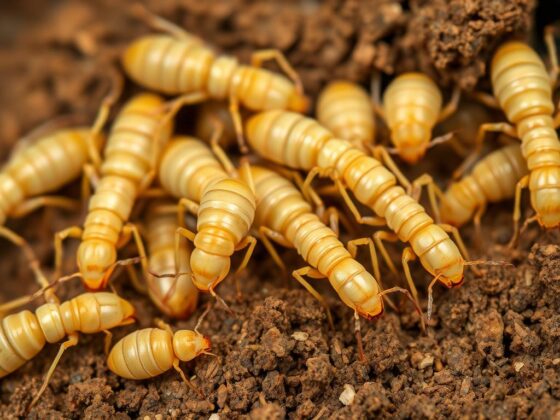
Why Choose Natural Termite Treatments in Charleston?
Charleston’s historic homes and lush landscapes deserve protection methods that preserve both structures and the environment. Natural termite treatments offer several advantages:
- Lower toxicity for families, pets, and beneficial insects
- Reduced environmental impact on Charleston’s delicate ecosystem
- Fewer health concerns for those with chemical sensitivities
- Compatibility with historic home preservation
- Often more affordable for targeted applications
While natural treatments may require more frequent application than chemical alternatives, many Charleston homeowners find the trade-off worthwhile for peace of mind.
Common Termite Species in Charleston
Before selecting a treatment, it’s important to identify which termite species you’re dealing with, as effectiveness varies by type:
Formosan Subterranean Termites

Often called “super termites,” Formosans are aggressive, form large colonies, and can cause significant structural damage quickly. They’re particularly prevalent in Charleston’s historic district.
Eastern Subterranean Termites

The most common termite species in South Carolina, these pests build distinctive mud tubes and thrive in Charleston’s moist soil conditions.
Top 7 Natural and Organic Termite Treatments for Charleston Homes
1. Orange Oil (d-Limonene)

How it works: Orange oil contains d-limonene, which dissolves the exoskeletons of termites and destroys their eggs on contact.
Effectiveness: Particularly effective against drywood termites, moderately effective against Formosan termites when applied directly.
Safety: Non-toxic to humans and pets when used as directed, though skin irritation is possible. Safe for plants when diluted properly.
Application: Best for localized infestations. Can be DIY-applied using a drill and injection system or sprayer, but professional application is recommended for comprehensive treatment.
Local brands: XT-2000 Orange Oil, available at Charleston Hardware Store and online retailers.
2. Neem Oil

How it works: Contains azadirachtin, which disrupts termites’ hormonal systems, preventing them from molting, feeding, and reproducing.
Effectiveness: Moderate against both Formosan and Eastern Subterranean termites. Works as both a repellent and growth regulator.
Safety: Very low toxicity for humans and pets. Safe for garden plants and beneficial insects when properly diluted.
Application: Can be applied as a soil drench around foundations or directly to wood. DIY-friendly but requires regular reapplication every 2-3 months in Charleston’s humid climate.
Local brands: Dyna-Gro Neem Oil, available at Hyams Garden Center and Abide-A-While Garden Center in Mount Pleasant.
3. Diatomaceous Earth

How it works: Microscopic fossilized remains of diatoms with sharp edges that cut through termites’ exoskeletons, causing dehydration and death.
Effectiveness: Good for preventative treatment and light infestations of both common Charleston termite species.
Safety: Food-grade DE is non-toxic to humans and pets, though respiratory protection is recommended during application to avoid lung irritation.
Application: Apply as a dry powder around foundations, entry points, and in crawl spaces. Easily DIY-applied but must be kept dry to remain effective (challenging in Charleston’s humidity).
Local brands: Harris Diatomaceous Earth, available at Lowe’s and Home Depot locations throughout Charleston.
4. Beneficial Nematodes

How it works: Microscopic, soil-dwelling worms that seek out and kill termites by entering their bodies and releasing bacteria that multiply and kill the host.
Effectiveness: Highly effective against subterranean termites, particularly suited for Charleston’s soil conditions.
Safety: Completely safe for humans, pets, plants, and beneficial insects. Only targets termites and certain other soil pests.
Application: Applied as a soil drench around foundations and in yards. DIY-friendly but requires specific soil temperature and moisture conditions for effectiveness.
Local brands: Steinernema carpocapsae nematodes, available at Possum’s Landscape and Pest Control Supplies in North Charleston.
5. Borate Treatments

How it works: Sodium borate compounds disrupt termites’ digestive systems and dehydrate them. Penetrates wood for long-lasting protection.
Effectiveness: Excellent preventative treatment and effective for existing infestations of both Formosan and Eastern Subterranean termites.
Safety: Low toxicity to humans and pets when dry, though protective gear is recommended during application. Not harmful to plants when used as directed.
Application: Can be applied as a spray, foam, or dust to wood surfaces. DIY-friendly for exposed wood, but professional application recommended for comprehensive treatment.
Local brands: Bora-Care and Tim-bor, available at Ledford’s Pest Control and other local suppliers.
6. Vinegar Solutions

How it works: The acetic acid in vinegar dissolves termites’ exoskeletons on contact and creates an inhospitable environment.
Effectiveness: Moderate effectiveness as a contact killer and repellent for both common Charleston termite species.
Safety: Completely non-toxic to humans, pets, and plants. May cause temporary odor but dissipates quickly.
Application: Applied as a spray directly to visible termites or as a preventative measure around entry points. Completely DIY-friendly but requires frequent reapplication.
Local brands: Any white vinegar will work; organic apple cider vinegar from Charleston Farmers Market vendors offers additional benefits.
7. Cardboard Traps

How it works: Moistened cardboard attracts termites with its cellulose content. Once infested, the cardboard is removed and destroyed, reducing termite populations.
Effectiveness: Limited effectiveness as a control method alone, but useful for monitoring and reducing small colonies of both termite species.
Safety: Completely non-toxic and safe for all humans, pets, and plants.
Application: Stack moistened corrugated cardboard near infested areas, check regularly, and destroy (burn) when termites are present. Entirely DIY-friendly.
Local materials: Recycled cardboard is readily available; no purchase necessary.
Comparison of Natural Termite Treatments for Charleston Homes
| Treatment | Cost | Effectiveness | Longevity | Ease of Use | Best For |
| Orange Oil | $$$ | High (direct contact) | 2-3 months | Moderate | Localized drywood termite infestations |
| Neem Oil | $$ | Moderate | 2-3 months | Easy | Prevention and light infestations |
| Diatomaceous Earth | $ | Moderate | Until wet (challenge in Charleston) | Very Easy | Preventative barrier treatment |
| Beneficial Nematodes | $$ | High (subterranean) | 3-6 months | Moderate | Yard and soil treatment |
| Borate Treatments | $$$ | Very High | 3-5 years | Moderate | Long-term wood protection |
| Vinegar Solutions | $ | Low-Moderate | 1-2 weeks | Very Easy | Spot treatment of visible termites |
| Cardboard Traps | $ | Low | Until saturated | Very Easy | Monitoring and population reduction |
Not Sure Which Treatment Is Right For Your Home?
Charleston’s unique climate and termite species require specialized knowledge. Get expert advice from local professionals who understand our region’s specific challenges.
Charleston-Based Resources for Natural Termite Control
Local Companies Offering Organic Termite Solutions
Ledford’s Pest Control
Specializes in Integrated Pest Management (IPM) with organic options. Offers Boracare treatments and customized natural pest control plans.
Phone: (843) 766-8298
Address: Charleston, SC
Carolina Exterminating
Offers termite inspections and eco-friendly treatment options including borate-based solutions for historic Charleston homes.
Phone: (843) 225-9990
Address: 948 Wappoo Rd, Charleston, SC
Charleston Pest & Lawn

Locally owned company offering natural termite solutions with emphasis on minimal environmental impact.
Phone: (843) 202-0953
Address: 4365 Dorchester Rd, Charleston, SC
Where to Buy Natural Termite Control Products in Charleston

- Hyams Garden Center – 1409 Folly Rd, Charleston – Carries neem oil and beneficial nematodes
- Abide-A-While Garden Center – 1460 Hwy 17 N, Mt Pleasant – Stocks organic pest control products
- Possum’s Landscape & Pest Control Supplies – 2824 Azalea Dr, North Charleston – Specializes in professional-grade natural treatments
- Charleston Hardware Co. – 119 King St, Charleston – Carries borate treatments and application equipment
- Charleston Farmers Market – Marion Square (Saturdays) – Local vendors with organic pest control solutions
- Lowe’s and Home Depot – Multiple locations – Stock diatomaceous earth and some natural options
Creating an Integrated Natural Termite Management Plan for Charleston Homes

For maximum effectiveness in Charleston’s challenging climate, combine multiple approaches:
Prevention Strategies
- Maintain 18″ between soil and wood portions of your home
- Fix leaky pipes and ensure proper drainage (crucial in Charleston’s rainy climate)
- Remove wood debris from around your foundation
- Use termite-resistant mulch (cedar or cypress) in gardens
- Install termite shields on foundations
- Schedule regular inspections (quarterly in Charleston’s high-risk environment)
Treatment Combinations
- Borate treatments for wood + beneficial nematodes for soil
- Diatomaceous earth barriers + neem oil applications
- Orange oil for spot treatments + cardboard traps for monitoring
- Vinegar solutions for visible termites + preventative borate treatments
Ready to Protect Your Charleston Home Naturally?
Get a customized organic termite protection plan designed specifically for your property’s needs and Charleston’s unique climate challenges.
Frequently Asked Questions About Natural Termite Control in Charleston
Are natural termite treatments effective in Charleston’s humid climate?
Yes, but with important considerations. Charleston’s high humidity and warm temperatures create ideal conditions for termites while potentially reducing the effectiveness of some natural treatments. Diatomaceous earth, for example, loses effectiveness when wet, making it challenging in our climate. However, beneficial nematodes thrive in our moist soil conditions, and borate treatments penetrate wood deeply in humid environments. For best results in Charleston, use multiple treatment methods and apply more frequently than might be necessary in drier climates.
How often should natural termite treatments be reapplied in Charleston?
Reapplication schedules vary by treatment type and Charleston’s seasonal conditions:
- Orange oil: Every 2-3 months, more frequently during summer
- Neem oil: Every 2-3 months, especially after heavy rains
- Diatomaceous earth: After any rainfall or irrigation
- Beneficial nematodes: Every 3-6 months, best applied in spring and fall
- Borate treatments: Every 3-5 years for long-term protection
- Vinegar solutions: Every 1-2 weeks for active infestations
- Cardboard traps: Check and replace weekly
Charleston’s peak termite season (March-August) may require more frequent applications than the off-season.
Can natural treatments effectively control Formosan termites in Charleston?
Formosan termites, prevalent in Charleston, are more aggressive and form larger colonies than other species, making them challenging to control with natural methods alone. For Formosan infestations, a combination approach is most effective:
- Borate treatments provide the most effective natural control
- Beneficial nematodes help reduce colony size in soil
- Orange oil works for spot treatments of accessible wood
For severe Formosan infestations, consult with professionals who specialize in eco-friendly integrated pest management. They may recommend combining natural methods with targeted, minimal-impact conventional treatments for comprehensive control.
Are natural termite treatments safe for historic Charleston homes?
Yes, natural treatments are often ideal for Charleston’s historic homes. Chemical fumigation can damage historic materials and finishes, while many natural treatments are gentler on original woodwork. Borate treatments are particularly suitable as they penetrate wood without altering appearance or structural integrity. Always consult with preservation specialists before treating historic properties, as some natural oils may affect certain historic finishes. Several Charleston pest control companies offer specialized services for historic homes, combining preservation expertise with effective natural termite control.
What is the cost comparison between natural and chemical termite treatments in Charleston?
Cost varies widely based on property size and infestation severity, but general comparisons for an average Charleston home include:
- DIY natural treatments: $100-$500 for materials, requiring regular reapplication
- Professional natural treatments: $800-$2,000 for initial application
- Conventional chemical treatments: $1,000-$2,500 for initial treatment
- Termite bonds/annual service: $300-$500 for either natural or conventional
While initial costs may be comparable, natural treatments often require more frequent reapplication in Charleston’s climate. However, they avoid potential health and environmental costs associated with chemical exposure.
Protecting Your Charleston Home with Natural Termite Solutions
Charleston’s unique combination of historic architecture, humid climate, and aggressive termite species creates special challenges for homeowners seeking natural pest control solutions. While conventional chemical treatments remain effective, the natural and organic options outlined in this guide provide viable alternatives that protect both your home and the environment.
For best results, consider combining multiple natural treatment methods and partnering with local professionals who understand Charleston’s specific termite challenges. Regular monitoring, preventative maintenance, and prompt treatment of any signs of activity will help ensure your home remains termite-free while minimizing environmental impact.
Take the First Step Toward Natural Termite Protection
Schedule a consultation with Charleston’s eco-friendly pest control experts to develop a customized natural termite treatment plan for your home.
Related TermiteHQ guide: expert review process.
Related TermiteHQ guide: compare termite treatments.
Related TermiteHQ guide: termite treatment cost estimator.
Related TermiteHQ guide: termite damage repair calculator.
Related TermiteHQ guide: termite inspection guide.