Termites cause billions of dollars in damage to homes across America each year, and Wichita is no exception. Our unique climate, with humid summers and clay-rich soil, creates an ideal environment for subterranean termites to thrive. As a homeowner in Wichita, understanding how to identify, prevent, and treat termite problems can save you thousands in repair costs and help preserve your property’s value.
This guide provides practical, affordable DIY termite control methods specifically tailored for Wichita residents. While severe infestations may require professional intervention, many prevention techniques and early-stage treatments can be effectively handled on your own.
Why Termites Thrive in Wichita, Kansas
Wichita’s climate and soil conditions create a perfect storm for termite activity. Eastern subterranean termites are the most common species in our area, with an estimated 7-14 colonies per acre throughout Kansas. These destructive pests thrive in our environment for several reasons:
- Humid summers provide the moisture termites need to survive
- Clay-rich soil retains moisture and allows termites to build extensive tunnel systems
- Mild winters mean termite colonies remain active nearly year-round
- Urban development has displaced natural termite habitats, pushing colonies toward residential areas
- Many older homes in Wichita were built without modern termite prevention measures
Understanding these local factors is crucial for implementing effective DIY termite control strategies that address the specific challenges Wichita homeowners face.
How to Identify Termite Infestations in Your Wichita Home
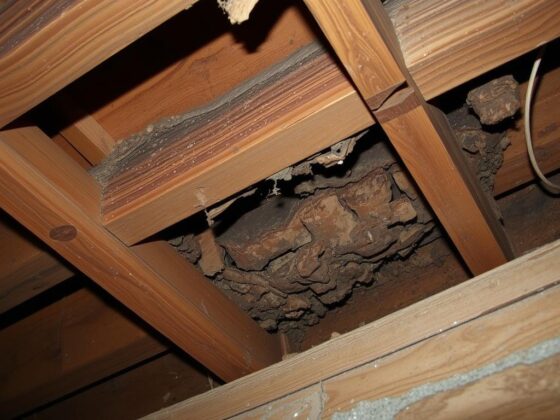
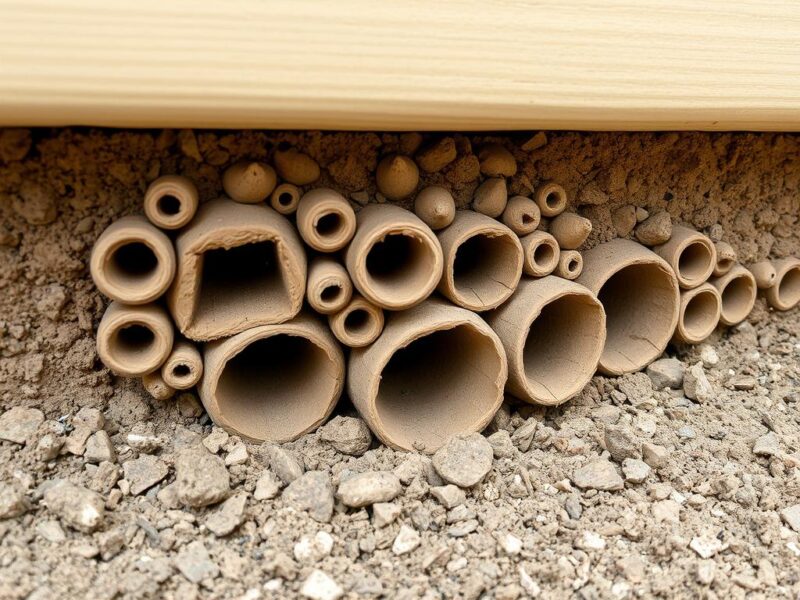
Mud tubes on a home foundation – a clear sign of termite activity
Early detection is your best defense against extensive termite damage. Here are the key signs to watch for in and around your Wichita home:
Visual Signs of Termite Activity
Mud Tubes
Subterranean termites build protective mud tubes about the width of a pencil along foundations, walls, and other surfaces. These tubes protect termites from predators and dry air as they travel between their colony and food sources. In Wichita homes, these are commonly found along basement walls, crawl spaces, and exterior foundations.
Damaged Wood
Wood that sounds hollow when tapped or appears blistered and darkened may indicate termite damage. Unlike other wood-destroying insects, termites consume wood from the inside out, often leaving a thin veneer intact. This makes damage difficult to detect until it’s extensive.
Swarmers and Discarded Wings
In Wichita, termite swarms typically occur in spring and early summer, especially after rain. These winged reproductive termites emerge to start new colonies. Finding discarded wings near windows, doors, or light fixtures is a strong indication of termite activity nearby.
Frass (Termite Droppings)
Drywood termites (less common in Wichita but still present) push their waste pellets out of their tunnels, creating small piles that resemble sawdust or coffee grounds. Finding these near wooden structures suggests an active infestation.
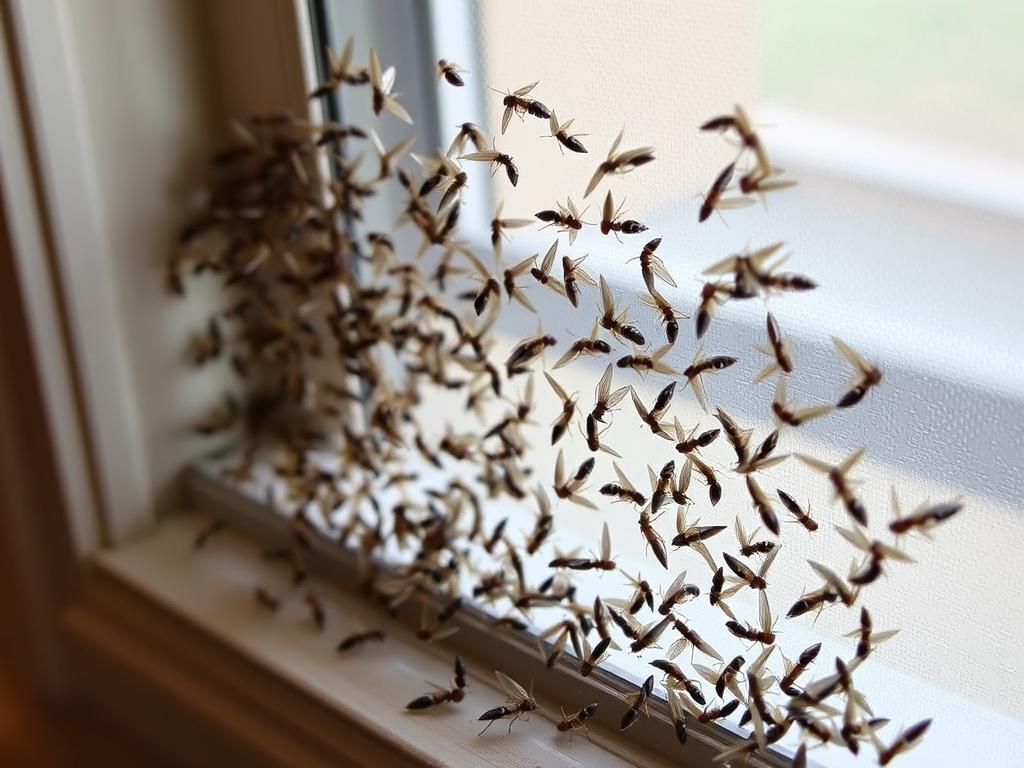
Termite swarmers near a window – a common sight in Wichita homes during spring
WARNING: Structural Damage Risk – Termites cause an estimated $5 billion in damage annually in the U.S. In Wichita’s climate, a single colony can contain millions of termites that can silently damage your home’s structure for years before signs become visible. Early detection and treatment are crucial to prevent costly repairs.
DIY Termite Prevention Tips for Wichita Homeowners
Prevention is always more cost-effective than treatment. Here are practical steps you can take to make your Wichita home less attractive to termites:
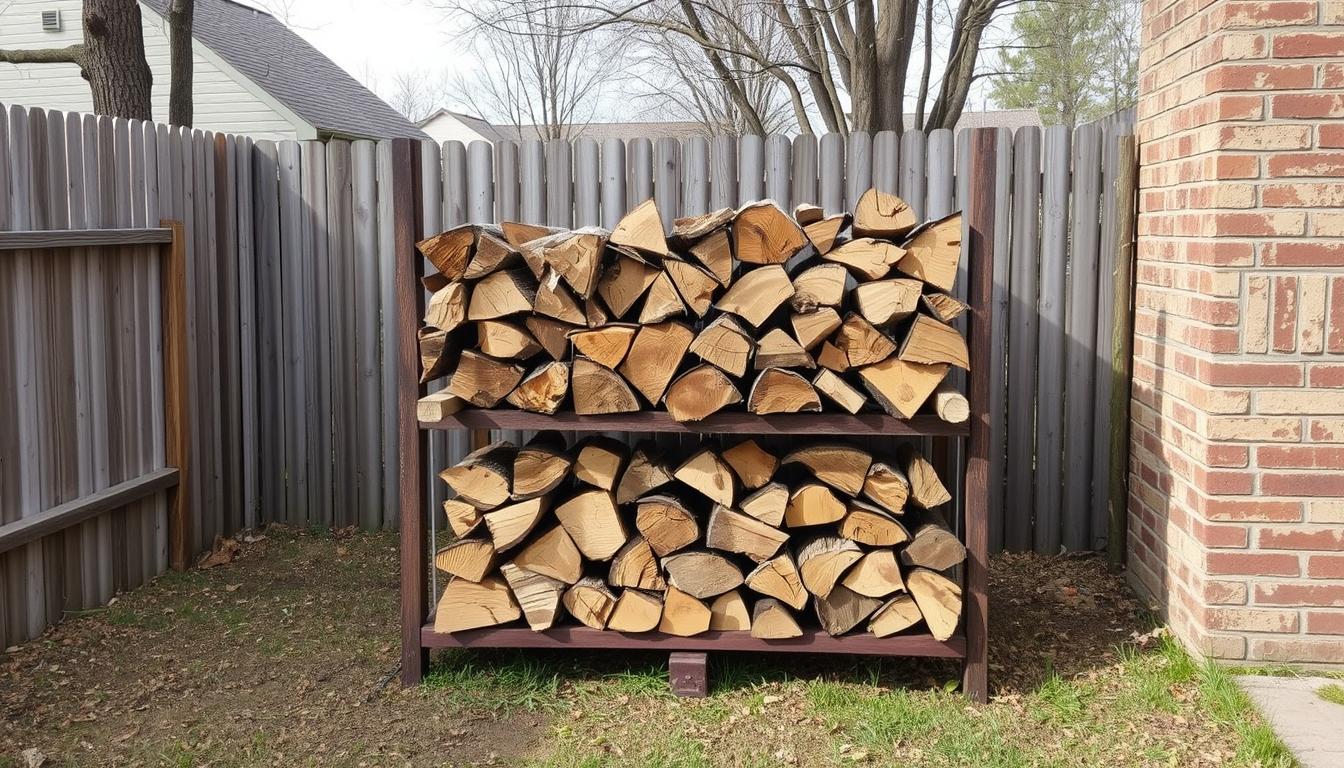
Proper firewood storage: elevated and away from your home’s foundation
Moisture Control
Termites need moisture to survive, making water management crucial for prevention in Wichita’s humid climate:
- Fix leaky faucets, pipes, and AC units promptly
- Ensure gutters and downspouts direct water away from your foundation
- Maintain proper ventilation in crawl spaces and attics
- Grade soil around your foundation to prevent water accumulation
- Consider installing a dehumidifier in damp basements
Wood Contact Elimination
Reducing wood-to-soil contact is essential for preventing termite entry:
- Store firewood at least 20 feet from your home and elevated off the ground
- Keep wooden siding, door frames, and window frames at least 6 inches above soil
- Replace wood mulch near foundations with termite-resistant alternatives like gravel
- Remove dead trees, stumps, and roots near your property
- Consider replacing wooden structures in contact with soil with concrete, metal, or pressure-treated wood
Sealing Entry Points
Termites can enter through tiny cracks and openings:
- Seal cracks in your foundation with appropriate caulking
- Repair damaged roof tiles and eaves
- Install fine mesh screens on vents and openings
- Check utility entry points and seal gaps around pipes and wires
- Repair damaged weather stripping around doors and windows
Prevention Checklist
Download our free Wichita Termite Prevention Checklist to help you systematically protect your home from termites. This printable guide includes seasonal tasks specifically designed for our local climate and soil conditions.
DIY Termite Treatment Methods for Wichita Homes
When prevention isn’t enough and you discover signs of termites, these DIY treatment methods can help address early-stage infestations:
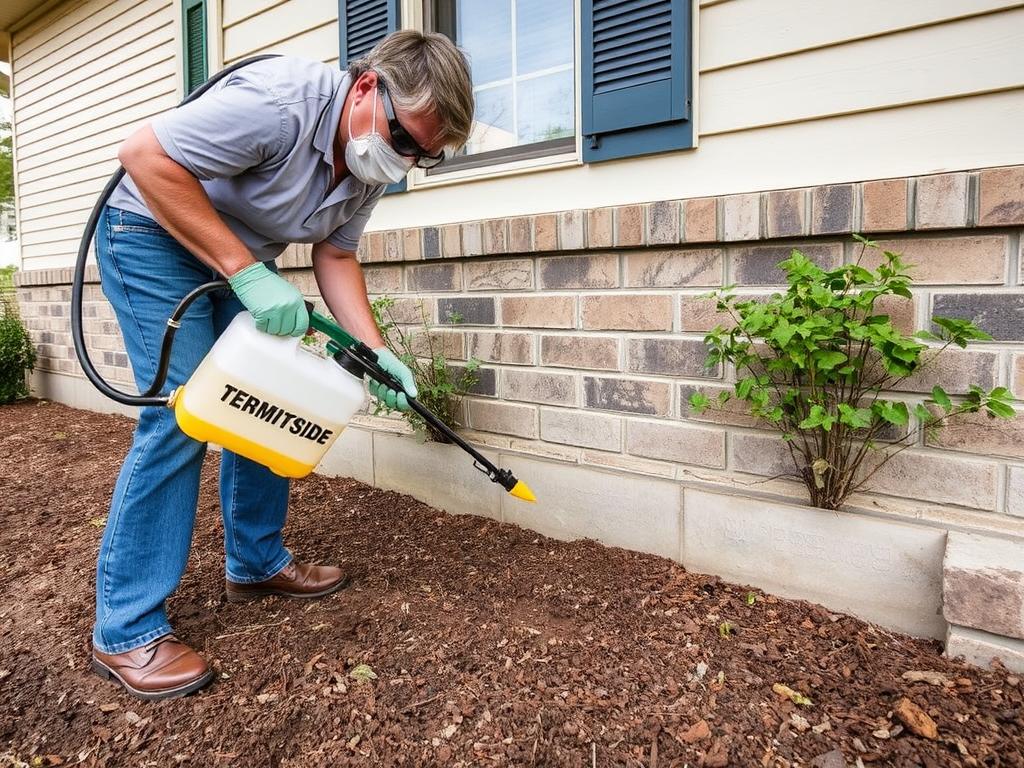
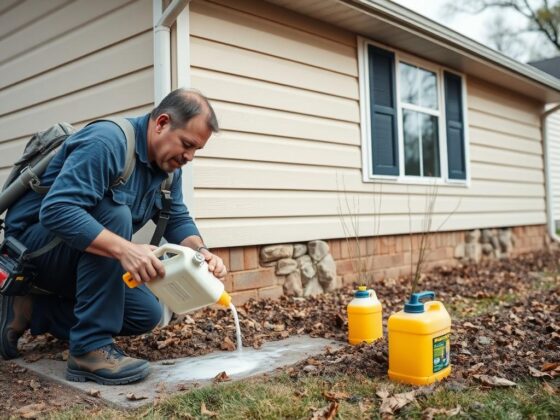
Proper application of liquid termiticide requires protective equipment
Liquid Termiticides
Liquid termiticides create a chemical barrier in the soil around your home:
Advantages
- Creates a long-lasting protective barrier
- Effective against subterranean termites common in Wichita
- Can both kill existing termites and prevent new infestations
- Some products remain effective for up to 5 years
Limitations
- Requires careful application to avoid gaps in coverage
- May be difficult to apply in Wichita’s clay soil
- Requires special equipment and safety precautions
- Not recommended within 25 feet of water wells (common in some Wichita neighborhoods)
Recommended products available in Wichita:
- Taurus SC – Available at Home Depot on E Kellogg Dr
- Termidor SC – Available at Westlake Ace Hardware on N Woodlawn Blvd
- Spectracide Terminate – Available at Lowe’s on W Kellogg Dr
Termite Bait Stations
Bait stations use termites’ foraging behavior to eliminate colonies:
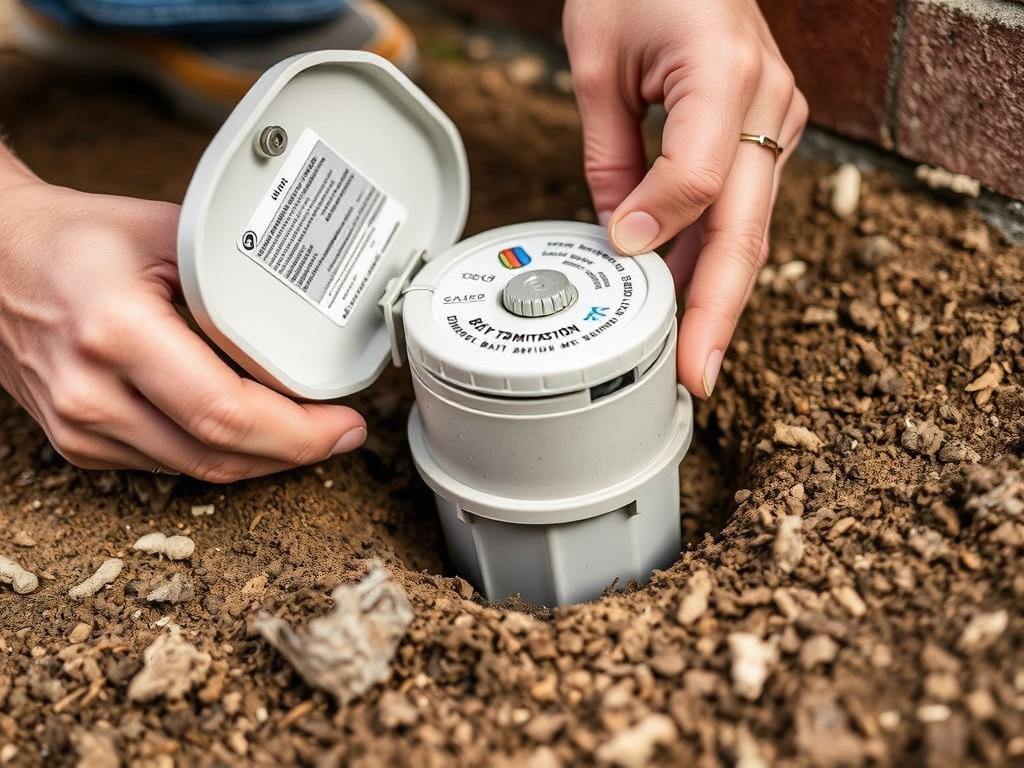
DIY termite bait stations should be placed every 10-15 feet around your home
Advantages
- Less invasive than liquid treatments
- No drilling or trenching required
- Safe to use near water sources (important for many Wichita properties)
- Can eliminate entire colonies, not just individual termites
Limitations
- Takes longer to see results
- Requires regular monitoring and bait replacement
- May be less effective during Wichita’s winter months
- Needs proper placement to intercept termite foraging paths
Installation guide for DIY bait stations:
- Place stations every 10-15 feet around your home’s perimeter
- Install in moist soil areas where termites are likely to forage
- Ensure the top of the station is flush with the ground
- Check stations monthly and replace bait as needed
- Keep records of activity to track effectiveness
Recommended bait systems available in Wichita:
- Spectracide Terminate Stakes – Available at Menards on N Maize Rd
- Terro T1901 Termite Bait Stakes – Available at Ace Hardware on E Central Ave
- Advance Termite Bait System – Available at Do-it Best Hardware on S Broadway
Natural Remedies
For those preferring eco-friendly options, these natural methods can help with prevention and minor infestations:
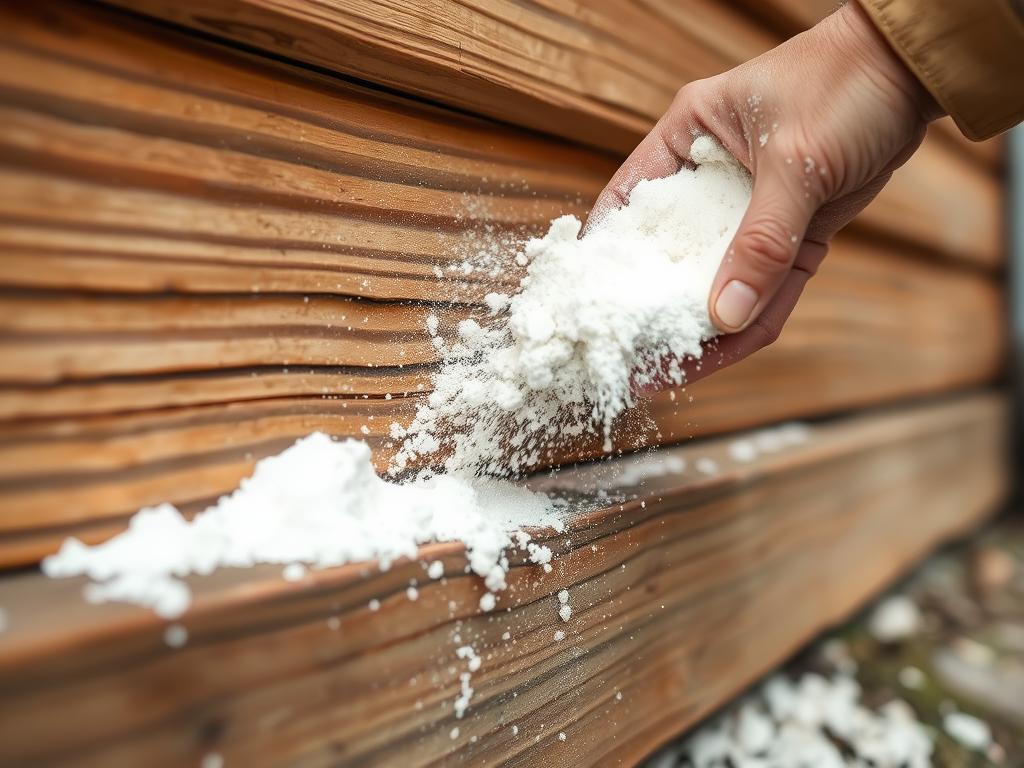
Diatomaceous earth can be applied to cracks and entry points
Orange Oil
Contains d-limonene that dissolves termite exoskeletons. Apply directly to infested wood for spot treatments. Effective against drywood termites but less so against subterranean species common in Wichita.
Diatomaceous Earth
This natural powder damages termites’ exoskeletons, causing dehydration. Apply around foundations, entry points, and in crawl spaces. Works best in Wichita’s dry summer months.
Boric Acid
Disrupts termites’ digestive systems and damages their nervous systems. Can be applied as a powder or mixed with water as a spray. Particularly effective in Wichita’s humid conditions.
Where to find natural remedies in Wichita:
- Orange Oil – Available at GreenAcres Market on E Central Ave
- Diatomaceous Earth – Available at Tractor Supply Co. on W Kellogg Dr
- Boric Acid – Available at Westlake Ace Hardware on N Woodlawn Blvd
Safety Precautions for DIY Termite Control

Essential safety gear for handling termite control products
When using DIY termite control products, safety should be your top priority:
Personal Protective Equipment
- Always wear chemical-resistant gloves when handling termiticides
- Use eye protection to prevent splashes
- Wear a respirator mask when applying powders or sprays
- Cover skin with long sleeves and pants
- Wear closed-toe shoes when applying treatments outdoors
Application Safety
- Read and follow all product label instructions
- Never mix different termite control products
- Apply on calm days to prevent drift in Wichita’s often windy conditions
- Keep children and pets away from treated areas until dry
- Store unused products in original containers out of reach of children
IMPORTANT: If you have a water well on your property, be aware that Sedgwick County ordinance 7.30.050 prohibits applying termiticides within 25 feet of wells. Many Wichita properties, especially in older neighborhoods, have wells that could be contaminated by improper termiticide application.
Termite Control Challenges Specific to Wichita
Wichita homeowners face unique challenges when implementing DIY termite control:

Clay-rich soil in Wichita can make liquid termiticide application challenging
Soil Conditions
Wichita’s clay-rich soil presents several challenges:
- Clay soil can prevent even distribution of liquid termiticides
- Requires more product and careful application techniques
- May need soil amendments to improve penetration
- Creates ideal tunneling conditions for subterranean termites
- Retains moisture that attracts termites, especially after Wichita’s summer storms
Climate Factors
Our local weather patterns affect termite activity and treatment effectiveness:
- Hot, humid summers create ideal conditions for termite reproduction
- Heavy seasonal rains can wash away surface treatments
- Freeze-thaw cycles can create foundation cracks that serve as entry points
- Wind can complicate outdoor application of liquid or powder treatments
- Extended termite season compared to northern regions
Local Construction Practices
Many Wichita homes have features that increase termite vulnerability:
- Slab-on-grade foundations common in newer neighborhoods
- Older homes often lack modern termite shields and barriers
- Crawl spaces in many mid-century homes provide easy termite access
- Additions and renovations may create wood-soil contact points
- Irrigation systems can create moisture zones attractive to termites
Where to Find Termite Control Products in Wichita
These local retailers carry a range of DIY termite control products:

Local hardware stores offer a variety of DIY termite control options
| Store | Address | Available Products | Price Range |
| Home Depot | 3350 N Woodlawn Blvd | Termidor, Taurus SC, bait stations | $25-$200 |
| Lowe’s | 333 S Ridge Rd | Spectracide, Terro, application equipment | $20-$150 |
| Westlake Ace Hardware | 8829 W Central Ave | Boric acid, orange oil, diatomaceous earth | $15-$100 |
| Menards | 3545 N Maize Rd | Bait systems, liquid treatments, sprayers | $30-$180 |
| Tractor Supply Co. | 6125 E Kellogg Dr | Commercial-grade treatments, bulk options | $40-$250 |
Budget-Friendly Equipment
Essential tools for DIY termite control that won’t break the bank:
- 1-Gallon Pump Sprayer – $15-25 at Ace Hardware
- Soil Injection Rod – $30-40 at Home Depot
- Protective Gear Set – $25-35 at Harbor Freight Tools
- Moisture Meter – $20-30 at Lowe’s
- Inspection Tools – $10-20 at Westlake Ace Hardware
When to Call Professional Termite Control Services
While DIY methods can be effective for prevention and minor infestations, some situations call for professional intervention:
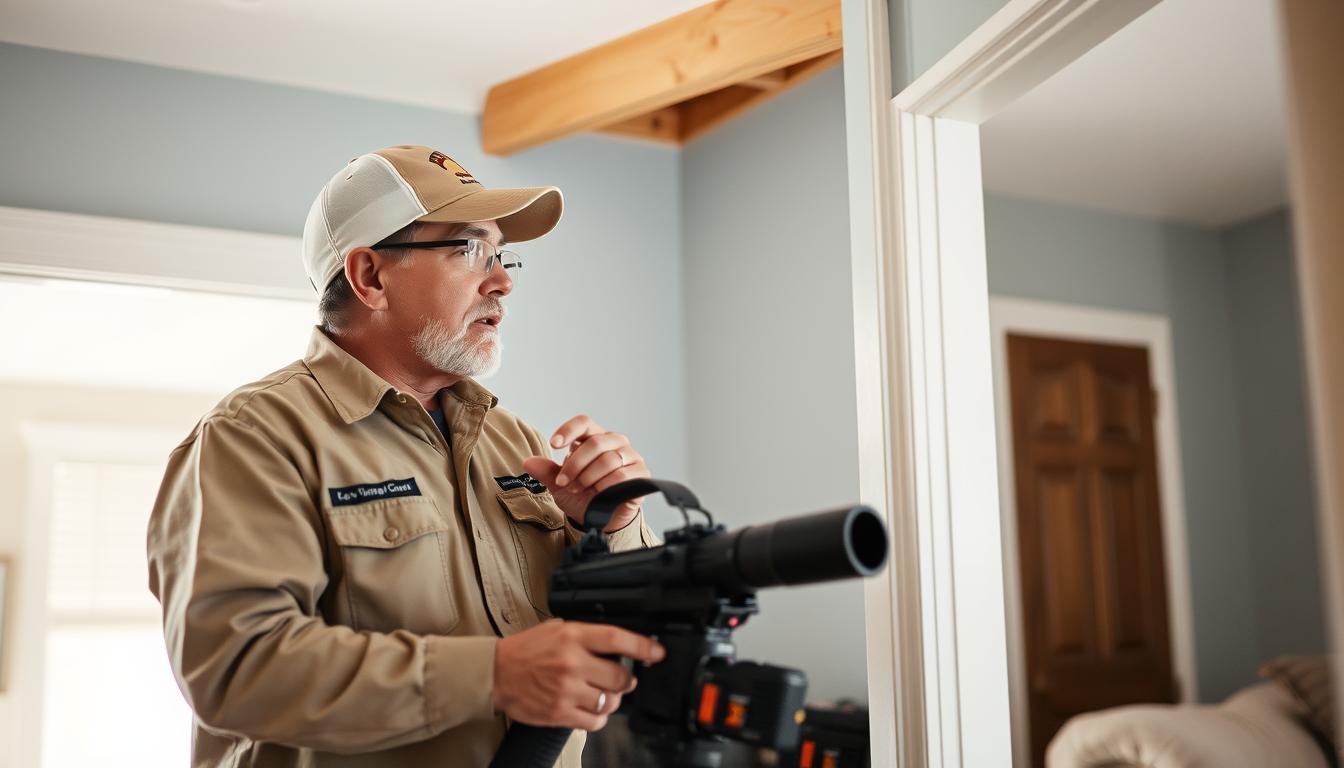
Professional inspectors can detect termite activity in hard-to-reach areas
Signs You Need Professional Help
- Widespread evidence of termites throughout your home
- Failed DIY treatment attempts
- Structural damage to load-bearing elements
- Property located in a high-risk area of Wichita
- Home sale requiring official termite inspection documentation
Benefits of Professional Treatment
Professional termite control companies offer several advantages:
- Access to commercial-grade products not available to consumers
- Specialized equipment for thorough application
- Trained technicians who can identify all infestation points
- Warranties and guarantees on treatments
- Regular monitoring to prevent future infestations
Annual Inspections: Even if you choose DIY methods for prevention, consider scheduling a professional inspection once a year. Many Wichita pest control companies offer affordable inspection services that can catch problems before they become severe.
Protecting Your Wichita Home from Termites: The Bottom Line
Effective termite control for Wichita homeowners requires a combination of vigilance, prevention, and appropriate treatment. By understanding the unique challenges our local climate and soil conditions present, you can implement DIY strategies that significantly reduce your risk of costly termite damage.
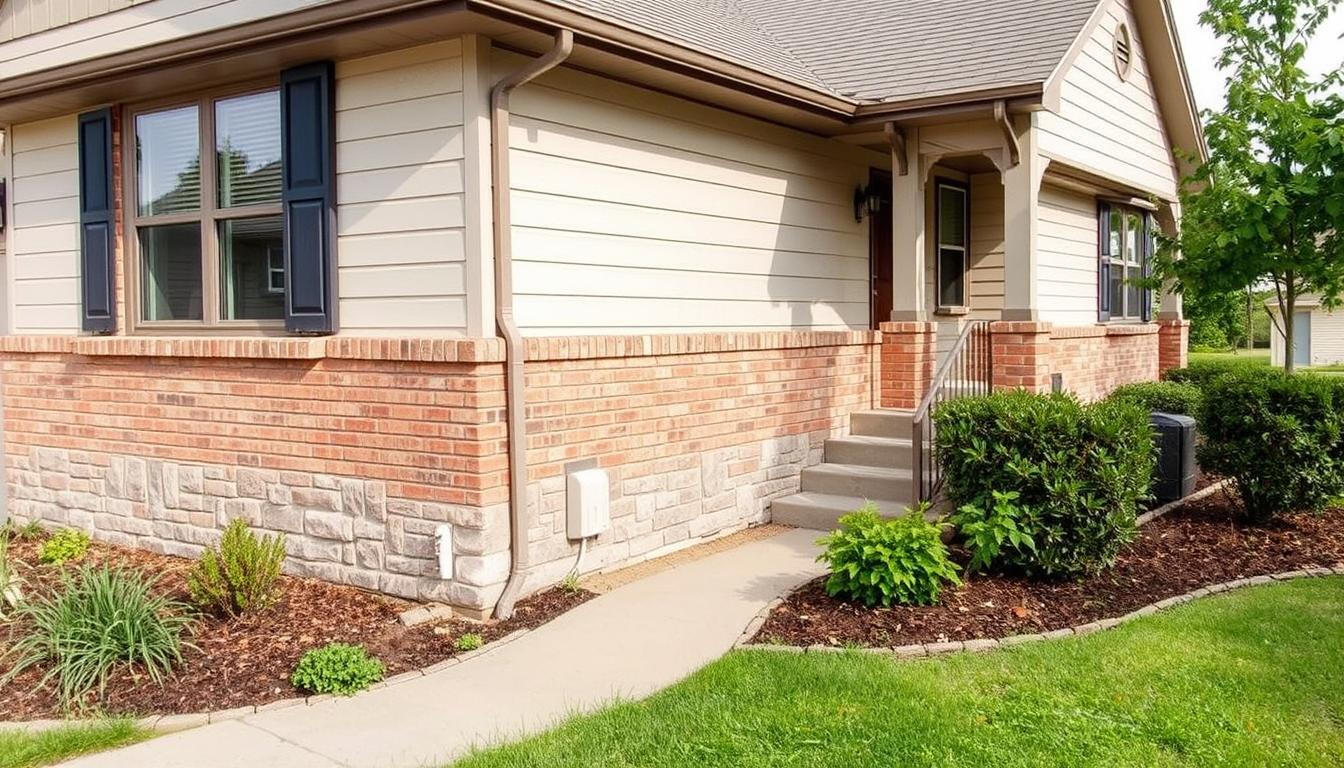
A well-protected home with proper termite prevention measures in place
Remember these key takeaways:
- Regular inspection is your first line of defense
- Moisture control is essential in Wichita’s humid climate
- Multiple prevention methods provide the best protection
- DIY treatments work best for early-stage infestations
- Know when to call professionals for severe problems
By combining these DIY termite control strategies with annual professional inspections, you can protect your Wichita home from these destructive pests while saving money on expensive treatments and repairs.
Start Protecting Your Home Today
Download our comprehensive Wichita Termite Prevention Checklist and take the first step toward a termite-free home. This free resource includes seasonal tasks, product recommendations, and expert tips specifically for Wichita homeowners.
Related TermiteHQ guide: expert review process.
Related TermiteHQ guide: compare termite treatments.
Related TermiteHQ guide: termite treatment cost estimator.
Related TermiteHQ guide: termite damage repair calculator.
Related TermiteHQ guide: termite inspection guide.